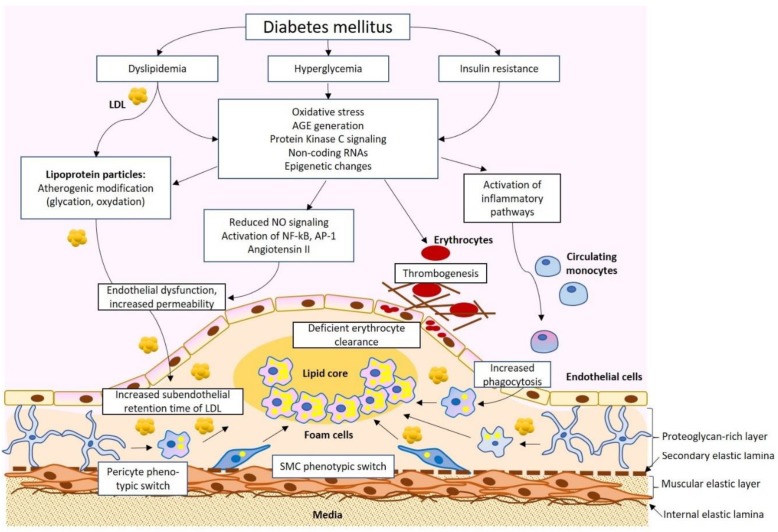
Figure 1Figure 1
A simplified scheme of the pathophysiological connection of diabetes mellitus and atherosclerosis. Dyslipidemia, hyperglycemia, and insulin resistance result in a spectrum of physiological changes, including the formation of atherogenic low-density lipoprotein (LDL), advanced glycation end products (AGE), and activation of pro-inflammatory signaling that impact different cell types of the arterial wall, resulting in atherosclerotic lesion development. SMC, smooth muscular cells.