Digital biomarkers and AI-driven early detection of neurodegeneration
Research Question
“What are the mechanisms underlying digital biomarkers and ai-driven early detection of neurodegeneration?”
ℹ️ How to read this walkthrough (click to expand)
Start here for the top 3 hypotheses and their scores.
Four AI personas debated the question. Click “Read full response” to expand.
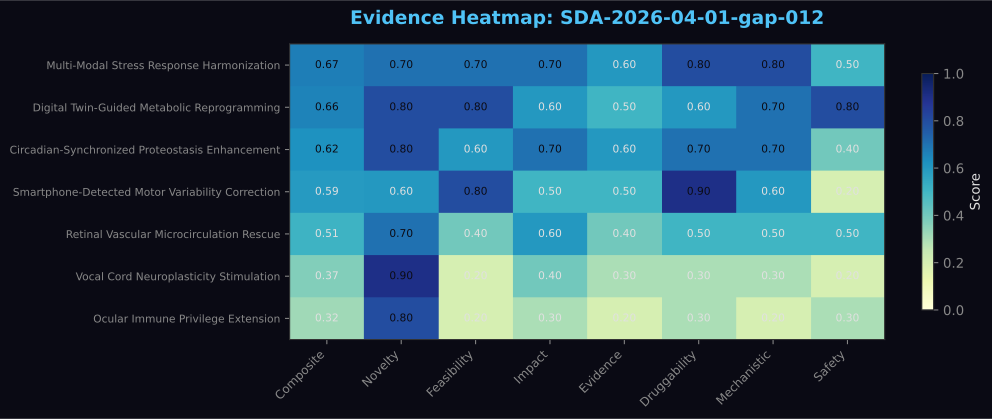
Each hypothesis is scored on 8+ dimensions from novelty to druggability.
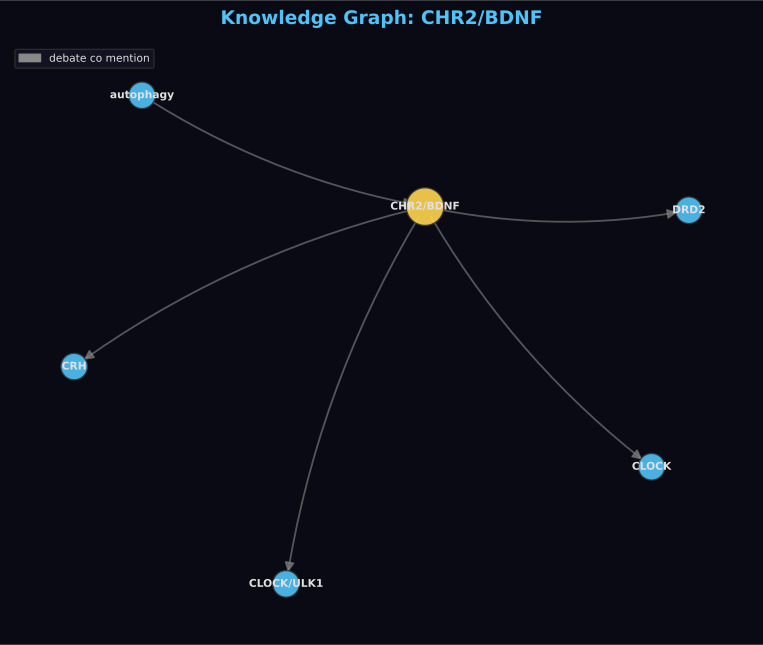
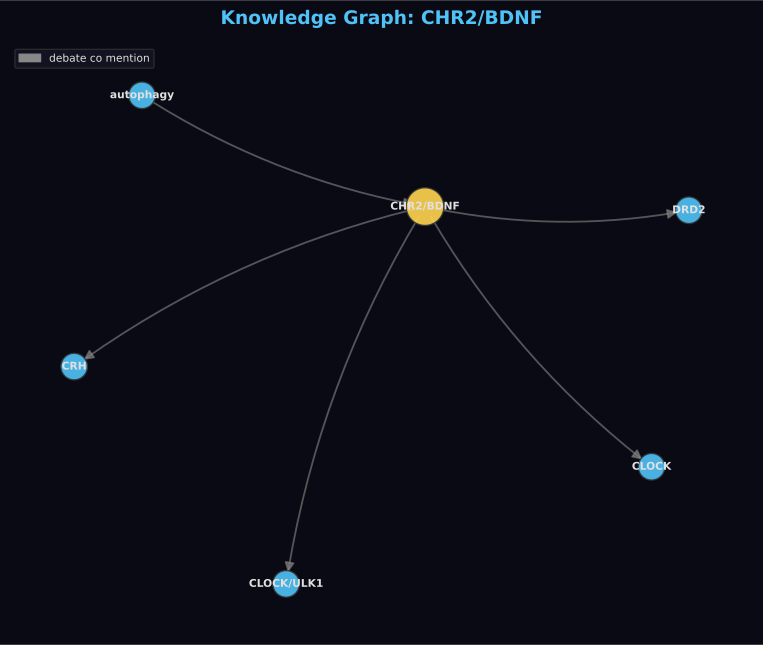
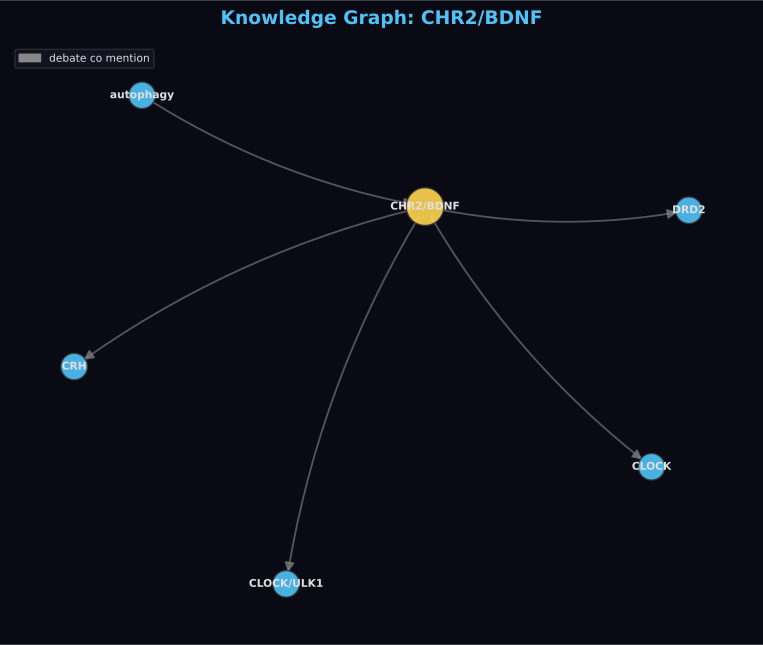
Interactive network of molecular relationships. Drag nodes, scroll to zoom.
Analysis Journey
How This Analysis Was Created
An AI agent scanned recent literature to identify under-explored research questions at the frontier of neuroscience.
Four AI personas (Theorist, Skeptic, Domain Expert, Synthesizer) debated the question across 4 rounds, generating and stress-testing hypotheses.
Each hypothesis was evaluated against PubMed literature, clinical trial data, and gene expression databases to build an evidence portfolio.
0 molecular relationships were extracted and mapped into an interactive knowledge graph connecting genes, pathways, and diseases.
Executive Summary
After integrating theoretical potential with critical evaluation and practical feasibility assessment, three hypotheses emerge as most viable for further investigation. The Multi-Modal Stress Response Harmonization approach ranks highest (composite score 0.67) due to strong mechanistic plausibility, established drug classes targeting HPA axis and neuroinflammation, and reasonable safety profiles, despite challenges with polypharmacy complexity. Digital Twin-Guided Metabolic Reprogramming ranks second (0.66) offering high feasibility through supplement pathways and AI-driven personalization, though limited by uncertain biomarker-metabolism correlations. Circadian-Synchronized Proteostasis Enhancement ranks third (0.62) with compelling biological rationale and existing autophagy enhancers, but faces challenges in determining optimal timing windows and managing immunosuppression risks.
The analysis reveals critical knowledge gaps requiring validation before clinical translation, particularly the assumption that digital biomarkers reflect causal rather than consequential pathophysiology. The smartphone-based DBS approach, while technically feasible, carries unacceptable surgical risks for pre-symptomatic patients. The remaining hypotheses (retinal vascular rescue, vocal cord stimulation, and ocular immune privilege) suffer from weak mechanistic foundations and significant safety concerns. Success for any approach will require extensive biomarker validation studies, novel regulat
📊 Jupyter Notebook
Interactive computational analysis with code and visualizations
Multi-Agent Debate
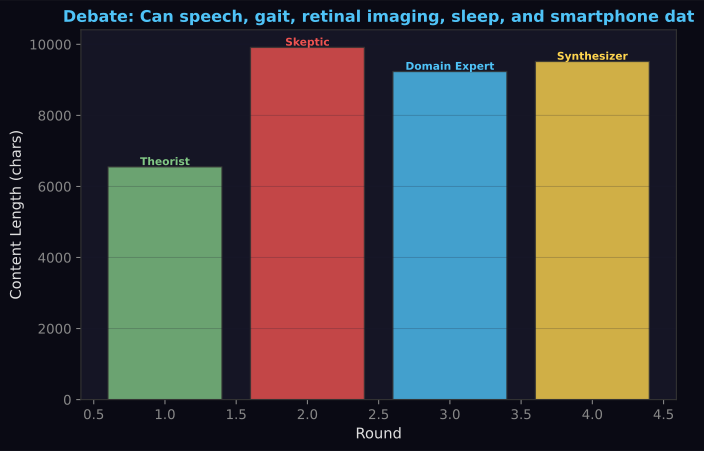
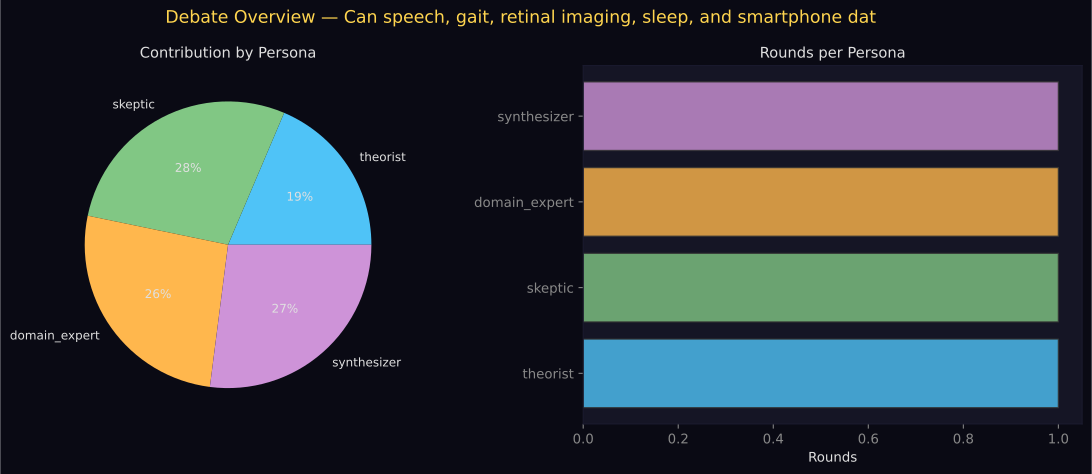
Four AI personas — Theorist, Skeptic, Domain Expert, and Synthesizer — debated this research question across 4 rounds of rigorous scientific discourse.
Novel Therapeutic Hypotheses for Pre-Clinical Neurodegeneration
Hypothesis 1: Circadian-Synchronized Proteostasis Enhancement
Title: Chronotherapy-Based Protein Clearance AmplificationDescription: Digital biomarkers revealing disrupted sleep-wake cycles and motor fluctuations indicate circadian dysregulation occurring years before clinical diagnosis. Precisely timed administration
...Critical Evaluation of Novel Therapeutic Hypotheses
Hypothesis 1: Circadian-Synchronized Proteostasis Enhancement
Specific Weaknesses
- Therapeutic window uncertainty: No evidence provided for optimal timing windows, which likely vary significantly between individuals and disease states
- Drug delivery challenges: Assumes proteostasis enhancers can achieve therapeutic CNS concen
Druggability and Feasibility Assessment
Hypothesis 1: Circadian-Synchronized Proteostasis Enhancement
Revised Confidence: 0.45Druggability Assessment
CLOCK/BMAL1 Targets:- Low druggability: Transcription factors are notoriously difficult to target directly
- Alternative approach: Target upstream kinases (CK1δ/ε, GSK-3β) or nuclear hormone receptors (REV-ERBα/β)
**ULK1...
Hypotheses (0)
Knowledge Graph (0 edges)
Interactive visualization of molecular relationships discovered in this analysis. Drag nodes to rearrange, scroll to zoom, click entities to explore.
No knowledge graph edges recorded