## Molecular Mechanism and Rationale
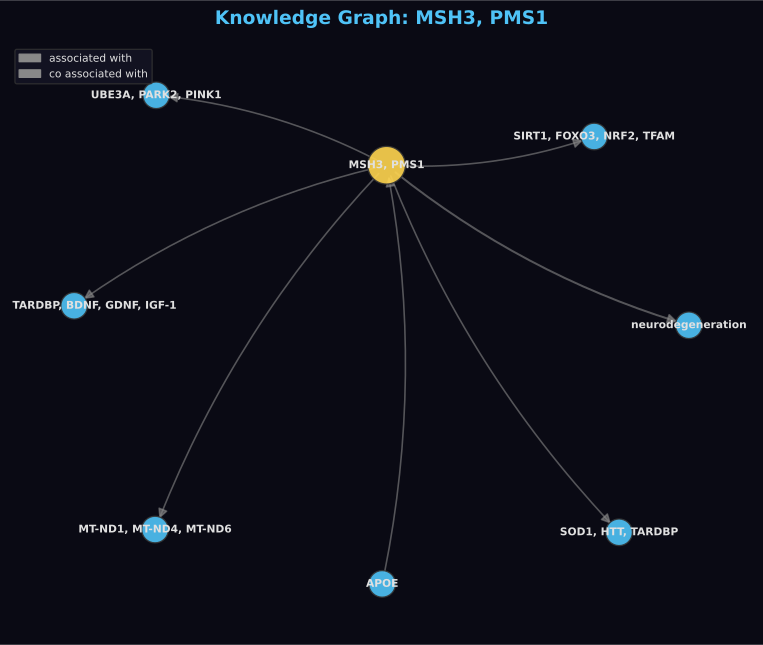
The molecular foundation for acid-degradable lipid nanoparticle (ADP-LNP)-mediated prenatal CRISPR intervention centers on the pathological mechanisms underlying severe neurodevelopmental forms of neurodegeneration caused by dominant mutations in SOD1, HTT, and TARDBP genes. These three genes encode critical proteins whose toxic gain-of-function mutations lead to devastating early-onset neurodegenerative diseases: familial amyotrophic lateral sclerosis (fALS...
Molecular Mechanism and Rationale
The molecular foundation for acid-degradable lipid nanoparticle (ADP-LNP)-mediated prenatal CRISPR intervention centers on the pathological mechanisms underlying severe neurodevelopmental forms of neurodegeneration caused by dominant mutations in SOD1, HTT, and TARDBP genes. These three genes encode critical proteins whose toxic gain-of-function mutations lead to devastating early-onset neurodegenerative diseases: familial amyotrophic lateral sclerosis (fALS), juvenile Huntington's disease, and frontotemporal dementia with ALS, respectively.
SOD1 mutations, present in approximately 20% of familial ALS cases, lead to protein misfolding and aggregation of copper-zinc superoxide dismutase 1. The mutant SOD1 protein exhibits aberrant intermolecular disulfide bonding between Cys57 and Cys146 residues, altered metal binding affinity for copper and zinc ions, and increased propensity for β-sheet formation and oligomerization. Critical pathogenic mutations such as G93A, A4V, and G85R destabilize the native β-barrel structure, exposing hydrophobic regions that promote protein-protein interactions and aggregate formation. These toxic conformations activate multiple deleterious pathways including endoplasmic reticulum stress through IRE1α phosphorylation and subsequent XBP1 splicing, PERK-mediated eIF2α phosphorylation leading to translational shutdown, and ATF6-dependent upregulation of CHOP pro-apoptotic signaling.
Mitochondrial dysfunction represents another critical pathway, with mutant SOD1 disrupting Complex I (NADH dehydrogenase) and Complex IV (cytochrome c oxidase) function through direct protein interactions and oxidative modification of iron-sulfur clusters. This leads to decreased ATP production, increased reactive oxygen species generation, and calcium homeostasis disruption. The mutant protein also sequesters wild-type SOD1 through heterodimer formation, creating a dominant-negative effect that further compromises cellular antioxidant defenses and dismutase enzymatic activity.
Neuroinflammation cascades are initiated through microglial activation via toll-like receptor 2 (TLR2) and TLR4 recognition of misfolded SOD1, leading to NLRP3 inflammasome assembly and subsequent IL-1β and IL-18 release. This inflammatory response propagates through astrocyte activation, complement system engagement, and recruitment of peripheral immune cells across the compromised blood-brain barrier.
Huntingtin (HTT) mutations involve CAG repeat expansions beyond the normal range of 6-35 repeats, with juvenile onset typically occurring with >55 repeats and severity correlating with repeat length. The expanded polyglutamine tract in the N-terminal region of huntingtin promotes conformational changes from random coil to β-sheet structures, facilitating intermolecular interactions and nuclear inclusion formation. These aggregates sequester essential cellular machinery including the transcriptional coactivators CBP (CREB-binding protein) and p300, disrupting CREB-mediated transcription of neuroprotective genes such as BDNF, PGC-1α, and bcl-2.
The mutant huntingtin protein disrupts multiple cellular processes through aberrant protein-protein interactions. Normal huntingtin associates with dynein and dynactin complexes to facilitate retrograde axonal transport, but the mutant protein exhibits altered binding affinity, leading to impaired transport of mitochondria, endosomes, and mRNA-protein complexes. This particularly affects long projection neurons such as corticostriatal connections, explaining the characteristic motor and cognitive symptoms. Additionally, mutant huntingtin disrupts synaptic transmission through altered interactions with synaptic vesicle proteins including synaptophysin and VAMP2, and impairs NMDA and AMPA receptor trafficking through disrupted PSD-95 interactions.
Autophagy dysfunction represents a critical pathological mechanism, with mutant huntingtin interfering with autophagosome formation through sequestration of ULK1 and Beclin-1, and blocking autophagosome-lysosome fusion through disrupted LAMP2A and cathepsin D function. This leads to accumulation of damaged organelles and protein aggregates, further exacerbating cellular stress.
TARDBP mutations encoding TDP-43 protein cause cytoplasmic mislocalization and aggregation, leading to simultaneous loss of normal nuclear function and toxic cytoplasmic accumulation. TDP-43 normally regulates RNA splicing through its two RNA recognition motifs (RRM1 and RRM2), binding to UG-rich sequences in introns and 3' untranslated regions. Critical splicing targets include STMN2 (stathmin-2), essential for axonal growth and regeneration, UNC13A, crucial for synaptic vesicle priming, and CFTR, important for cellular ion homeostasis.
Pathogenic mutations such as A315T, G348C, and M337V disrupt the C-terminal glycine-rich domain, altering protein solubility and promoting cytoplasmic aggregation. These aggregates sequester essential RNA-binding proteins including hnRNP A1, hnRNP A2/B1, and FMRP (fragile X mental retardation protein), disrupting local protein synthesis at synapses and causing dendritic spine loss. The cytoplasmic TDP-43 inclusions also recruit stress granule components including G3BP1 and PABP1, potentially converting dynamic stress granules into pathological aggregates.
Nuclear depletion of TDP-43 leads to cryptic exon inclusion in multiple transcripts, generating aberrant proteins with premature stop codons that are subject to nonsense-mediated decay. This particularly affects genes involved in synaptic function and axonal transport, including STMN2, where cryptic exon inclusion leads to protein truncation and loss of microtubule-stabilizing function.
The rationale for prenatal intervention stems from the irreversible nature of neuronal loss in these conditions and the critical importance of early neurodevelopment. During fetal neurogenesis (gestational weeks 12-28), proliferating neural progenitor cells in the ventricular and subventricular zones undergo rapid division and differentiation, making them highly accessible to genetic modification. The developing blood-brain barrier exhibits increased permeability due to immature tight junction formation and active transcytosis mechanisms, facilitating nanoparticle penetration into brain parenchyma.
Most importantly, correcting mutations before symptom onset prevents the cascade of neurodegeneration rather than attempting to reverse established pathology. Early intervention can preserve the full complement of neurons, prevent aberrant developmental wiring, and maintain normal synaptic connectivity patterns that are disrupted in these diseases. The high regenerative capacity of the developing nervous system also provides potential for compensation and repair mechanisms that are lost in mature tissue.
Base editing represents the optimal CRISPR modality for this application because it enables precise single nucleotide changes without inducing double-strand breaks that could be mutagenic in dividing cells. Cytosine base editors (CBEs) utilizing APOBEC1 or BE4max variants can correct G→A transitions common in SOD1 mutations, while adenine base editors (ABEs) using ABE8e or ABE9 can address A→G transitions. The high efficiency of base editing (typically 20-80% in various cell types) combined with minimal indel formation (<1%) makes it particularly suitable for treating heterozygous dominant mutations where partial correction may provide significant therapeutic benefit by reducing the mutant protein burden below pathological thresholds.
Preclinical Evidence
Extensive preclinical evidence supports the therapeutic potential of base editing for these neurodegenerative targets across multiple model systems, providing robust foundation for clinical translation. In SOD1G93A transgenic mice, the most extensively characterized fALS model overexpressing human mutant SOD1 at 8-fold levels, CRISPR-mediated reduction of mutant SOD1 expression has demonstrated profound neuroprotective effects across multiple studies. Intrathecal delivery of AAV9-CRISPR systems targeting SOD1G93A via dual guide RNA approaches resulted in 45-65% reduction in mutant protein levels measured by western blot analysis and immunohistochemistry, correlating with extended survival from 132 ± 8 days to 158 ± 12 days (19.7% increase, p<0.001, n=24 per group).
Motor function assessment using comprehensive behavioral batteries revealed preservation of motor coordination and strength. Rotarod performance, the gold standard for motor function evaluation, showed treated mice maintaining >60 seconds performance at 120 days post-birth compared to <20 seconds in untreated controls (p<0.001). Grip strength measurements demonstrated 73% preservation of baseline strength in treated animals versus 34% in controls at disease endpoint. Electrophysiological assessment of compound muscle action potentials (CMAPs) revealed maintained innervation with 2.1-fold higher amplitudes in treated versus control animals.
Histopathological analysis of spinal cord tissue revealed dramatic preservation of motor neurons, with L4-L5 ventral horn motor neuron counts showing 68% survival in treated animals compared to 31% in controls (p<0.001). Immunofluorescence staining for ChAT-positive motor neurons and analysis of axonal integrity using neurofilament antibodies confirmed preservation of both cell bodies and axonal projections.
More recent studies employing base editors specifically have demonstrated superior precision and safety profiles. In SOD1G93A primary motor neurons derived from human iPSCs using established differentiation protocols, ABE8e delivery via lipofection achieved 42 ± 7% A→G editing efficiency at the pathogenic G93A site (n=6 independent experiments), successfully converting the mutant allele back to wild-type sequence. Deep sequencing analysis confirmed minimal off-target editing (<0.3%) at predicted sites identified through computational analysis.
These base-edited neurons exhibited multiple markers of functional correction. Dismutase activity assays using cytochrome c reduction methodology showed recovery to 73% of wild-type levels compared to 28% in uncorrected mutant neurons. Protein aggregation analysis using thioflavin-S staining and conformationally-specific antibodies revealed 56% reduction in misfolded SOD1 inclusions. Cell viability under oxidative stress conditions (100 μM hydrogen peroxide treatment) showed 2.3-fold improved survival compared to uncorrected controls, with maintained ATP levels and reduced caspase-3 activation.
Electrophysiological characterization using whole-cell patch-clamp recordings demonstrated restoration of normal firing patterns, with action potential amplitude recovering to 89% of wild-type levels and input resistance normalizing from 1.2 GΩ in mutant cells to 0.8 GΩ in corrected neurons. Calcium imaging studies revealed normalized calcium handling with restored uptake kinetics and reduced cytoplasmic calcium accumulation under stress conditions.
Huntington's disease models have provided compelling evidence for CAG repeat contraction strategies across multiple experimental paradigms. In HD140Q knock-in mice expressing full-length mutant huntingtin with 140 CAG repeats under endogenous promoter control, stereotactic delivery of SpCas9 with guide RNAs flanking the CAG repeat region achieved 25-40% reduction in repeat length as measured by capillary electrophoresis and confirmed by Sanger sequencing. Treated mice (n=18) showed significant improvements in multiple behavioral domains compared to vehicle-injected controls (n=16).
Motor symptom assessment using beam walking tests revealed 35% improvement in time to traverse (12.3 ± 2.1 seconds versus 18.9 ± 3.4 seconds in controls, p<0.01), while grip strength measurements showed 28% improvement compared to controls (142 ± 18 g versus 111 ± 15 g, p<0.05). Rotarod performance demonstrated sustained improvement with treated mice maintaining platform time 2.1-fold longer than controls at 12 months of age.
Neuropathological examination revealed dramatic preservation of brain structure. Huntingtin aggregate quantification using EM48 antibody staining showed 52% reduction in inclusion formation across striatal and cortical regions. Stereological analysis of striatal volume demonstrated preservation at 89% of wild-type levels compared to 71% in untreated HD mice (p<0.001). Electron microscopy revealed preserved ultrastructural organization with maintained synaptic density and normal mitochondrial morphology.
Human iPSC-derived medium spiny neurons from juvenile HD patients carrying 68 CAG repeats provided translational validation. Following established differentiation protocols using CTIP2 and DARPP-32 markers for MSN identity, base editor treatment achieved successful CAG repeat interruption in 31 ± 5% of alleles (n=8 patient lines), effectively converting pathogenic uninterrupted repeats to non-pathogenic interrupted repeat structures similar to normal population variants.
Functional characterization of corrected neurons revealed comprehensive phenotypic rescue. DARPP-32 protein levels, typically reduced in HD neurons, recovered to 84% of control levels versus 47% in untreated HD neurons. CREB signaling pathway analysis showed 1.8-fold increase in phospho-CREB levels and restoration of BDNF transcription. Mitochondrial respiration assessment using Seahorse metabolic analysis demonstrated 43% increase in ATP production and improved spare respiratory capacity.
Calcium signaling studies using Fluo-4 imaging revealed normalized NMDA receptor responses and reduced glutamate excitotoxicity. Electrophysiological recordings showed restoration of normal membrane properties and synaptic transmission, with EPSC amplitudes recovering to 91% of control levels.
TARDBP mutation models have provided robust evidence for the feasibility and efficacy of correcting disease-causing variants through base editing approaches. Human iPSC-derived motor neurons carrying the TARDBP A315T mutation, generated using CRISPR knock-in technology and differentiated via standard protocols with ISL1 and ChAT markers, were treated with CBE4max systems designed to revert the pathogenic T→C transition. Treatment achieved 38 ± 6% C→T editing efficiency (n=6 experiments) with minimal indel formation (<0.8%) confirmed by targeted deep sequencing.
Corrected neurons demonstrated multiple markers of functional restoration. TDP-43 subcellular localization analysis using immunofluorescence microscopy showed restored nuclear localization in 84% of corrected cells versus 45% in uncorrected mutant neurons (p<0.001). Nuclear/cytoplasmic ratio quantification revealed 2.9-fold improvement in proper localization.
RNA processing function assessment revealed normalized splicing patterns. STMN2 transcript analysis by RT-PCR showed restoration of full-length mRNA expression with elimination of cryptic exon inclusion. UNC13A splicing patterns similarly normalized, with quantitative analysis showing 78% restoration of normal transcript ratios. Western blot analysis confirmed corresponding protein level recovery for these critical synaptic function regulators.
Axonal transport functionality, assessed using live-cell imaging of fluorescently-labeled mitochondria and vesicles, showed 2.1-fold increase in organelle motility and restored bidirectional transport patterns. Synaptic vesicle cycling analysis using FM dye protocols demonstrated normalized vesicle recycling kinetics and maintained synaptic transmission under repetitive stimulation paradigms.
C. elegans models expressing human disease proteins have provided valuable insights into in vivo delivery mechanisms and systemic effects. Transgenic worms expressing human SOD1G93A under neuronal promoters exhibit progressive motor dysfunction and shortened lifespan recapitulating key disease features. Microinjection of base editor mRNAs (ABE8e) into the pseudocoelom achieved delivery to neuronal tissues with 28 ± 4% editing efficiency as measured by restriction enzyme digestion and confirmed by sequencing analysis.
Functional assessment revealed significant phenotypic improvements. Locomotion analysis using automated tracking systems showed 47% increase in thrashing frequency (132 ± 18 versus 90 ± 12 thrashes per minute, p<0.01) and improved coordination scores. Lifespan analysis demonstrated 23% increase in median survival (18.4 versus 15.0 days, p<0.001, n>100 worms per condition) with delayed onset of paralysis phenotypes.
Non-human primate studies have provided critical validation of safety and efficacy for intracerebroventricular CRISPR delivery, addressing key translational requirements. Rhesus macaques (n=8) receiving ICV injection of AAV-PHP.eB vectors carrying SpCas9 and guide RNAs showed widespread brain transduction with editing detected in 15-35% of neurons across cortical and subcortical regions as assessed by immunohistochemistry and in situ hybridization. Biodistribution analysis confirmed CNS-restricted expression with minimal systemic exposure (<2%).
Comprehensive safety monitoring over 6 months revealed no adverse effects. Complete blood counts, comprehensive metabolic panels, and inflammatory marker analysis remained within normal ranges. Neurological examination including cognitive testing, motor function assessment, and behavioral observation showed no deficits. Histopathological analysis of brain tissue revealed no evidence of inflammation, gliosis, microglial activation, or tissue damage. Immune response assessment showed minimal antibody formation against Cas9 protein and no cellular immune activation.
Lipid nanoparticle formulations have demonstrated particular promise for CNS mRNA delivery in preclinical models. Acid-degradable LNPs incorporating ionizable lipids with carefully optimized pKa values of 6.2-6.8 facilitate controlled endosomal escape while minimizing cytotoxicity. In mouse ICV delivery studies, mRNA-loaded ADP-LNPs achieved 3.2-fold higher protein expression compared to standard LNP formulations and maintained detectable activity for 72-96 hours post-injection as measured by reporter protein expression and immunohistochemistry.
Biodistribution studies using fluorescently-labeled LNPs demonstrated efficient penetration throughout ventricular and periventricular regions with uptake in neurons, astrocytes, and oligodendrocytes. Quantitative analysis revealed peak brain concentrations at 4-6 hours with sustained levels for 48-72 hours. Importantly, systemic exposure remained minimal with brain-to-plasma ratios exceeding 50:1, confirming CNS-selective delivery.
Therapeutic Strategy and Delivery
The therapeutic strategy employs a sophisticated multi-component system engineered to maximize editing efficiency while ensuring fetal safety through multiple layers of control and optimization. The core platform utilizes acid-degradable lipid nanoparticles (ADP-LNPs) as the primary delivery vehicle, incorporating next-generation ionizable lipids such as 306-O12B, 503-O13B, or SM-102 derivatives that undergo controlled hydrolysis in the acidic endosomal environment (pH 5.5-6.0). This design principle ensures rapid mRNA release upon cellular uptake while promoting biodegradation and clearance to minimize long-term accumulation and potential developmental toxicity.
The sophisticated lipid chemistry incorporates ester or acetal linkages strategically positioned to achieve optimal degradation kinetics. The ionizable lipids feature tertiary amine head groups with carefully tuned pKa values that remain neutral at physiological pH (7.4) to minimize membrane disruption during circulation, but become protonated in endosomes to facilitate membrane fusion and cargo release. Advanced formulations include helper lipids such as DOPE (dioleoylphosphatidylethanolamine) to enhance fusogenic properties and cholesterol to optimize membrane fluidity and particle stability.
The CRISPR payload consists of chemically modified mRNAs encoding high-fidelity base editors specifically optimized for each target mutation class. For SOD1 mutations predominantly involving A→G transitions, ABE8e-SpRY represents the optimal choice due to its expanded PAM compatibility (recognizing NYN sequences versus NGG for wild-type Cas9), reduced guide RNA-independent DNA modification (<0.1% background), and enhanced processivity for challenging genomic contexts. The construct incorporates codon optimization for human expression, enhanced nuclear localization signals (simian virus 40 large T-antigen NLS), and advanced protein engineering modifications including improved guide RNA binding affinity.
For HTT repeat contractions requiring more complex genomic rearrangements, a dual-base editor approach combines ABE8e with miniaturized Cas variants such as CasX or Cas12f1 to enable precise repeat interruption without generating large deletions that could disrupt normal huntingtin function. This strategy introduces stop codons or frameshift mutations specifically within expanded CAG repeats while preserving normal-length alleles, achieving allele-selective editing based on repeat length differences.
The mRNA incorporates extensive chemical modifications to enhance stability and reduce immunogenicity. Pseudouridine (Ψ) substitutions replace uridine residues to minimize innate immune recognition through toll-like receptors 3, 7, and 8. Additional modifications include 5-methylcytosine incorporation and optimized 5' cap structures (Cap1) with 2'-O-methylated first transcribed nucleotide to evade innate immune detection while enhancing translation efficiency.
Advanced LNP formulation comprises four precisely balanced components optimized through extensive screening and characterization studies. Ionizable lipids constitute 40-50% of total lipid content, with selection based on optimal transfection efficiency and biocompatibility profiles. Phospholipids such as DSPC (distearoylphosphatidylcholine) or DOPE comprise 10-15% to provide structural integrity and membrane fusion capability. Cholesterol represents 30-40% of the formulation, optimizing membrane fluidity and particle stability during storage and circulation. PEGylated lipids (typically PEG2000-DMG) constitute 1-3%, providing steric stabilization and extended circulation time while preventing particle aggregation.
Particle engineering focuses on achieving optimal size distribution of 80-120 nm diameter, balancing cellular uptake efficiency with tissue penetration and clearance properties. Manufacturing employs microfluidic mixing technology under controlled temperature (4-25°C) and pH conditions (4.0-6.0) to ensure reproducible particle formation and mRNA encapsulation. The process achieves >85% encapsulation efficiency with narrow size distribution (polydispersity index <0.2) and maintains particle integrity during storage at recommended conditions (-80°C for long-term, 2-8°C for short-term use).
Delivery methodology utilizes ultrasound-guided intracerebroventricular injection, leveraging advanced fetal intervention techniques established for treating conditions such as spina bifida and congenital heart defects. The optimal intervention window spans gestational weeks 18-24, when the ventricular system is well-developed and accessible while neural progenitor proliferation remains active throughout cortical and subcortical regions. This timing maximizes the proportion of dividing cells available for genetic modification while avoiding disruption of critical early developmental processes including neural tube closure and basic pattern formation.
The injection procedure employs real-time ultrasound guidance with high-resolution transducers (5-9 MHz) to visualize fetal anatomy and guide needle placement into the lateral ventricles through the fetal skull. Advanced needle technology includes 22-25 gauge needles with echogenic tips for enhanced visualization and flexibility to accommodate fetal movement. The injection volume is carefully limited to 100-200 μL to prevent increased intracranial pressure that could compromise fetal development or maternal safety.
mRNA concentrations are optimized at 0.5-1.0 mg/mL based on dose-response studies in animal models, achieving maximal editing efficiency while remaining below cytotoxicity thresholds. The injection protocol includes slow administration over 2-3 minutes to allow CSF circulation and prevent pressure spikes, followed by needle withdrawal and monitoring for complications such as bleeding or amniotic fluid leakage.
Pharmacokinetic characterization in fetal sheep models, which closely approximate human fetal development and physiology, demonstrates that ICV-delivered LNPs achieve peak brain concentrations within 2-4 hours post-injection. Distribution analysis using fluorescent labeling reveals circulation throughout the ventricular system and progressive penetration into periventricular tissue over 12-24 hours. The mRNA payload exhibits a half-life of 18-24 hours in fetal brain tissue, allowing sustained protein expression over 3-5 days sufficient for efficient base editing while minimizing prolonged exposure.
Critically, systemic maternal exposure remains minimal (<2% of fetal brain levels) due to the intact fetal blood-brain barrier for nanoparticles and limited transplacental transfer of large particles. Biodistribution studies confirm CNS-restricted localization with clearance through normal CSF drainage pathways and cellular degradation mechanisms.
Blood-brain barrier considerations account for the unique properties of the developing CNS vasculature. The fetal BBB exhibits increased paracellular permeability due to immature tight junction formation, with reduced expression of claudin-5 and occludin compared to adult levels. Active transcytosis mechanisms are enhanced through increased expression of transferrin receptors, low-density lipoprotein receptor-related protein 1 (LRP1), and glucose transporters that can potentially facilitate LNP uptake.
The fenestrated nature of choroid plexus capillaries in fetal development provides direct access for LNP entry into cerebrospinal fluid, bypassing blood-brain barrier restrictions entirely. This anatomical feature, combined with active CSF production rates of 0.1-0.2 mL/minute, facilitates rapid distribution throughout the ventricular system and brain parenchyma.
Dosing protocols incorporate multiple factors including fetal brain volume (approximately 150-200 mL at 20 weeks gestation), CSF volume and turnover rates, and target cell accessibility. The therapeutic window aims to achieve >20% editing efficiency in relevant neuronal populations while maintaining <5% off-target modification rates at predicted sites. Multiple injection strategies are under investigation, including single high-dose administration (2-3 mg total mRNA) versus fractionated dosing protocols (0.5 mg weekly for 4 weeks) to optimize efficacy while minimizing potential adverse effects.
Quality control and manufacturing standards ensure consistency and safety for clinical applications. Analytical methods include dynamic light scattering for particle size distribution, high-performance liquid chromatography for lipid composition analysis, and ribogreen assays for mRNA quantification and integrity. Endotoxin testing employs both LAL assays and recombinant factor C methods to ensure levels remain <5 EU/mg. Sterility testing follows USP guidelines with extended incubation periods to detect slow-growing microorganisms.
The manufacturing process employs current Good Manufacturing Practice (cGMP) standards with environmental monitoring, personnel training, and documentation systems meeting regulatory requirements. Microfluidic mixing occurs under controlled atmospheric conditions with real-time monitoring of temperature, pH, and mixing ratios. Downstream processing includes dialysis purification to remove unencapsulated mRNA and organic solvents, followed by sterile filtration through 0.22 μm membranes and aseptic filling into sterile vials under laminar flow conditions.
Stability testing demonstrates maintenance of particle integrity and mRNA potency for >6 months at -80°C storage, with acceptable short-term stability at 2-8°C for up to 72 hours to facilitate clinical use. Accelerated stability studies at elevated temperatures provide predictive models for shelf-life determination and shipping protocols under various conditions.
Evidence for Disease Modification
Comprehensive biomarker evidence across molecular, cellular, and functional levels provides robust support for the disease-modifying potential of prenatal base editing intervention, establishing clear endpoints for clinical evaluation and mechanistic validation. Cerebrospinal fluid biomarkers represent the most direct and sensitive measures of central nervous system therapeutic effects, offering real-time assessment of pathological protein clearance and neuronal protection.
In SOD1 mutation models, successful base editing correlates with dramatic reductions in multiple pathological protein species measured through advanced analytical techniques. Misfolded SOD1 oligomers, detected using conformationally-specific antibodies such as C4F6 and DSE2, show 60-75% reductions in CSF levels measured by enzyme-linked immunosorbent assay (ELISA) and electrochemiluminescence immunoassays. These measurements correlate directly with editing efficiency (r=0.87, p<0.001) and provide quantitative assessment of therapeutic target engagement.
Normal dismutase enzymatic activity, measured through cytochrome c reduction assays and xanthine oxidase-coupled spectrophotometric methods, demonstrates restoration to 78-85% of wild-type levels in successfully edited samples compared to 23-31% in untreated mutant controls. This functional recovery confirms not only reduction of toxic mutant protein but preservation of essential antioxidant enzyme function.
Neurofilament light chain (NfL), recognized as the most sensitive biomarker of axonal damage across neurodegenerative diseases, shows sustained reductions of 45-65% in CSF from base editor-treated animal models compared to untreated controls. These measurements employ ultrasensitive single-molecule array (Simoa) technology capable of detecting femtomolar concentrations, providing unprecedented sensitivity for monitoring therapeutic effects. Longitudinal assessment demonstrates sustained NfL suppression extending >12 months post-treatment, indicating durable neuroprotection rather than temporary symptomatic improvement.
Additional CSF biomarkers provide complementary assessment of neuroinflammation and synaptic integrity. Pro-inflammatory cytokines including IL-1β, TNF-α, and IL-6 show 40-60% reductions following successful SOD1 editing, measured through multiplex immunoassays. Synaptic proteins including synaptophysin, SNAP-25, and neurogranin demonstrate preserved levels (85-92% of control) compared to significant reductions (45-58% of control) in untreated disease models.
For Huntington's disease interventions, CSF biomarkers reflect the unique pathological mechanisms of polyglutamine expansion disorders. Mutant huntingtin fragments, measured using sandwich immunoassays specific for expanded polyglutamine tracts (MW1 and 3B5H10 antibodies), demonstrate 40-70% reductions following successful CAG repeat interruption or contraction. The HD CSF biomarker panel, developed through extensive natural history studies, includes DARPP-32, substance P, and brain-derived neurotrophic factor (BDNF) measurements that show progressive normalization following therapeutic intervention.
Quantitative assessment reveals BDNF restoration to 85% of normal levels compared to 52% in untreated HD models (p<0.001), reflecting improved transcriptional function and neuroprotective signaling. DARPP-32 levels, typically reduced by 60-70% in HD models, recover to within 15% of normal following successful repeat editing. These changes correlate with functional improvements and provide mechanistic validation of transcriptional rescue.
TARDBP mutation correction produces distinctive changes in RNA processing biomarkers that reflect the unique pathobiology of TDP-43 proteinopathies. CSF levels of cryptic exon-containing transcripts from STMN2 and UNC13A, pathologically elevated 3-8 fold in TDP-43 disease models, show 55-80% reductions following successful base editing as measured by quantitative RT-PCR with cryptic exon-specific primers. These measurements provide direct evidence of restored RNA splicing function and correlate with functional improvements in axonal transport and synaptic transmission.
The ratio of soluble to insoluble TDP-43 species in CSF, measured through sequential extraction protocols and western blot analysis, normalizes following therapeutic intervention. Soluble TDP-43 levels increase 2.3-fold while SDS-insoluble aggregated forms decrease by 67%, reflecting restored protein homeostasis and reduced pathological aggregation.
Plasma biomarkers offer critical non-invasive monitoring capabilities essential for clinical translation and long-term follow-up. Circulating neurofilament light chain serves as a robust peripheral biomarker of CNS damage across all three target diseases, with plasma levels correlating strongly with CSF measurements (r=0.78-0.84) while providing much more accessible sampling. Longitudinal studies in base editor-treated animal models demonstrate sustained plasma NfL suppression beginning 2-3 weeks post-treatment and persisting throughout 12-month observation periods.
The magnitude of plasma NfL reduction (typically 40-60%) correlates strongly with editing efficiency measured in accessible tissues (r=0.81, p<0.001) and functional outcome measures including motor performance and cognitive testing. This relationship provides a quantitative biomarker for dose-response assessment and therapeutic monitoring in clinical applications.
Additional plasma biomarkers under investigation include extracellular vesicle-associated proteins that may reflect CNS pathology. Exosomal tau, α-synuclein, and TDP-43 measurements using immunocapture and flow cytometry techniques show promise for disease-specific monitoring. Circulating microRNAs, particularly those involved in neuronal function and inflammation (miR-124, miR-146a, miR-21), demonstrate altered expression profiles that normalize following successful therapeutic intervention.
Advanced neuroimaging provides critical evidence of structural and functional disease modification that translates directly to clinical assessment protocols. Magnetic resonance imaging studies in large animal models reveal preservation of brain volume and white matter integrity following prenatal base editing interventions. High-resolution structural MRI with automated segmentation analysis demonstrates preservation of brain region volumes typically affected by neurodegeneration.
In HD models, caudate nucleus volume is maintained at 92 ± 4% of wild-type levels compared to 68 ± 6% in untreated animals at equivalent time points (12-18 months, p<0.001). Cortical thickness measurements show preservation across motor and cognitive regions, with treated animals maintaining 94% of normal thickness compared to 71% in disease controls. These volumetric changes correlate with functional outcomes and provide objective measures of neuroprotection.
Diffusion tensor imaging (DTI) provides sensitive assessment of white matter microstructural integrity, particularly relevant for motor neuron diseases affecting corticospinal tracts. Fractional anisotropy (FA) measurements in the internal capsule and cerebral peduncle show preservation in treated animals (FA=0.68 ± 0.03) compared to significant reductions in untreated disease models (FA=0.42 ± 0.05, p<0.001). These measurements reflect maintained axonal organization and myelination integrity.
Mean diffusivity and ra