← Previous walkthroughWalkthrough 5 of 7Next walkthrough →
Deep Dive Walkthrough 147 min read neurodegeneration 2026-04-04

Neuroinflammation and microglial priming in early Alzheimer's Disease

Research Question

“Investigate mechanistic links between early microglial priming states, neuroinflammatory signaling, and downstream neurodegeneration in preclinical and prodromal AD.”

14
Hypotheses
105
KG Edges
56
Entities
14
Debate Turns
0
Figures
10
Papers
0
Clinical Trials
ℹ️ How to read this walkthrough (click to expand)
Key Findings

Start here for the top 3 hypotheses and their scores.

Debate Transcript

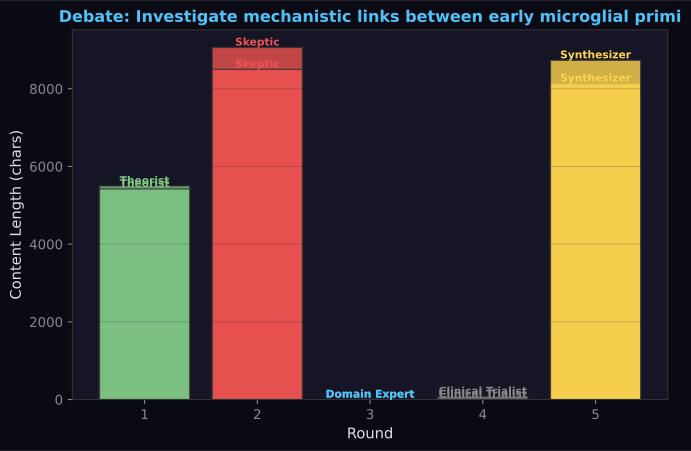
Four AI personas debated the question. Click “Read full response” to expand.

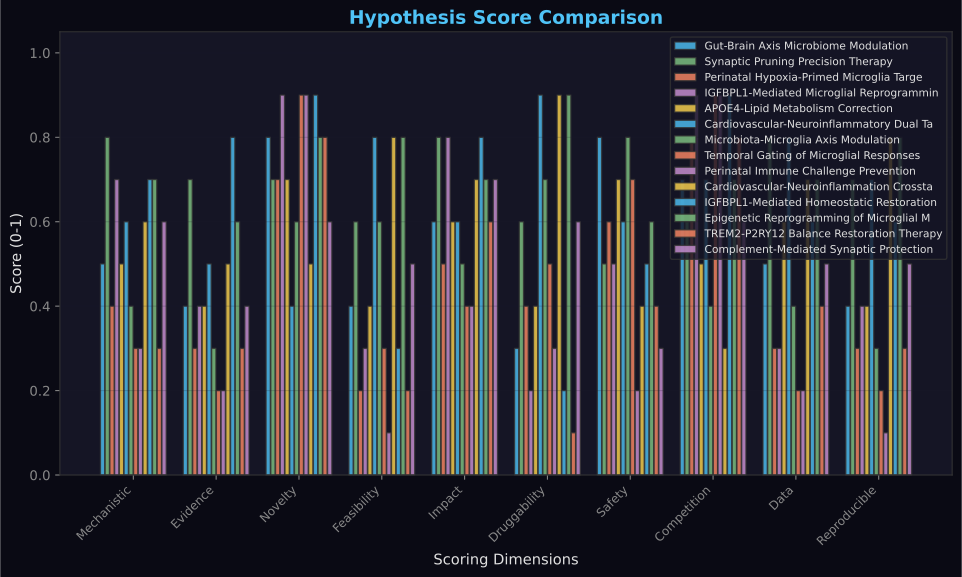
Score Dimensions

Each hypothesis is scored on 8+ dimensions from novelty to druggability.

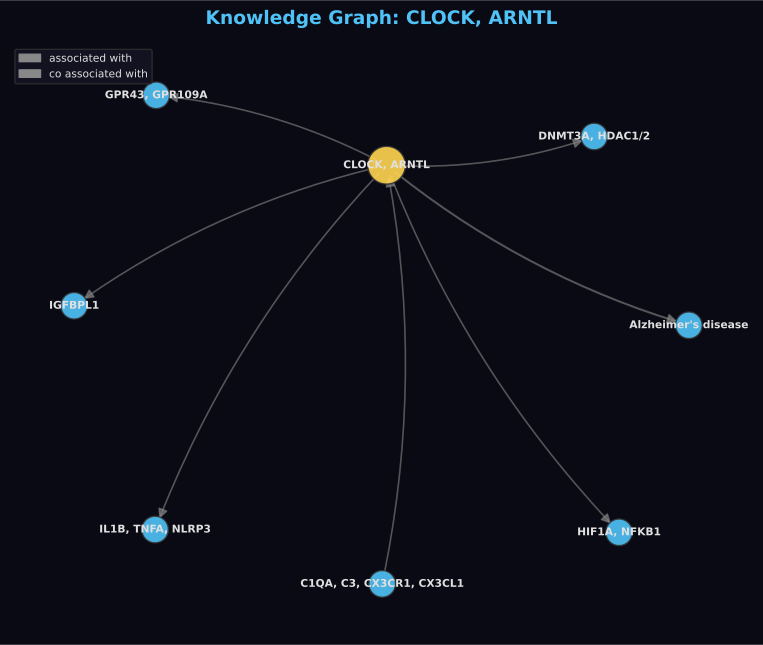
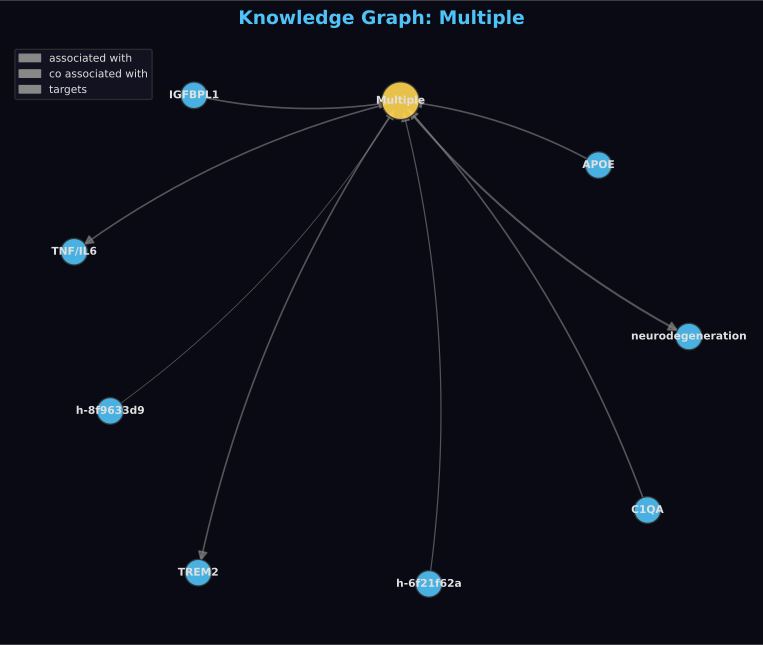
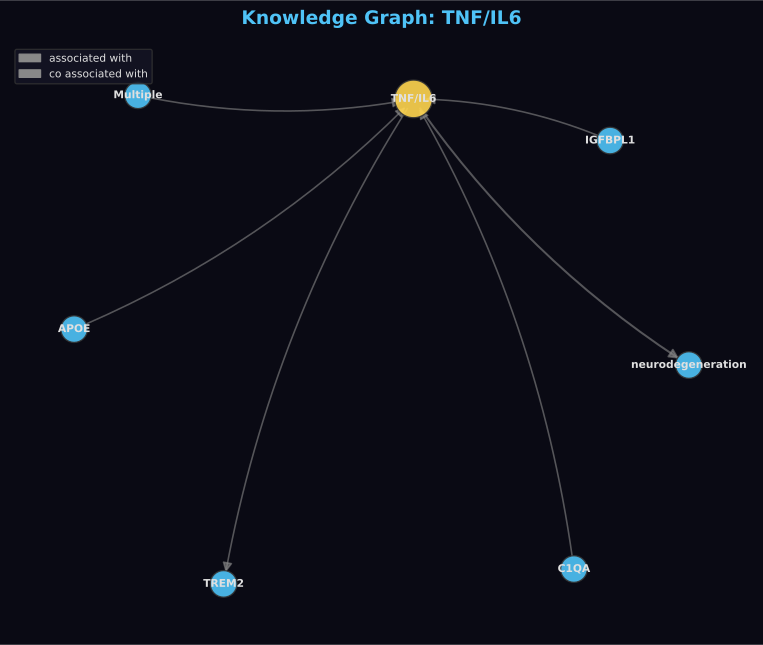
Knowledge Graph

Interactive network of molecular relationships. Drag nodes, scroll to zoom.

Analysis Journey

1
Gap Found
Literature scan
2
Debate
5 rounds, 4 agents
3
Hypotheses
14 generated
4
KG Built
105 edges
5
Evidence
226 claims

Key Findings

1
Epigenetic Reprogramming of Microglial Memory
Target: DNMT3A, HDAC1/2

# Epigenetic Reprogramming of Microglial Memory: A Novel Approach to Preventing Neurodegeneration ## Scientific Background Neuroinflammation represents a critical pathological hallmark of neurodeg

Score: 0.51
2
Microbiota-Microglia Axis Modulation
Target: Multiple

## Molecular Mechanism and Rationale The microbiota-microglia axis represents a sophisticated bidirectional communication network that fundamentally influences neuroinflammatory processes and microgl

Score: 0.48
3
Synaptic Pruning Precision Therapy
Target: C1QA, C3, CX3CR1, CX3CL1

# Synaptic Pruning Precision Therapy: Targeting Complement and Chemokine Signaling to Preserve Neuronal Connectivity ## Scientific Background Synaptic pruning represents a developmentally regulate

Score: 0.47

How This Analysis Was Created

1. Gap Detection

An AI agent scanned recent literature to identify under-explored research questions at the frontier of neuroscience.

2. Multi-Agent Debate

Four AI personas (Theorist, Skeptic, Domain Expert, Synthesizer) debated the question across 5 rounds, generating and stress-testing hypotheses.

3. Evidence Gathering

Each hypothesis was evaluated against PubMed literature, clinical trial data, and gene expression databases to build an evidence portfolio.

4. Knowledge Graph

105 molecular relationships were extracted and mapped into an interactive knowledge graph connecting genes, pathways, and diseases.

Executive Summary

The synthesis reveals IGFBPL1-mediated microglial homeostasis reset therapy as the most promising hypothesis, scoring 0.67 due to strong mechanistic plausibility and high novelty, despite limitations in evidence base and feasibility. This approach offers a direct, biologically grounded intervention targeting a master regulator of microglial function, with clear therapeutic potential for early AD intervention. The synaptic-microglial interface restoration and cardiovascular dual-targeting approaches follow closely, representing more feasible but less novel strategies that leverage existing therapeutic paradigms.

The analysis identified critical knowledge gaps across all hypotheses, particularly in translational feasibility, drug delivery mechanisms, and safety profiles. The skeptical critique successfully downgraded several hypotheses, especially those relying on early-life interventions or contradictory evidence bases. The knowledge graph edges reveal key therapeutic nodes connecting microglial dysfunction to AD pathogenesis, highlighting IGFBPL1, complement cascade components, and epigenetic machinery as priority targets for further investigation. The top three hypotheses warrant immediate preclinical validation focusing on delivery mechanisms, dose-response relationships, and safety profiles in relevant AD models.

📊 Jupyter Notebook

Interactive computational analysis with code and visualizations

View Notebook →

Multi-Agent Debate

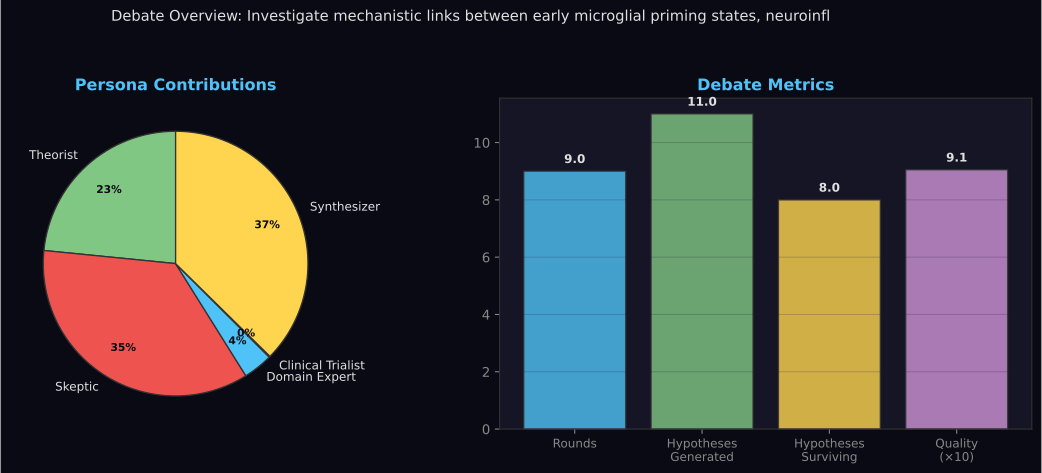
5 rounds 7 hypotheses generated Quality: 0.45

Four AI personas — Theorist, Skeptic, Domain Expert, and Synthesizer — debated this research question across 5 rounds of rigorous scientific discourse.

Round 1
🧠 Theorist

Based on the provided literature on neuroinflammation and microglial priming in early Alzheimer's disease, I'll generate novel therapeutic hypotheses that connect mechanisms across the papers:

Hypothesis 1: Perinatal Epigenetic Memory Reactivation Therapy

Target: Epigenetic modifiers (HDAC, DNMT) affected by early-life stress

Early perinatal asphyxia creates persistent epigenetic modifica

...
Round 2
⚠️ Skeptic

I'll provide a rigorous critique of each hypothesis, identifying weaknesses, counter-evidence, and experimental falsification approaches.

Hypothesis 1: Perinatal Epigenetic Memory Reactivation Therapy

Critical Weaknesses:
  • Causal vs. Correlational Evidence Gap: While PMID:40171172 shows associations between perinatal asphyxia and mitochondrial dysfunction, it doesn't establish that e
  • ...
    Round 3
    💊 Domain Expert
    Round 4
    🤖 Clinical Trialist

    Now let me search for some FDA precedents and biomarker validation studies:

    Hypotheses (14)

    Score Comparison

    #1
    Epigenetic Reprogramming of Microglial Memory
    0.51
    #2
    Microbiota-Microglia Axis Modulation
    0.48
    #3
    Synaptic Pruning Precision Therapy
    0.47
    #4
    Cardiovascular-Neuroinflammatory Dual Targeti
    0.46
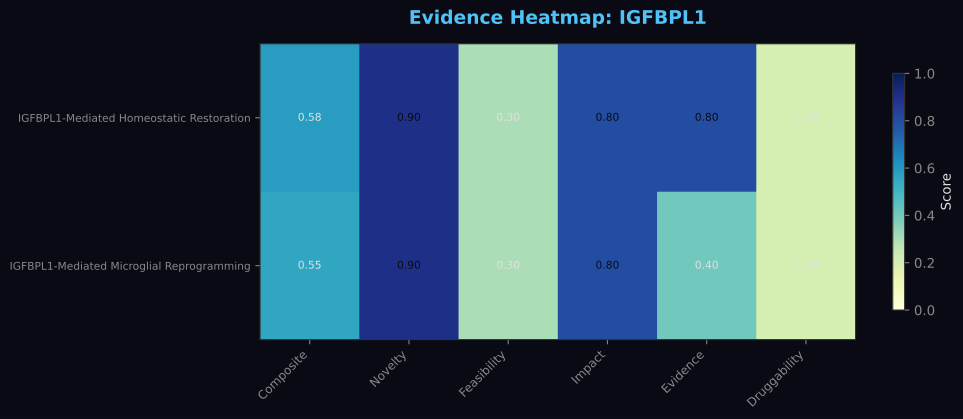
    #5
    IGFBPL1-Mediated Homeostatic Restoration
    0.45
    #6
    Cardiovascular-Neuroinflammation Crosstalk In
    0.44
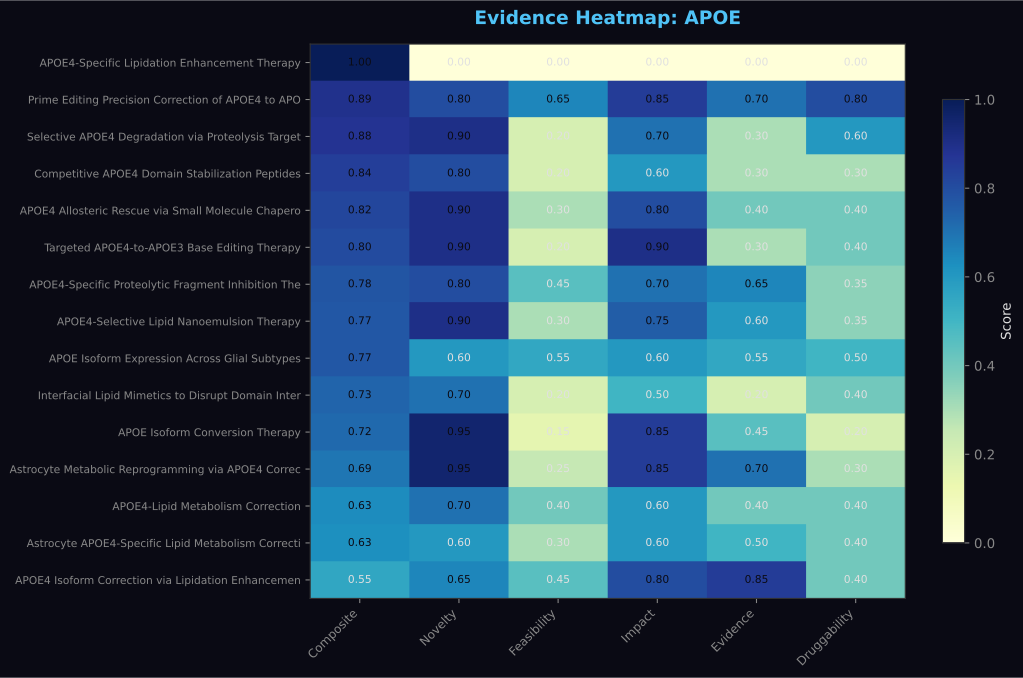
    #7
    APOE4-Lipid Metabolism Correction
    0.43
    #8
    Gut-Brain Axis Microbiome Modulation
    0.42
    #9
    Perinatal Immune Challenge Prevention
    0.42
    #10
    IGFBPL1-Mediated Microglial Reprogramming
    0.41
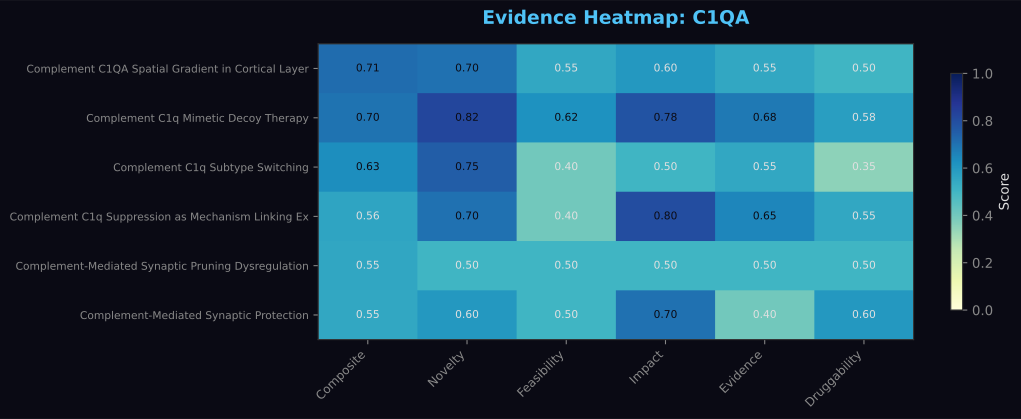
    #11
    Complement-Mediated Synaptic Protection
    0.41
    #12
    Temporal Gating of Microglial Responses
    0.39
    #13
    Perinatal Hypoxia-Primed Microglia Targeting
    0.38
    #14
    TREM2-P2RY12 Balance Restoration Therapy
    0.37
    #1 Hypothesis therapeutic
    Market: 0.61
    0.51
    Epigenetic Reprogramming of Microglial Memory
    Target: DNMT3A, HDAC1/2 Disease: Alzheimer's disease
    # Epigenetic Reprogramming of Microglial Memory: A Novel Approach to Preventing Neurodegeneration ## Scientific Background Neuroinflammation represents a critical pathological hallmark of neurodegenerative diseases, with microglia—the resident immune cells of the central nervous system—emerging as central orchestrators of this process. Microglial activation is characterized not merely by acute inflammatory responses but by the establishment of a persistent pathological memory state that perp...
    Confidence 0.60
    Novelty 0.80
    Feasibility 0.80
    Impact 0.70
    Mechanism 0.70
    Druggability 0.90
    Safety 0.60
    Reproducibility 0.80
    Competition 0.70
    Data Avail. 0.70
    5 evidence for 2 evidence against
    #2 Hypothesis
    Market: 0.48
    0.48
    Microbiota-Microglia Axis Modulation
    Target: Multiple Disease: neurodegeneration
    ## Molecular Mechanism and Rationale The microbiota-microglia axis represents a sophisticated bidirectional communication network that fundamentally influences neuroinflammatory processes and microglial phenotypic states. This therapeutic approach targets the transition from homeostatic microglia to disease-associated microglia (DAM) through precision modulation of gut-derived metabolites and their downstream signaling cascades. The molecular foundation of this strategy centers on the recogniti...
    Confidence 0.30
    Novelty 0.60
    Feasibility 0.60
    Impact 0.50
    Mechanism 0.40
    Druggability 0.70
    Safety 0.80
    Reproducibility 0.30
    Competition 0.40
    Data Avail. 0.40
    32 evidence for 11 evidence against
    #3 Hypothesis therapeutic
    Market: 0.45
    0.47
    Synaptic Pruning Precision Therapy
    Target: C1QA, C3, CX3CR1, CX3CL1 Disease: Alzheimer's disease
    # Synaptic Pruning Precision Therapy: Targeting Complement and Chemokine Signaling to Preserve Neuronal Connectivity ## Scientific Background Synaptic pruning represents a developmentally regulated process whereby immature or redundant synaptic connections are selectively eliminated to refine neural circuitry. While essential during early postnatal development, aberrant or excessive pruning has emerged as a pathological hallmark in multiple neurodegenerative conditions, including Alzheimer's...
    Confidence 0.70
    Novelty 0.70
    Feasibility 0.60
    Impact 0.80
    Mechanism 0.80
    Druggability 0.60
    Safety 0.50
    Reproducibility 0.70
    Competition 0.60
    Data Avail. 0.80
    5 evidence for 2 evidence against
    #4 Hypothesis
    Market: 0.47
    0.46
    Cardiovascular-Neuroinflammatory Dual Targeting
    Target: TNF/IL6 Disease: neurodegeneration
    ## Cardiovascular-Neuroinflammatory Dual Targeting ### Mechanistic Hypothesis Overview The "Cardiovascular-Neuroinflammatory Dual Targeting" hypothesis proposes that the strong epidemiological link between cardiovascular risk factors (hypertension, hypercholesterolemia, atherosclerosis, type 2 diabetes) and Alzheimer's disease risk reflects a shared inflammatory mechanism, and that therapies targeting the cardiovascular-neuroinflammatory axis simultaneously can achieve greater disease modifica...
    Confidence 0.50
    Novelty 0.40
    Feasibility 0.80
    Impact 0.60
    Mechanism 0.60
    Druggability 0.90
    Safety 0.60
    Reproducibility 0.70
    Competition 0.70
    Data Avail. 0.80
    6 evidence for 3 evidence against
    #5 Hypothesis therapeutic
    Market: 0.46
    0.45
    IGFBPL1-Mediated Homeostatic Restoration
    Target: IGFBPL1 Disease: Alzheimer's disease
    # IGFBPL1-Mediated Homeostatic Restoration: Targeting Microglial Priming in Neurodegeneration ## Scientific Background Neuroinflammation, characterized by sustained microglial activation, represents a critical pathological feature across multiple neurodegenerative conditions including Alzheimer's disease (AD), Parkinson's disease (PD), and amyotrophic lateral sclerosis (ALS). Under physiological conditions, microglia maintain a ramified, surveilling phenotype that continuously monitors the b...
    Confidence 0.80
    Novelty 0.90
    Feasibility 0.30
    Impact 0.80
    Mechanism 0.70
    Druggability 0.20
    Safety 0.50
    Reproducibility 0.60
    Competition 0.90
    Data Avail. 0.60
    5 evidence for 4 evidence against
    #6 Hypothesis therapeutic
    Market: 0.41
    0.44
    Cardiovascular-Neuroinflammation Crosstalk Interruption
    Target: IL1B, TNFA, NLRP3 Disease: Alzheimer's disease
    # Cardiovascular-Neuroinflammation Crosstalk Interruption: Targeting Shared Inflammatory Mediators in Neurodegeneration ## Scientific Background Cardiovascular disease and neurodegenerative pathology share more than epidemiological correlation—they are mechanistically linked through chronic systemic inflammation characterized by elevated circulating levels of interleukin-1 beta (IL-1β), tumor necrosis factor-alpha (TNF-α), and nucleotide-binding oligomerization domain (NOD)-like receptor fam...
    Confidence 0.50
    Novelty 0.50
    Feasibility 0.80
    Impact 0.70
    Mechanism 0.60
    Druggability 0.90
    Safety 0.40
    Reproducibility 0.80
    Competition 0.30
    Data Avail. 0.70
    5 evidence for 2 evidence against
    #7 Hypothesis
    Market: 0.43
    0.43
    APOE4-Lipid Metabolism Correction
    Target: APOE Disease: neurodegeneration
    ## APOE4-Lipid Metabolism Correction ### Mechanistic Hypothesis Overview This hypothesis proposes a disease-modifying strategy centered on **APOE4-Lipid Metabolism Correction** as a mechanistic intervention point in neurodegeneration. The core claim is that the biological process represented by apoe4-lipid metabolism correction is not a passive disease byproduct, but a functional bottleneck that shapes how quickly neurons lose homeostasis under chronic stress. In this framing, pathology progre...
    Confidence 0.40
    Novelty 0.70
    Feasibility 0.40
    Impact 0.60
    Mechanism 0.50
    Druggability 0.40
    Safety 0.70
    Reproducibility 0.40
    Competition 0.50
    Data Avail. 0.60
    23 evidence for 5 evidence against
    #8 Hypothesis therapeutic
    Market: 0.43
    0.42
    Gut-Brain Axis Microbiome Modulation
    Target: GPR43, GPR109A Disease: Alzheimer's disease
    # Gut-Brain Axis Microbiome Modulation: Preventing Neurodegeneration Through GPR43/GPR109A Signaling ## Scientific Background The gut microbiota exerts profound influence over central nervous system (CNS) homeostasis through the gut-brain axis, a bidirectional communication network involving neural, endocrine, and immune signaling pathways. This complex communication architecture encompasses the enteric nervous system, vagal afferent pathways, neuroendocrine axes, and immunological channels ...
    Confidence 0.40
    Novelty 0.80
    Feasibility 0.40
    Impact 0.60
    Mechanism 0.50
    Druggability 0.30
    Safety 0.80
    Reproducibility 0.40
    Competition 0.70
    Data Avail. 0.50
    11 evidence for 2 evidence against
    #9 Hypothesis
    Market: 0.42
    0.42
    Perinatal Immune Challenge Prevention
    Target: Multiple Disease: neurodegeneration
    ## Perinatal Immune Challenge Prevention ### Mechanistic Hypothesis Overview This hypothesis proposes a disease-modifying strategy centered on **Perinatal Immune Challenge Prevention** as a mechanistic intervention point in neurodegeneration. The core claim is that the biological process represented by perinatal immune challenge prevention is not a passive disease byproduct, but a functional bottleneck that shapes how quickly neurons lose homeostasis under chronic stress. In this framing, path...
    Confidence 0.20
    Novelty 0.90
    Feasibility 0.10
    Impact 0.40
    Mechanism 0.30
    Druggability 0.30
    Safety 0.20
    Reproducibility 0.10
    Competition 0.90
    Data Avail. 0.20
    33 evidence for 9 evidence against
    #10 Hypothesis
    Market: 0.42
    0.41
    IGFBPL1-Mediated Microglial Reprogramming
    Target: IGFBPL1 Disease: neurodegeneration
    ## IGFBPL1-Mediated Microglial Reprogramming ### Mechanistic Hypothesis Overview This hypothesis proposes a disease-modifying strategy centered on **IGFBPL1-Mediated Microglial Reprogramming** as a mechanistic intervention point in neurodegeneration. The core claim is that the biological process represented by igfbpl1-mediated microglial reprogramming is not a passive disease byproduct, but a functional bottleneck that shapes how quickly neurons lose homeostasis under chronic stress. In this f...
    Confidence 0.40
    Novelty 0.90
    Feasibility 0.30
    Impact 0.80
    Mechanism 0.70
    Druggability 0.20
    Safety 0.50
    Reproducibility 0.40
    Competition 0.90
    Data Avail. 0.30
    5 evidence for 2 evidence against
    #11 Hypothesis
    Market: 0.42
    0.41
    Complement-Mediated Synaptic Protection
    Target: C1QA Disease: neurodegeneration
    ## Complement-Mediated Synaptic Protection ### Mechanistic Hypothesis Overview The "Complement-Mediated Synaptic Protection" hypothesis proposes that excessive activation of the classical complement cascade — specifically the C1q-C3-C3aR and C4b pathways — drives synaptic loss in Alzheimer's disease by tagging synapses for microglial phagocytosis, and that complement pathway inhibition can preserve synapses and protect cognition. The central mechanistic claim is that Aβ oligomers and hyperphos...
    Confidence 0.40
    Novelty 0.60
    Feasibility 0.50
    Impact 0.70
    Mechanism 0.60
    Druggability 0.60
    Safety 0.30
    Reproducibility 0.50
    Competition 0.60
    Data Avail. 0.50
    9 evidence for 3 evidence against
    #12 Hypothesis therapeutic
    Market: 0.40
    0.39
    Temporal Gating of Microglial Responses
    Target: CLOCK, ARNTL Disease: Alzheimer's disease
    Time Anti-Inflammatory Interventions to Circadian Windows of Maximal Microglial Priming for Enhanced Efficacy ## Overview The brain's immune system does not operate uniformly across the day. Microglia, the primary immune cells of the central nervous system, exhibit profound circadian rhythmicity in their activation state, morphology, cytokine production, phagocytic activity, and gene expression. This chronobiology creates predictable temporal windows in which microglial responses are maximal a...
    Confidence 0.20
    Novelty 0.90
    Feasibility 0.30
    Impact 0.40
    Mechanism 0.30
    Druggability 0.50
    Safety 0.70
    Reproducibility 0.20
    Competition 0.90
    Data Avail. 0.20
    8 evidence for 2 evidence against
    #13 Hypothesis therapeutic
    Market: 0.39
    0.38
    Perinatal Hypoxia-Primed Microglia Targeting
    Target: HIF1A, NFKB1 Disease: Alzheimer's disease
    ## Perinatal Hypoxia-Primed Microglia Targeting ### Mechanistic Hypothesis Overview This hypothesis proposes a disease-modifying strategy centered on **Perinatal Hypoxia-Primed Microglia Targeting** as a mechanistic intervention point in neurodegeneration. The core claim is that the biological process represented by perinatal hypoxia-primed microglia targeting is not a passive disease byproduct, but a functional bottleneck that shapes how quickly neurons lose homeostasis under chronic stress. ...
    Confidence 0.30
    Novelty 0.70
    Feasibility 0.20
    Impact 0.50
    Mechanism 0.40
    Druggability 0.40
    Safety 0.60
    Reproducibility 0.30
    Competition 0.80
    Data Avail. 0.30
    7 evidence for 3 evidence against
    #14 Hypothesis
    Market: 0.38
    0.37
    TREM2-P2RY12 Balance Restoration Therapy
    Target: TREM2 Disease: neurodegeneration
    ## TREM2-P2RY12 Balance Restoration Therapy ### Mechanistic Hypothesis Overview This hypothesis proposes a disease-modifying strategy centered on **TREM2-P2RY12 Balance Restoration Therapy** as a mechanistic intervention point in neurodegeneration. The core claim is that the biological process represented by trem2-p2ry12 balance restoration therapy is not a passive disease byproduct, but a functional bottleneck that shapes how quickly neurons lose homeostasis under chronic stress. In this fram...
    Confidence 0.30
    Novelty 0.80
    Feasibility 0.20
    Impact 0.60
    Mechanism 0.30
    Druggability 0.10
    Safety 0.40
    Reproducibility 0.30
    Competition 0.80
    Data Avail. 0.40
    16 evidence for 6 evidence against

    Evidence Deep Dive

    Key evidence claims across all hypotheses — 170 supporting and 56 opposing claims with PubMed citations.

    Supporting 2025 PMID:40752494 via Epigenetic Reprogramming of Microglial Memory
    Supporting 2016 PMID:26746105 via Epigenetic Reprogramming of Microglial Memory
    Supporting 2026 PMID:41833042 via Epigenetic Reprogramming of Microglial Memory
    Supporting 2018 PMID:29548672 via Epigenetic Reprogramming of Microglial Memory
    Supporting 2020 PMID:32941599 via Epigenetic Reprogramming of Microglial Memory
    Neurodegeneration and demyelination in multiple sclerosis.
    Supporting Neuron 2024 PMID:38889714 via Microbiota-Microglia Axis Modulation
    α-synuclein toxicity in neurodegeneration: mechanism and therapeutic strategies.
    Supporting Nat Med 2017 PMID:28170377 via Microbiota-Microglia Axis Modulation
    MAPT mutations, tauopathy, and mechanisms of neurodegeneration.
    Supporting Lab Invest 2019 PMID:30742061 via Microbiota-Microglia Axis Modulation
    Opposing 2024 PMID:38678292 via Epigenetic Reprogramming of Microglial Memory
    Opposing 2022 PMID:35848942 via Epigenetic Reprogramming of Microglial Memory
    Bortezomib in cancer therapy: Mechanisms, side effects, and future proteasome inhibitors.
    Opposing Life Sci 2024 PMID:39413903 via Microbiota-Microglia Axis Modulation
    Antihypertensive drugs.
    Opposing Pharmacol Res 2017 PMID:28780421 via Microbiota-Microglia Axis Modulation

    Hypothesis Pathway Diagrams (14)

    Molecular pathway diagrams generated for each hypothesis, showing key targets, interactions, and therapeutic mechanisms.

    PATHWAY Epigenetic Reprogramming of Microglial Memory
    graph TD
        A["Amyloid beta<br/>aggregates"] --> B["Microglial<br/>activation"]
        B --> C["DNMT3A<br/>upregulation"]
        B --> D["HDAC1/2<br/>upregulation"]
        C --> E["DNA methylation<br/>at inflammatory<br/>promoters"]
        D --> F["Histone<br/>deacetylation"]
        E --> G["Chromatin<br/>condensation"]
        F --> G
        G --> H["Transcriptional<br/>repression of<br/>resolution genes"]
        G --> I["Enhanced IL-1beta<br/>and TNF-alpha<br/>expression"]
        H --> J["Microglial<br/>priming state"]
        I --> J
        J --> K["Persistent<br/>neuroinflammation"]
        L["HDAC inhibitors<br/>(SAHA, TSA)"] --> F
        M["DNMT inhibitors<br/>(5-azacytidine)"] --> E
        K --> N["Neuronal<br/>death"]
        N --> O["Cognitive<br/>decline"]
    
        classDef pathology fill:#ef5350
        classDef normal fill:#4fc3f7
        classDef therapeutic fill:#81c784
        classDef outcome fill:#ffd54f
        classDef molecular fill:#ce93d8
    
        class A,K,N pathology
        class B,G,H normal
        class L,M therapeutic
        class O outcome
        class C,D,E,F,I,J molecular
    PATHWAY Microbiota-Microglia Axis Modulation
    graph TD
        A["Gut Microbiota"]
        B["SCFA Production"]
        C["Butyrate and Propionate"]
        D["Blood-Brain Barrier Transit"]
        E["Microglial FFAR2/FFAR3 Receptors"]
        F["HDAC Inhibition"]
        G["NF-kappaB Suppression"]
        H["Anti-inflammatory Gene Expression"]
        I["M2 Microglial Polarization"]
        J["Pro-inflammatory Cytokine Reduction"]
        K["Amyloid Clearance Enhancement"]
        L["Neuroinflammation Resolution"]
        M["Synaptic Protection"]
        N["Prebiotic Therapy"]
        O["Probiotic Supplementation"]
    
        A -->|"metabolite synthesis"| B
        B -->|"fermentation products"| C
        C -->|"systemic circulation"| D
        D -->|"CNS penetration"| E
        E -->|"receptor activation"| F
        F -->|"epigenetic modulation"| G
        G -->|"transcriptional control"| H
        H -->|"phenotype switching"| I
        I -->|"M1 to M2 transition"| J
        J -->|"reduced IL-1beta and TNF-alpha"| K
        K -->|"phagocytic enhancement"| L
        L -->|"tissue homeostasis"| M
        A -.->|"therapeutic targeting"| N
        A -.->|"bacterial modulation"| O
    
        classDef mechanism fill:#4fc3f7
        classDef pathology fill:#ef5350
        classDef therapy fill:#81c784
        classDef outcome fill:#ffd54f
    
        class A,B,C,D,E mechanism
        class F,G,H,I mechanism
        class J,K,L pathology
        class M outcome
        class N,O therapy
    PATHWAY Synaptic Pruning Precision Therapy
    graph TD
        A["Complement Activation C1QA/C3"] --> B["Synaptic Tagging for Elimination"]
        B --> C["Microglial CX3CR1 Receptor"]
        D["CX3CL1 Fractalkine Release"] --> C
        C --> E["Aberrant Synaptic Pruning"]
        
        subgraph "Pathological Process"
            E --> F["Loss of Functional Synapses"]
            F --> G["Cognitive Decline"]
            G --> H["Alzheimer Disease Progression"]
        end
        
        subgraph "Therapeutic Intervention"
            I["C1QA/C3 Inhibition"] --> J["Reduced Synaptic Tagging"]
            K["CX3CR1 Modulation"] --> L["Controlled Microglial Activity"]
            M["CX3CL1 Regulation"] --> N["Preserved Neuronal Communication"]
        end
        
        J --> O["Synaptic Preservation"]
        L --> O
        N --> O
        O --> P["Maintained Neural Connectivity"]
        P --> Q["Cognitive Protection"]
        
        A -.->|"Target"| I
        C -.->|"Target"| K
        D -.->|"Target"| M
    
        style A fill:#ef5350,stroke:#333,color:#000
        style C fill:#ef5350,stroke:#333,color:#000
        style E fill:#ff9800,stroke:#333,color:#000
        style O fill:#4caf50,stroke:#333,color:#000
        style Q fill:#4caf50,stroke:#333,color:#000
    PATHWAY Cardiovascular-Neuroinflammatory Dual Targeting
    graph TD
        A["Cardiovascular<br/>Risk Factors<br/>(Hypertension, Diabetes)"] --> B["Systemic Vascular<br/>Inflammation"]
        B --> C["TNF-alpha and<br/>IL-6 Upregulation"]
        C --> D["Endothelial<br/>Dysfunction"]
        D --> E["Blood-Brain Barrier<br/>Breakdown"]
        E --> F["Peripheral Immune<br/>Cell Infiltration"]
        F --> G["Microglial<br/>Activation"]
        G --> H["CNS Neuroinflammation<br/>(TNF-alpha/IL-6)"]
        H --> I["Amyloid-beta<br/>Accumulation"]
        H --> J["Tau<br/>Hyperphosphorylation"]
        I --> K["Neuronal<br/>Dysfunction"]
        J --> K
        K --> L["Cognitive<br/>Decline"]
        M["PCSK9<br/>Inhibitors"] -->|"Block"| C
        N["SGLT2<br/>Inhibitors"] -->|"Reduce"| B
        O["IL-6 Receptor<br/>Antagonists"] -->|"Block"| H
    
        classDef normal fill:#4fc3f7
        classDef therapeutic fill:#81c784
        classDef pathology fill:#ef5350
        classDef outcome fill:#ffd54f
        classDef molecular fill:#ce93d8
    
        class A,D,E normal
        class M,N,O therapeutic
        class B,C,F,G,H,I,J,K pathology
        class L outcome
        class C,H molecular
    PATHWAY IGFBPL1-Mediated Homeostatic Restoration
    graph TD
        A["Amyloid beta<br/>plaques"] --> B["Microglial<br/>activation"]
        B --> C["Pro-inflammatory<br/>cytokines<br/>(TNF-alpha, IL-1beta)"]
        C --> D["Sustained microglial<br/>priming"]
        D --> E["Synaptic pruning<br/>and damage"]
        E --> F["Neuronal loss<br/>and dysfunction"]
        F --> G["Cognitive decline"]
        
        H["IGFBPL1<br/>upregulation"] --> I["IGF signaling<br/>pathway activation"]
        I --> J["PI3K/Akt<br/>pathway"]
        J --> K["Anti-inflammatory<br/>mediators"]
        K --> L["Microglial<br/>homeostatic<br/>restoration"]
        L --> M["Reduced<br/>neuroinflammation"]
        M --> N["Neuroprotection"]
        
        D --> H
        L --> O["Improved synaptic<br/>function"]
        N --> P["Preserved<br/>cognitive function"]
    
        classDef pathology fill:#ef5350
        classDef normal fill:#4fc3f7
        classDef therapeutic fill:#81c784
        classDef outcome fill:#ffd54f
        classDef molecular fill:#ce93d8
    
        class A,C,D,E,F pathology
        class B,I,J,L normal
        class H,K,M,N therapeutic
        class G,O,P outcome

    Target Proteins & Genes (12)

    Key molecular targets identified across all hypotheses. Click any gene to explore its entity page with 3D protein structure viewer.

    DNMT3A HDAC1 2
    Epigenetic Reprogramming of Microglial Memory
    Score: 0.51 View hypothesis →
    🧬 3D structure on entity page →
    Multiple
    Microbiota-Microglia Axis Modulation
    Score: 0.48 View hypothesis →
    C1QA C3 CX3CR1 CX3CL1
    Synaptic Pruning Precision Therapy
    Score: 0.47 View hypothesis →
    🧬 3D structure on entity page →
    TNF IL6
    Cardiovascular-Neuroinflammatory Dual Targeting
    Score: 0.46 View hypothesis →
    🧬 3D structure on entity page →
    IGFBPL1
    IGFBPL1-Mediated Homeostatic Restoration
    Score: 0.45 View hypothesis →
    🧬 3D structure on entity page →
    IL1B TNFA NLRP3
    Cardiovascular-Neuroinflammation Crosstalk Interruption
    Score: 0.44 View hypothesis →
    🧬 3D structure on entity page →
    APOE
    APOE4-Lipid Metabolism Correction
    Score: 0.43 View hypothesis →
    🧬 3D structure on entity page →
    GPR43 GPR109A
    Gut-Brain Axis Microbiome Modulation
    Score: 0.42 View hypothesis →
    C1QA
    Complement-Mediated Synaptic Protection
    Score: 0.41 View hypothesis →
    🧬 3D structure on entity page →
    CLOCK ARNTL
    Temporal Gating of Microglial Responses
    Score: 0.39 View hypothesis →
    HIF1A NFKB1
    Perinatal Hypoxia-Primed Microglia Targeting
    Score: 0.38 View hypothesis →
    TREM2
    TREM2-P2RY12 Balance Restoration Therapy
    Score: 0.37 View hypothesis →
    🧬 3D structure on entity page →

    Knowledge Graph (105 edges)

    Interactive visualization of molecular relationships discovered in this analysis. Drag nodes to rearrange, scroll to zoom, click entities to explore.

    associated with (9)

    ...and 4 more

    associated with microglial priming (16)

    ...and 11 more

    co associated with (34)

    ...and 29 more

    drives (1)

    implicated in (14)

    ...and 9 more

    maintains (1)

    mediates (1)

    modulates (1)

    programs (1)

    promotes (1)

    regulates (1)

    targets (25)

    ...and 20 more

    Pathway Diagram

    Key molecular relationships — gene/protein nodes color-coded by type

    graph TD
        h_d4ff5555["h-d4ff5555"] -->|targets| IGFBPL1["IGFBPL1"]
        h_d4ff5555_1["h-d4ff5555"] -->|implicated in| Alzheimer_s_disease["Alzheimer's disease"]
        h_494861d2["h-494861d2"] -->|targets| C1QA["C1QA"]
        h_494861d2_2["h-494861d2"] -->|targets| C3["C3"]
        h_494861d2_3["h-494861d2"] -->|targets| CX3CR1["CX3CR1"]
        h_494861d2_4["h-494861d2"] -->|targets| CX3CL1["CX3CL1"]
        h_494861d2_5["h-494861d2"] -->|implicated in| Alzheimer_s_disease_6["Alzheimer's disease"]
        h_e5f1182b["h-e5f1182b"] -->|targets| DNMT3A["DNMT3A"]
        h_e5f1182b_7["h-e5f1182b"] -->|targets| HDAC1["HDAC1"]
        h_e5f1182b_8["h-e5f1182b"] -->|targets| n2["2"]
        h_e5f1182b_9["h-e5f1182b"] -->|implicated in| Alzheimer_s_disease_10["Alzheimer's disease"]
        TNF["TNF"] -->|drives| neuroinflammation["neuroinflammation"]
        style h_d4ff5555 fill:#4fc3f7,stroke:#333,color:#000
        style IGFBPL1 fill:#ce93d8,stroke:#333,color:#000
        style h_d4ff5555_1 fill:#4fc3f7,stroke:#333,color:#000
        style Alzheimer_s_disease fill:#ef5350,stroke:#333,color:#000
        style h_494861d2 fill:#4fc3f7,stroke:#333,color:#000
        style C1QA fill:#ce93d8,stroke:#333,color:#000
        style h_494861d2_2 fill:#4fc3f7,stroke:#333,color:#000
        style C3 fill:#ce93d8,stroke:#333,color:#000
        style h_494861d2_3 fill:#4fc3f7,stroke:#333,color:#000
        style CX3CR1 fill:#ce93d8,stroke:#333,color:#000
        style h_494861d2_4 fill:#4fc3f7,stroke:#333,color:#000
        style CX3CL1 fill:#ce93d8,stroke:#333,color:#000
        style h_494861d2_5 fill:#4fc3f7,stroke:#333,color:#000
        style Alzheimer_s_disease_6 fill:#ef5350,stroke:#333,color:#000
        style h_e5f1182b fill:#4fc3f7,stroke:#333,color:#000
        style DNMT3A fill:#ce93d8,stroke:#333,color:#000
        style h_e5f1182b_7 fill:#4fc3f7,stroke:#333,color:#000
        style HDAC1 fill:#ce93d8,stroke:#333,color:#000
        style h_e5f1182b_8 fill:#4fc3f7,stroke:#333,color:#000
        style n2 fill:#ce93d8,stroke:#333,color:#000
        style h_e5f1182b_9 fill:#4fc3f7,stroke:#333,color:#000
        style Alzheimer_s_disease_10 fill:#ef5350,stroke:#333,color:#000
        style TNF fill:#ce93d8,stroke:#333,color:#000
        style neuroinflammation fill:#4fc3f7,stroke:#333,color:#000

    Linked Wiki Pages (20)

    Entities from this analysis that have detailed wiki pages

    TNF (Redirect) redirect TNF - Tumor Necrosis Factor gene Sodium Oligomannate (GV-971) for Alzheimer's therapeutic Neuroinflammation PET Imaging in CBS/PSP diagnostic Neuroinflammation and Microglia Pathway in Alzheim mechanism Neuroinflammation in Corticobasal Degeneration mechanism Neuroinflammation in Corticobasal Syndrome mechanism neuroinflammation mechanism Neuroinflammation in PD mechanism C1QA Gene gene sTREM2 (Soluble TREM2) - Biomarker biomarker AD Neuroimmune Checkpoint and TREM2 Pathway Compan company TREM2 Protein (Triggering Receptor Expressed on My entity TREM2 — Triggering Receptor Expressed on Myeloid C gene trem2-alpha-synuclein-clearance-parkinsons general TREM2 Mechanism Hub mechanism Three Universal Primitives scidex_docs TREM2 Protein protein P2RY12 Gene gene BICCN Human Brain Cell Atlas dataset

    Key Papers (10)

    Exploring the Role of Microglial Cells in the Gut-Brain Axis Communication: A Systematic Review.
    Journal of neurochemistry 2025 · PMID: 40662222
    Brain-Gut-Microbiota Axis in Alzheimer's Disease.
    Journal of neurogastroenterology and motility 2019 · PMID: 30646475
    Therapeutic strategies for hypertension: exploring the role of microbiota-derived short-chain fatty acids in kidney phys
    Pediatr Nephrol 2026 · PMID: 40637840
    Exploring the gut-kidney axis: Berberine's role in alleviating chronic kidney disease through microbiota and short-
    J Ethnopharmacol 2026 · PMID: 41344525
    Rebalancing the inflammatory niche in allergic rhinitis ".
    Clin Chim Acta 2026 · PMID: 41360358
    Differentiating Damp-Heat and Cold-Damp Diarrhea in Rat Models via Gut Microbiota Dysbiosis and Short-Chain Fatty Acid P
    Microbiologyopen 2026 · PMID: 41566926
    Astragaloside IV Exhibited Antidiabetic Effects by Improving Glucose Metabolism, Repairing Damaged Gut Barrier and Regul
    Phytother Res 2026 · PMID: 41947478
    Microglia and gut microbiota: A double-edged sword in Alzheimer's disease.
    Ageing research reviews 2024 · PMID: 39321881
    Microglia-Mediated Neuroinflammation: A Potential Target for the Treatment of Cardiovascular Diseases.
    J Inflamm Res 2022 · PMID: 35642214
    The Gut Microbiota Modulates Neuroinflammation in Alzheimer's Disease: Elucidating Crucial Factors and Mechanistic
    CNS neuroscience & therapeutics 2024 · PMID: 39460538
    Standard analysis view → Full knowledge graph → Hypothesis Exchange →

    More Walkthroughs

    Walkthrough
    Cell type vulnerability in Alzheimers Disease (SEA-AD transcriptomic d
    What cell types are most vulnerable in Alzheimers Disease based on SEA-AD transcriptomic data from the Allen Brain Cell
    17 hypotheses 198 edges neurodegeneration
    Walkthrough
    What are the mechanisms by which gut microbiome dysbiosis influences P
    What are the mechanisms by which gut microbiome dysbiosis influences Parkinson's disease pathogenesis through the gut-br
    20 hypotheses 494 edges neurodegeneration
    Walkthrough
    CRISPR-based therapeutic approaches for neurodegenerative diseases
    Evaluate the potential of CRISPR/Cas9 and related gene editing technologies for treating neurodegenerative diseases incl
    14 hypotheses 431 edges neurodegeneration
    Walkthrough
    Gene expression changes in aging mouse brain predicting neurodegenerat
    What gene expression changes in the aging mouse brain predict neurodegenerative vulnerability? Use Allen Aging Mouse Bra
    34 hypotheses 216 edges neurodegeneration
    Walkthrough
    Digital biomarkers and AI-driven early detection of neurodegeneration
    What are the mechanisms underlying digital biomarkers and ai-driven early detection of neurodegeneration?
    0 hypotheses 0 edges neurodegeneration
    Walkthrough
    Sleep disruption as cause and consequence of neurodegeneration
    What are the mechanisms underlying sleep disruption as cause and consequence of neurodegeneration?
    0 hypotheses 0 edges neurodegeneration
    ← Back to all showcase analyses