Back to Showcase
Deep Dive Walkthrough 184 min read neurodegeneration 2026-04-01

What are the mechanisms by which gut microbiome dysbiosis influences Parkinson's disease pathogenesis through the gut-brain axis?

Research Question

“What are the mechanisms by which gut microbiome dysbiosis influences Parkinson's disease pathogenesis through the gut-brain axis??”

20
Hypotheses
534
KG Edges
157
Entities
4
Debate Turns
3
Figures
10
Papers
57
Clinical Trials
ℹ️ How to read this walkthrough (click to expand)
Key Findings

Start here for the top 3 hypotheses and their scores.

Debate Transcript

Four AI personas debated the question. Click “Read full response” to expand.

Score Dimensions

Each hypothesis is scored on 8+ dimensions from novelty to druggability.

Knowledge Graph

Interactive network of molecular relationships. Drag nodes, scroll to zoom.

Analysis Journey

1
Gap Found
Literature scan
2
Debate
4 rounds, 4 agents
3
Hypotheses
20 generated
4
KG Built
534 edges
5
Evidence
0 claims

Key Findings

1
Enhancing Vagal Cholinergic Signaling to Restore Gut-Brain Anti-Inflammatory Com
Target: CHRNA7

## Mechanistic Overview Enhancing Vagal Cholinergic Signaling to Restore Gut-Brain Anti-Inflammatory Communication starts from the claim that modulating CHRNA7 within the disease context of neurodegen

Score: 0.67
2
Selective TLR4 Modulation to Prevent Gut-Derived Neuroinflammatory Priming
Target: TLR4

## Mechanistic Overview Selective TLR4 Modulation to Prevent Gut-Derived Neuroinflammatory Priming starts from the claim that modulating TLR4 within the disease context of neurodegeneration can redire

Score: 0.79
3
Correcting Gut Microbial Dopamine Imbalance to Support Systemic Dopaminergic Fun
Target: DDC

## Mechanistic Overview Correcting Gut Microbial Dopamine Imbalance to Support Systemic Dopaminergic Function starts from the claim that modulating DDC within the disease context of neurodegeneration

Score: 0.61

How This Analysis Was Created

1. Gap Detection

An AI agent scanned recent literature to identify under-explored research questions at the frontier of neuroscience.

2. Multi-Agent Debate

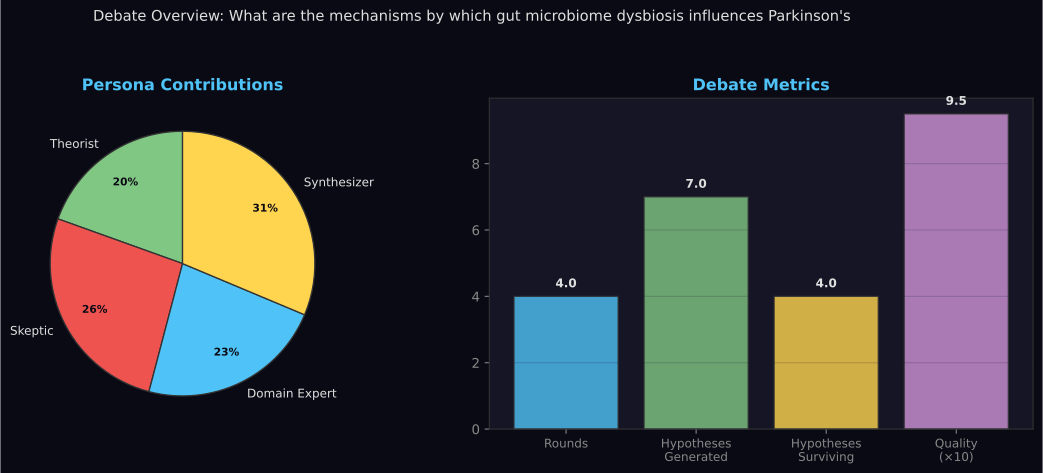
Four AI personas (Theorist, Skeptic, Domain Expert, Synthesizer) debated the question across 4 rounds, generating and stress-testing hypotheses.

3. Evidence Gathering

Each hypothesis was evaluated against PubMed literature, clinical trial data, and gene expression databases to build an evidence portfolio.

4. Knowledge Graph

534 molecular relationships were extracted and mapped into an interactive knowledge graph connecting genes, pathways, and diseases.

Executive Summary

Looking at the debate between the Theorist's hypotheses, the Skeptic's critiques, and the Expert's feasibility assessment, I'll now synthesize these inputs and produce final scored rankings.

Multi-Agent Debate

4 rounds 7 hypotheses generated Quality: 0.95

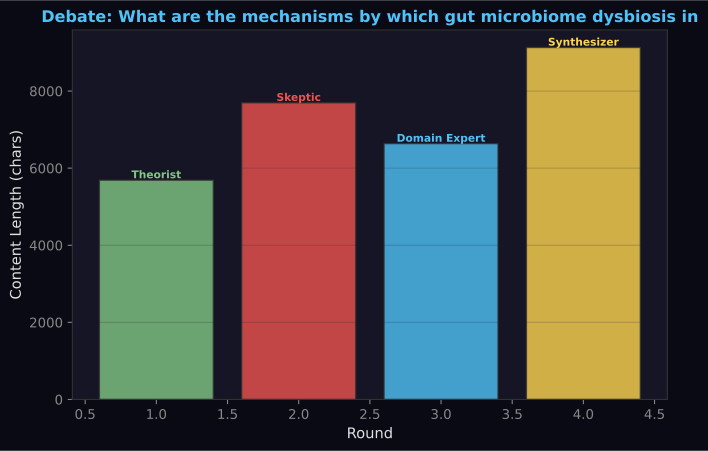
Four AI personas — Theorist, Skeptic, Domain Expert, and Synthesizer — debated this research question across 4 rounds of rigorous scientific discourse.

Round 1
🤖 Persona-Theorist

Based on the provided literature on gut-brain axis mechanisms in Parkinson's disease, I'll generate novel therapeutic hypotheses that connect unexplored mechanistic pathways:

Hypothesis 1: Prevotellaceae-Derived Butyrate Supplementation as Neuroprotective Therapy

Description: Since PD patients show reduced Prevotellaceae abundance (PMID:39501822), targeted butyrate supplementation could re

...
Round 2
🤖 Persona-Skeptic

I'll provide a rigorous critique of each hypothesis, identifying weaknesses, counter-evidence, and proposing falsification experiments.

Hypothesis 1: Prevotellaceae-Derived Butyrate Supplementation

Critical Weaknesses:
  • Conflation of correlation with causation: Reduced Prevotellaceae may be consequence, not cause of PD pathology
  • Oversimplified SCFA attribution: Butyrate is produ

...
Round 3
🤖 Persona-Domain Expert

I'll provide a practical feasibility assessment for the most viable hypotheses based on druggability, existing compounds, competitive landscape, and development considerations.

HYPOTHESIS 1: Butyrate Supplementation (Revised Confidence: 0.45)

Druggability Assessment: HIGH

  • Target: HDACs (Class I/II) and GPR41/43 receptors are well-established drug targets
  • Chemical Matter: Multi

...
Round 4
🤖 Persona-Synthesizer

Looking at the debate between the Theorist's hypotheses, the Skeptic's critiques, and the Expert's feasibility assessment, I'll now synthesize these inputs and produce final scored rankings.

...

Hypotheses (20)

Score Comparison

#1
Enhancing Vagal Cholinergic Signaling to Rest
0.67
#2
Selective TLR4 Modulation to Prevent Gut-Deri
0.79
#3
Correcting Gut Microbial Dopamine Imbalance t
0.61
#4
Blocking AGE-RAGE Signaling in Enteric Glia t
0.61
#5
Restoring Neuroprotective Tryptophan Metaboli
0.61
#6
Targeted Butyrate Supplementation for Microgl
0.80
#7
Microglial AIM2 Inflammasome as the Primary D
0.82
#8
Mitochondrial DAMPs-Driven AIM2 Inflammasome
0.81
#9
Prevotellaceae-Derived Butyrate Supplementati
0.00
#10
Calcium-Dysregulated mPTP Opening as an Alter
0.80
#11
Astrocyte-Intrinsic NLRP3 Inflammasome Activa
0.82
#12
Gut Microbiome Remodeling to Prevent Systemic
0.92
#13
Mitochondrial DNA-Driven AIM2 Inflammasome Ac
0.80
#14
Circadian-Synchronized Microbiome Interventio
0.00
#15
Mediterranean Diet Metabolite Synthesis via E
0.00
#16
Enteric Nervous System Reprogramming via Micr
0.00
#17
Inflammasome-Targeted Microbiome Modulation T
0.00
#18
Akkermansia muciniphila Metabolite Inhibition
0.00
#19
Targeting Bacterial Curli Fibrils to Prevent
0.64
#20
Vagal Nerve Stimulation Combined with Probiot
0.00
#1 Hypothesis therapeutic
Market: 0.55
0.67
Enhancing Vagal Cholinergic Signaling to Restore Gut-Brain Anti-Inflammatory Communication
Target: CHRNA7 Disease: neurodegeneration Pathway: Vagal cholinergic anti-inflammatory path
## Mechanistic Overview Enhancing Vagal Cholinergic Signaling to Restore Gut-Brain Anti-Inflammatory Communication starts from the claim that modulating CHRNA7 within the disease context of neurodegeneration can redirect a disease-relevant process. The original description reads: "Gut dysbiosis disrupts vagal cholinergic anti-inflammatory pathways by reducing acetylcholine-producing bacteria and damaging enteric neurons. Vagus nerve stimulation combined with choline supplementation could restore...
Confidence 0.50
Novelty 0.80
Feasibility 0.70
Impact 0.70
Mechanism 0.60
Druggability 0.60
Safety 0.80
Reproducibility 0.60
Competition 0.70
Data Avail. 0.60
Clinical 0.33
0 evidence for 0 evidence against
#2 Hypothesis therapeutic
Market: 0.68
0.79
Selective TLR4 Modulation to Prevent Gut-Derived Neuroinflammatory Priming
Target: TLR4 Disease: neurodegeneration Pathway: TLR4/MyD88/NF-κB innate immune signaling
## Mechanistic Overview Selective TLR4 Modulation to Prevent Gut-Derived Neuroinflammatory Priming starts from the claim that modulating TLR4 within the disease context of neurodegeneration can redirect a disease-relevant process. The original description reads: "Selective TLR4 Modulation to Prevent Gut-Derived Neuroinflammatory Priming proposes targeting the Toll-like receptor 4 (TLR4) signaling axis as the critical bridge between intestinal barrier dysfunction and CNS neuroinflammation. Chroni...
Confidence 0.60
Novelty 0.70
Feasibility 0.80
Impact 0.70
Mechanism 0.70
Druggability 0.80
Safety 0.60
Reproducibility 0.70
Competition 0.80
Data Avail. 0.70
Clinical 0.13
0 evidence for 0 evidence against
#3 Hypothesis therapeutic
Market: 0.52
0.61
Correcting Gut Microbial Dopamine Imbalance to Support Systemic Dopaminergic Function
Target: DDC Disease: neurodegeneration Pathway: Gut microbial aromatic amino acid decarb
## Mechanistic Overview Correcting Gut Microbial Dopamine Imbalance to Support Systemic Dopaminergic Function starts from the claim that modulating DDC within the disease context of neurodegeneration can redirect a disease-relevant process. The original description reads: "**Background and Rationale** The gut-brain axis has emerged as a critical bidirectional communication pathway that significantly influences neurological health and disease progression. In Parkinson's disease (PD), mounting evi...
Confidence 0.20
Novelty 0.70
Feasibility 0.40
Impact 0.20
Mechanism 0.30
Druggability 0.40
Safety 0.50
Reproducibility 0.30
Competition 0.80
Data Avail. 0.30
Clinical 0.35
0 evidence for 0 evidence against
#4 Hypothesis therapeutic
Market: 0.52
0.61
Blocking AGE-RAGE Signaling in Enteric Glia to Prevent Neuroinflammatory Cascade
Target: AGER Disease: neurodegeneration Pathway: AGE-RAGE → NF-κB inflammatory signaling
## Mechanistic Overview Blocking AGE-RAGE Signaling in Enteric Glia to Prevent Neuroinflammatory Cascade starts from the claim that modulating AGER within the disease context of neurodegeneration can redirect a disease-relevant process. The original description reads: "**Background and Rationale** The gut-brain axis has emerged as a critical bidirectional communication pathway in neurodegeneration, with mounting evidence suggesting that intestinal dysfunction precedes and contributes to central ...
Confidence 0.30
Novelty 0.60
Feasibility 0.50
Impact 0.40
Mechanism 0.40
Druggability 0.60
Safety 0.30
Reproducibility 0.30
Competition 0.60
Data Avail. 0.40
Clinical 0.39
0 evidence for 0 evidence against
#5 Hypothesis therapeutic
Market: 0.53
0.61
Restoring Neuroprotective Tryptophan Metabolism via Targeted Probiotic Engineering
Target: TDC Disease: neurodegeneration Pathway: Tryptophan → kynurenine / serotonin meta
## Mechanistic Overview Restoring Neuroprotective Tryptophan Metabolism via Targeted Probiotic Engineering starts from the claim that modulating TDC within the disease context of neurodegeneration can redirect a disease-relevant process. The original description reads: "**Background and Rationale** The gut-brain axis has emerged as a critical bidirectional communication pathway in neurodegeneration, with mounting evidence demonstrating that intestinal microbiota composition significantly influen...
Confidence 0.30
Novelty 0.80
Feasibility 0.40
Impact 0.50
Mechanism 0.40
Druggability 0.50
Safety 0.60
Reproducibility 0.40
Competition 0.70
Data Avail. 0.50
Clinical 0.39
0 evidence for 0 evidence against
#6 Hypothesis therapeutic
Market: 0.58
0.80
Targeted Butyrate Supplementation for Microglial Phenotype Modulation
Target: GPR109A Disease: neurodegeneration Pathway: Short-chain fatty acid → GPR109A → NF-κB
## Mechanistic Overview Targeted Butyrate Supplementation for Microglial Phenotype Modulation starts from the claim that modulating GPR109A within the disease context of neurodegeneration can redirect a disease-relevant process. The original description reads: "Targeted Butyrate Supplementation for Microglial Phenotype Modulation proposes leveraging the gut-brain axis to restore microglial homeostasis in neurodegenerative diseases through precision delivery of butyrate — a short-chain fatty acid...
Confidence 0.70
Novelty 0.60
Feasibility 0.90
Impact 0.80
Mechanism 0.80
Druggability 0.90
Safety 0.90
Reproducibility 0.80
Competition 0.70
Data Avail. 0.80
Clinical 0.13
0 evidence for 0 evidence against
#7 Hypothesis mechanistic
Market: 0.67
0.82
Microglial AIM2 Inflammasome as the Primary Driver of TDP-43 Proteinopathy Neuroinflammation in ALS/FTD
Target: AIM2, CASP1, IL1B, PYCARD, TARDBP Disease: neurodegeneration Pathway: Microglial AIM2 inflammasome activation
## Mechanistic Overview Microglial AIM2 Inflammasome as the Primary Driver of TDP-43 Proteinopathy Neuroinflammation in ALS/FTD starts from the claim that modulating AIM2, CASP1, IL1B, PYCARD, TARDBP within the disease context of neurodegeneration can redirect a disease-relevant process. The original description reads: "## Mechanistic Overview Microglial AIM2 Inflammasome as the Primary Driver of TDP-43 Proteinopathy Neuroinflammation in ALS/FTD starts from the claim that modulating AIM2, CASP1,...
Confidence 0.76
Novelty 0.64
Feasibility 0.60
Mechanism 0.80
Druggability 0.90
Safety 0.60
Reproducibility 0.70
Competition 0.80
Data Avail. 0.80
Clinical 0.04
0 evidence for 0 evidence against
#8 Hypothesis mechanistic
Market: 0.63
0.81
Mitochondrial DAMPs-Driven AIM2 Inflammasome Activation in Neurodegeneration
Target: AIM2, CASP1, IL1B, PYCARD Disease: neurodegeneration Pathway: AIM2 inflammasome activation via cytosol
## Mechanistic Overview Mitochondrial DAMPs-Driven AIM2 Inflammasome Activation in Neurodegeneration starts from the claim that modulating AIM2, CASP1, IL1B, PYCARD within the disease context of neurodegeneration can redirect a disease-relevant process. The original description reads: "## Mechanistic Overview Mitochondrial DAMPs-Driven AIM2 Inflammasome Activation in Neurodegeneration starts from the claim that modulating AIM2, CASP1, IL1B, PYCARD within the disease context of neurodegeneration ...
Confidence 0.75
Novelty 0.53
Feasibility 0.66
Mechanism 0.80
Druggability 0.90
Safety 0.60
Reproducibility 0.70
Competition 0.80
Data Avail. 0.80
Clinical 0.04
0 evidence for 0 evidence against
#9 Hypothesis debate_mined_candidate
Market: 0.51
0.00
Prevotellaceae-Derived Butyrate Supplementation as Neuroprotective Therapy
Target: HDAC1/HDAC2
Targeted butyrate supplementation to restore neuroprotective short-chain fatty acid signaling, addressing reduced Prevotellaceae abundance in PD patients through HDAC modulation and GPR41/43 receptor activation Debate provenance: derived from debate `sess_sda-2026-04-01-gap-20260401-225149` on question: What are the mechanisms by which gut microbiome dysbiosis influences Parkinson's disease pathogenesis through the gut-brain axis?. Consensus signal: domain_expert, skeptic, synthesizer, theorist...
Confidence 0.55
Novelty 0.60
Mechanism 0.60
0 evidence for 0 evidence against
#10 Hypothesis mechanistic
Market: 0.60
0.80
Calcium-Dysregulated mPTP Opening as an Alternative mtDNA Release Mechanism for AIM2 Inflammasome Activation in Neurodegeneration
Target: AIM2, CASP1, IL1B, PYCARD, PPIF Disease: neurodegeneration Pathway: AIM2 inflammasome activation via mPTP-re
## Mechanistic Overview Calcium-Dysregulated mPTP Opening as an Alternative mtDNA Release Mechanism for AIM2 Inflammasome Activation in Neurodegeneration starts from the claim that modulating AIM2, CASP1, IL1B, PYCARD, PPIF within the disease context of neurodegeneration can redirect a disease-relevant process. The original description reads: "## Mechanistic Overview Calcium-Dysregulated mPTP Opening as an Alternative mtDNA Release Mechanism for AIM2 Inflammasome Activation in Neurodegeneration ...
Confidence 0.75
Novelty 0.52
Feasibility 0.64
Mechanism 0.80
Druggability 0.90
Safety 0.60
Reproducibility 0.70
Competition 0.80
Data Avail. 0.80
Clinical 0.04
0 evidence for 0 evidence against
#11 Hypothesis mechanistic
Market: 0.60
0.82
Astrocyte-Intrinsic NLRP3 Inflammasome Activation by Alpha-Synuclein Aggregates Drives Non-Cell-Autonomous Neurodegeneration
Target: NLRP3, CASP1, IL1B, PYCARD Disease: neurodegeneration Pathway: Astrocyte NLRP3 inflammasome activation
## Mechanistic Overview Astrocyte-Intrinsic NLRP3 Inflammasome Activation by Alpha-Synuclein Aggregates Drives Non-Cell-Autonomous Neurodegeneration starts from the claim that modulating NLRP3, CASP1, IL1B, PYCARD within the disease context of neurodegeneration can redirect a disease-relevant process. The original description reads: "## Mechanistic Overview Astrocyte-Intrinsic NLRP3 Inflammasome Activation by Alpha-Synuclein Aggregates Drives Non-Cell-Autonomous Neurodegeneration starts from the...
Confidence 0.78
Novelty 0.50
Feasibility 0.62
Mechanism 0.80
Druggability 0.90
Safety 0.60
Reproducibility 0.70
Competition 0.80
Data Avail. 0.80
Clinical 0.04
0 evidence for 0 evidence against
#12 Hypothesis mechanistic
Market: 0.69
0.92
Gut Microbiome Remodeling to Prevent Systemic NLRP3 Priming in Neurodegeneration
Target: NLRP3, CASP1, IL1B, PYCARD Disease: neurodegeneration Pathway: Gut-brain axis TLR4/NF-κB priming of NLR
## Mechanistic Overview Gut Microbiome Remodeling to Prevent Systemic NLRP3 Priming in Neurodegeneration proposes that intestinal dysbiosis creates systemic NLRP3 inflammasome priming through bacterial lipopolysaccharide (LPS) translocation, followed by secondary activation triggers in the central nervous system. Circulating LPS binds to Toll-like receptor 4 (TLR4) on peripheral monocytes and brain-resident microglia, initiating NF-κB-mediated transcriptional upregulation of NLRP3, pro-IL-1β, a...
Confidence 0.69
Novelty 0.50
Feasibility 0.72
Mechanism 0.80
Druggability 0.90
Safety 0.60
Reproducibility 0.70
Competition 0.80
Data Avail. 0.80
Clinical 0.04
0 evidence for 0 evidence against
#13 Hypothesis mechanistic
Market: 0.59
0.80
Mitochondrial DNA-Driven AIM2 Inflammasome Activation in Neurodegeneration
Target: AIM2, CASP1, IL1B, PYCARD Disease: neurodegeneration Pathway: AIM2 inflammasome activation via cytosol
## Mechanistic Overview Mitochondrial DNA-Driven AIM2 Inflammasome Activation in Neurodegeneration starts from the claim that modulating AIM2, CASP1, IL1B, PYCARD within the disease context of neurodegeneration can redirect a disease-relevant process. The original description reads: "**Molecular Mechanism and Rationale** The AIM2 (Absent in Melanoma 2) inflammasome represents a sophisticated cytosolic DNA-sensing apparatus that becomes dysregulated in neurodegenerative diseases through aberrant ...
Confidence 0.74
Novelty 0.52
Feasibility 0.66
Mechanism 0.80
Druggability 0.90
Safety 0.60
Reproducibility 0.70
Competition 0.80
Data Avail. 0.80
Clinical 0.04
0 evidence for 0 evidence against
#14 Hypothesis debate_mined_candidate
Market: 0.51
0.00
Circadian-Synchronized Microbiome Intervention
Target: CLOCK
Time-restricted feeding combined with chronotherapy using circadian-regulated probiotics to restore microbiome-brain signaling rhythms and improve motor symptom fluctuations Debate provenance: derived from debate `sess_sda-2026-04-01-gap-20260401-225149` on question: What are the mechanisms by which gut microbiome dysbiosis influences Parkinson's disease pathogenesis through the gut-brain axis?. Consensus signal: domain_expert, skeptic, synthesizer, theorist discussed the mechanism terms CLOCK,...
Confidence 0.55
Novelty 0.60
Mechanism 0.60
0 evidence for 0 evidence against
#15 Hypothesis debate_mined_candidate
Market: 0.51
0.00
Mediterranean Diet Metabolite Synthesis via Engineered Probiotics
Target: Custom_Metabolic_Pathway
Engineered probiotics designed to synthesize key Mediterranean diet metabolites directly in the gut, bypassing dietary compliance issues through sustained neuroprotective metabolite production Debate provenance: derived from debate `sess_sda-2026-04-01-gap-20260401-225149` on question: What are the mechanisms by which gut microbiome dysbiosis influences Parkinson's disease pathogenesis through the gut-brain axis?. Consensus signal: domain_expert, skeptic, synthesizer, theorist discussed the mec...
Confidence 0.55
Novelty 0.60
Mechanism 0.60
0 evidence for 0 evidence against
#16 Hypothesis debate_mined_candidate
Market: 0.51
0.00
Enteric Nervous System Reprogramming via Microbial Neurotransmitter Modulation
Target: TDC
Targeted cultivation of neurotransmitter-producing bacteria to reprogram enteric nervous system, enhancing gut motility and reducing alpha-synuclein aggregation through microbial dopamine synthesis Debate provenance: derived from debate `sess_sda-2026-04-01-gap-20260401-225149` on question: What are the mechanisms by which gut microbiome dysbiosis influences Parkinson's disease pathogenesis through the gut-brain axis?. Consensus signal: domain_expert, skeptic, synthesizer, theorist discussed th...
Confidence 0.55
Novelty 0.60
Mechanism 0.60
0 evidence for 0 evidence against
#17 Hypothesis debate_mined_candidate
Market: 0.51
0.00
Inflammasome-Targeted Microbiome Modulation Therapy
Target: NLRP3
Precision microbiome editing to reduce LPS-producing bacteria while enhancing anti-inflammatory species, targeting NLRP3 inflammasome activation and IL-1β/IL-18 signaling cascades Debate provenance: derived from debate `sess_sda-2026-04-01-gap-20260401-225149` on question: What are the mechanisms by which gut microbiome dysbiosis influences Parkinson's disease pathogenesis through the gut-brain axis?. Consensus signal: domain_expert, skeptic, synthesizer, theorist discussed the mechanism terms ...
Confidence 0.55
Novelty 0.60
Mechanism 0.60
0 evidence for 0 evidence against
#18 Hypothesis debate_mined_candidate
Market: 0.51
0.00
Akkermansia muciniphila Metabolite Inhibition
Target: Akkermansia_Mucinase
Selective inhibition of Akkermansia-specific mucin degradation enzymes to prevent intestinal barrier compromise and subsequent alpha-synuclein propagation Debate provenance: derived from debate `sess_sda-2026-04-01-gap-20260401-225149` on question: What are the mechanisms by which gut microbiome dysbiosis influences Parkinson's disease pathogenesis through the gut-brain axis?. Consensus signal: domain_expert, skeptic, synthesizer, theorist discussed the mechanism terms Akkermansia, Inhibition, ...
Confidence 0.55
Novelty 0.60
Mechanism 0.60
0 evidence for 0 evidence against
#19 Hypothesis mechanistic
Market: 0.54
0.64
Targeting Bacterial Curli Fibrils to Prevent α-Synuclein Cross-Seeding
Target: CSGA Disease: neurodegeneration Pathway: Bacterial curli amyloid → α-synuclein cr
## Mechanistic Overview Targeting Bacterial Curli Fibrils to Prevent α-Synuclein Cross-Seeding starts from the claim that modulating CSGA within the disease context of neurodegeneration can redirect a disease-relevant process. The original description reads: "**Background and Rationale** Parkinson's disease (PD) is characterized by the accumulation of misfolded α-synuclein aggregates, primarily in the form of Lewy bodies and Lewy neurites. While the precise mechanisms underlying α-synuclein aggr...
Confidence 0.40
Novelty 0.90
Feasibility 0.50
Impact 0.80
Mechanism 0.60
Druggability 0.60
Safety 0.40
Reproducibility 0.40
Competition 0.90
Data Avail. 0.50
Clinical 0.39
0 evidence for 0 evidence against
#20 Hypothesis debate_mined_candidate
Market: 0.51
0.00
Vagal Nerve Stimulation Combined with Probiotic Therapy
Target: CHAT
Combining targeted VNS with specific probiotic strains to create synergistic restoration of gut-brain communication through enhanced parasympathetic tone and microbial metabolite production Debate provenance: derived from debate `sess_sda-2026-04-01-gap-20260401-225149` on question: What are the mechanisms by which gut microbiome dysbiosis influences Parkinson's disease pathogenesis through the gut-brain axis?. Consensus signal: domain_expert, skeptic, synthesizer, theorist discussed the mechan...
Confidence 0.55
Novelty 0.60
Mechanism 0.60
0 evidence for 0 evidence against

Gene Expression Context

Expression data from Allen Institute and other transcriptomic datasets relevant to the target genes in this analysis.

CHRNA7 via Enhancing Vagal Cholinergic Signaling to Restore Gut-Brain A

CHRNA7 (α7nAChR) expression is reduced in substantia nigra microglia and enteric neurons in PD post-mortem tissue. Vagal motor neurons in the dorsal motor nucleus show alpha-synuclein pathology and reduced choline acetyltransferase (ChAT) expression in early PD stages, consistent with impaired cholinergic output.

TLR4 via Selective TLR4 Modulation to Prevent Gut-Derived Neuroinflam

TLR4 (Toll-Like Receptor 4):

  • Pattern recognition receptor for gram-negative bacterial lipopolysaccharide (LPS); signals through MyD88 and TRIF adaptor pathways
  • Allen Human Brain Atlas: moderate expression in cortex and hippocampus; enriched in regions with high microglial density (hippocampal fissure, temporal cortex white matter border)
  • Cell-type specificity: highest in microglia (5-10x above other CNS cell types); moderate in astrocytes and brain endothelial cells; low but detectable

DDC via Correcting Gut Microbial Dopamine Imbalance to Support Syste

DDC (DOPA Decarboxylase / Aromatic L-Amino Acid Decarboxylase):

  • Enzyme converting L-DOPA to dopamine and 5-HTP to serotonin; expressed in both mammalian cells and gut bacteria
  • Allen Human Brain Atlas: DDC highly expressed in substantia nigra, ventral tegmental area, and raphe nuclei (dopaminergic and serotonergic neurons); moderate in hypothalamus
  • Cell-type specificity: dopaminergic neurons of substantia nigra pars compacta show highest DDC expression; serotonergic neurons of dorsal ra

AGER via Blocking AGE-RAGE Signaling in Enteric Glia to Prevent Neuro

AGER (Advanced Glycosylation End-Product Specific Receptor / RAGE):

  • Multi-ligand pattern recognition receptor binding AGEs, amyloid-beta, HMGB1, and S100 proteins; activates NF-κB inflammatory signaling
  • Allen Human Brain Atlas: moderate expression in cortex and hippocampus; high expression in cerebrovascular endothelium; enriched in enteric nervous system (gut glia and neurons)
  • Cell-type specificity: endothelial cells > microglia > astrocytes > neurons in brain; enteric glia show high

TDC via Restoring Neuroprotective Tryptophan Metabolism via Targeted

TDC (Tyrosine Decarboxylase) / IDO1 (Indoleamine 2,3-Dioxygenase) / TPH1 (Tryptophan Hydroxylase 1):

  • TDC: bacterial enzyme (not expressed by human cells) that decarboxylates tyrosine and tryptophan; expressed by Enterococcus, Lactobacillus, and other gut commensals
  • Allen Human Brain Atlas: not applicable for bacterial TDC; human IDO1 expressed in microglia and cerebrovascular endothelium; TPH1 in raphe nuclei (brainstem serotonin neurons)
  • Gut-brain axis: ~95% of body's serotonin synthe

Hypothesis Pathway Diagrams (13)

Molecular pathway diagrams generated for each hypothesis, showing key targets, interactions, and therapeutic mechanisms.

PATHWAY Enhancing Vagal Cholinergic Signaling to Restore Gut-Brain Anti-Inflammatory Com
graph TD
    A["Gut Dysbiosis
Reduced ACh-producing bacteria
Pathobiont overgrowth"] --> B["Enteric Neuron Damage
Loss of cholinergic neurons
Reduced local ACh synthesis"] A --> C["Increased Gut Permeability
LPS translocation
PAMP release"] B --> D["Impaired Vagal Afferent
Signaling
Reduced gut-brain communication"] C --> E["Intestinal Macrophage
Activation
Pro-inflammatory phenotype"] D --> F["Nucleus Tractus Solitarius
NTS
Reduced inflammatory sensing"] E --> G["Systemic Inflammation
TNF-alpha and IL-1beta
elevation"] F --> H["Dorsal Motor Nucleus
DMV
Decreased efferent output"] G --> I["Blood-Brain Barrier
Disruption
Neuroinflammation initiation"] H --> J["Efferent Vagal
Cholinergic Output
Reduced ACh release"] I --> K["Microglial Activation
Neuroinflammatory cascade
Oxidative stress"] J --> L["Splenic Nerve Terminal
ACh release to
sympathetic ganglia"] K --> M["Alpha-Synuclein
Aggregation
Protein misfolding"] L --> N["Splenic T-Cell Activation
CD4+ T-cells release
ACh and norepinephrine"] M --> O["Dopaminergic Neuron
Degeneration
Substantia nigra loss"] N --> P["Macrophage CHRNA7
Binding
Anti-inflammatory signaling"] O --> Q["Parkinsonian Motor
Symptoms
Disease progression"] P --> R["JAK2-STAT3 Inhibition
Suppressed NF-kappaB
Reduced cytokine production"] S["Vagus Nerve Stimulation
VNS therapy
Electrical activation"] --> H T["Choline Supplementation
Dietary intervention
ACh precursor loading"] --> J U["Targeted CHRNA7
Agonist Therapy
Direct receptor activation"] --> P R --> V["Restored Anti-Inflammatory
Balance
Neuroprotective environment"] V --> W["Therapeutic Outcome
Slowed neurodegeneration
Improved motor function"] classDef normal fill:#4fc3f7,stroke:#2196f3 classDef therapeutic fill:#81c784,stroke:#4caf50 classDef pathology fill:#ef5350,stroke:#f44336 classDef outcome fill:#ffd54f,stroke:#ff9800 classDef molecular fill:#ce93d8,stroke:#9c27b0 class A,B,C,D,E pathology class F,G,H,I,J normal class K,L,M,N,O pathology class P,R,V molecular class Q outcome class S,T,U therapeutic class W outcome
PATHWAY Selective TLR4 Modulation to Prevent Gut-Derived Neuroinflammatory Priming
graph TD
    A["""Gut Barrier
Dysfunction"""] -->|"Increased Permeability"| B["LPS Translocation
to Systemic Circulation"] B -->|"Binds LBP/CD14"| C["TLR4 Activation
on Peripheral Immune Cells"] C -->|"MyD88/TRIF
Signaling"| D["Systemic Inflammatory
Cytokine Release"] D -->|"Crosses BBB via
Circumventricular Organs"| E["Microglial TLR4
Priming"] B -->|"Direct LPS
BBB Transport"| E E -->|"NF-kappaB / IRF3
Activation"| F["Microglial Pro-inflammatory
Phenotype"] F -->|"TNF-alpha, IL-1beta,
IL-6, ROS"| G["Neuroinflammation"] G --> H["Neuronal Damage
& Synaptic Loss"] G -->|"Amplifies"| I["Abeta/Tau Pathology
Progression"] H --> J["Cognitive Decline
& Neurodegeneration"] I --> J K["""Selective TLR4
Modulator"""] -->|"Peripheral TLR4
Antagonism"| L["Blocked LPS/TLR4
Signaling"] L -->|"Reduced Systemic
Inflammation"| M["Prevented Microglial
Priming"] M --> N["Preserved Homeostatic
Microglial Phenotype"] K -->|"Gut-Targeted
Formulation"| O["Restored Intestinal
Barrier Integrity"] O -->|"Reduced LPS
Translocation"| M N --> P["Reduced
Neuroinflammation"] P --> Q["Neuroprotection &
Cognitive Preservation"] style A fill:#ff8a80,stroke:#d32f2f,color:#000 style K fill:#4fc3f7,stroke:#2196f3,color:#000 style Q fill:#81c784,stroke:#4caf50,color:#000 style J fill:#ffab91,stroke:#e64a19,color:#000
PATHWAY Correcting Gut Microbial Dopamine Imbalance to Support Systemic Dopaminergic Fun
graph TD
    A["Gut Microbiota"] --> B["Bacterial DDC Enzyme"]
    B --> C["Gut Dopamine Production"]

    D["Dysbiosis in Parkinson's Disease"] --> E["Altered Microbial DDC Activity"]
    E --> F["Gut Dopamine Imbalance"]

    F --> G["Enteric Nervous System Dysfunction"]
    G --> H["GI Motility Issues"]
    G --> I["Altered Vagal Signaling"]

    F --> J["Systemic Dopamine Disruption"]
    J --> K["Levodopa Metabolism Interference"]
    K --> L["Reduced Drug Bioavailability"]

    I --> M["CNS Dopamine Circuit Disruption"]
    L --> M
    M --> N["Worsened PD Symptoms"]

    O["Targeted Probiotic/Microbiome Therapy"] --> P["Restore DDC-Producing Bacteria"]
    P --> Q["Normalize Gut Dopamine"]
    Q --> R["Improved GI Function"]
    Q --> S["Enhanced Levodopa Absorption"]
    Q --> T["Restored Vagal Signaling"]

    R --> U["Improved PD Management"]
    S --> U
    T --> U

    style D fill:#4a1942,stroke:#ce93d8,color:#e0e0e0
    style O fill:#1a3a4a,stroke:#4fc3f7,color:#e0e0e0
    style Q fill:#1a3a2a,stroke:#81c784,color:#e0e0e0
    style U fill:#2a3a1a,stroke:#c5e1a5,color:#e0e0e0
PATHWAY Blocking AGE-RAGE Signaling in Enteric Glia to Prevent Neuroinflammatory Cascade
graph TD
    A["Advanced Glycation End-Products"] --> B["AGE Accumulation in Gut"]
    B --> C["RAGE Receptor on Enteric Glia"]
    C --> D["AGE-RAGE Signaling"]

    D --> E["NF-kappaB Activation"]
    E --> F["Pro-inflammatory Cytokines"]
    F --> G["Enteric Glial Reactivity"]

    G --> H["Gut Barrier Disruption"]
    G --> I["Enteric Nervous System Inflammation"]

    H --> J["Systemic Inflammatory Mediators"]
    I --> K["Vagal Nerve Signaling"]

    J --> L["Blood-Brain Barrier Compromise"]
    K --> L

    L --> M["Central Neuroinflammation"]
    M --> N["Neurodegeneration"]

    O["Anti-RAGE Therapy"] --> P["Block AGE-RAGE Binding"]
    P --> Q["Suppress Enteric Glial Activation"]
    Q --> R["Preserve Gut Barrier"]
    Q --> S["Reduce Vagal Inflammation"]

    R --> T["Block Gut-to-Brain Cascade"]
    S --> T
    T --> U["Neuroprotection"]

    style A fill:#4a1942,stroke:#ce93d8,color:#e0e0e0
    style D fill:#3a1a1a,stroke:#ef9a9a,color:#e0e0e0
    style O fill:#1a3a4a,stroke:#4fc3f7,color:#e0e0e0
    style U fill:#2a3a1a,stroke:#c5e1a5,color:#e0e0e0
PATHWAY Restoring Neuroprotective Tryptophan Metabolism via Targeted Probiotic Engineeri
graph TD
    A["Dietary
Tryptophan"] --> B["Gut Microbiota
TDC Expression"] B --> C["Tryptamine
Production"] C --> D["5-HT Synthesis
in Gut"] D --> E["Serotonin
Transport"] E --> F["Blood-Brain
Barrier Crossing"] F --> G["CNS Serotonin
Availability"] A --> H["Kynurenine
Pathway Activation"] H --> I["Quinolinic Acid
Production"] I --> J["Neuroinflammation
and Oxidative Stress"] J --> K["Neuronal
Degeneration"] G --> L["Melatonin
Synthesis"] L --> M["Neuroprotective
Effects"] M --> N["Cognitive
Function"] O["Engineered
Probiotics"] --> B P["TDC Gene
Target"] --> O classDef normal fill:#4fc3f7 classDef therapeutic fill:#81c784 classDef pathology fill:#ef5350 classDef outcome fill:#ffd54f classDef molecular fill:#ce93d8 class A,B,C,D,E,F,G normal class O therapeutic class H,I,J,K pathology class L,M,N outcome class P molecular

Clinical Trials (32)

Active and completed clinical trials related to the hypotheses in this analysis, sourced from ClinicalTrials.gov.

Untitled
Recruiting Phase 2 via: Enhancing Vagal Cholinergic Signaling to Restore G
Untitled
Recruiting Phase 2 via: Enhancing Vagal Cholinergic Signaling to Restore G
Untitled
Completed Phase 2 via: Enhancing Vagal Cholinergic Signaling to Restore G
Low-Dose Naltrexone in Parkinson's Disease
NCT03431233 Completed Phase II via: Selective TLR4 Modulation to Prevent Gut-Derived N
Eritoran Safety and Pharmacokinetics
NCT03989271 Completed Phase I via: Selective TLR4 Modulation to Prevent Gut-Derived N
Rifaximin for Gut Permeability in PD
NCT03696004 Recruiting Phase II via: Selective TLR4 Modulation to Prevent Gut-Derived N
Akkermansia muciniphila in Neurodegeneration
NCT05334069 Recruiting Phase I/II via: Selective TLR4 Modulation to Prevent Gut-Derived N
Baby Detect : Genomic Newborn Screening
NCT05687474 COMPLETED Unknown via: Correcting Gut Microbial Dopamine Imbalance to Sup
Pilot Study to Investigate the Safety and Feasibility of AntiRetroviral Therapy for Alzheimer's Disease
NCT04552795 COMPLETED PHASE1 via: Correcting Gut Microbial Dopamine Imbalance to Sup
Lenalidomide or Observation in Treating Patients With Asymptomatic High-Risk Smoldering Multiple Myeloma
NCT01169337 ACTIVE_NOT_RECRUITING PHASE3 via: Correcting Gut Microbial Dopamine Imbalance to Sup
Safety and Effectiveness of Three Anti-HIV Drugs Combined in One Pill (Trizivir)
NCT00004981 UNKNOWN PHASE3 via: Correcting Gut Microbial Dopamine Imbalance to Sup
MRI and Gene Expression in Diagnosing Patients With Ductal Breast Cancer In Situ
NCT02352883 ACTIVE_NOT_RECRUITING NA via: Correcting Gut Microbial Dopamine Imbalance to Sup

Target Proteins & Genes (17)

Key molecular targets identified across all hypotheses. Click any gene to open its entity page; structural PDB references are linked when available.

CHRNA7
Enhancing Vagal Cholinergic Signaling to Restore Gut-Brain A
Score: 0.67 View hypothesis →
TLR4
Selective TLR4 Modulation to Prevent Gut-Derived Neuroinflam
Score: 0.79 View hypothesis →
DDC
Correcting Gut Microbial Dopamine Imbalance to Support Syste
Score: 0.61 View hypothesis →
AGER
Blocking AGE-RAGE Signaling in Enteric Glia to Prevent Neuro
Score: 0.61 View hypothesis →
TDC
Restoring Neuroprotective Tryptophan Metabolism via Targeted
Score: 0.61 View hypothesis →
GPR109A
Targeted Butyrate Supplementation for Microglial Phenotype M
Score: 0.80 View hypothesis →
AIM2 CASP1 IL1B PYCARD
Microglial AIM2 Inflammasome as the Primary Driver of TDP-43
Score: 0.82 View hypothesis →
AIM2 CASP1 IL1B PYCARD
Mitochondrial DAMPs-Driven AIM2 Inflammasome Activation in N
Score: 0.81 View hypothesis →
HDAC1 HDAC2
Prevotellaceae-Derived Butyrate Supplementation as Neuroprot
Score: 0.00 View hypothesis →
Structure reference: PDB 4BKX →
AIM2 CASP1 IL1B PYCARD
Calcium-Dysregulated mPTP Opening as an Alternative mtDNA Re
Score: 0.80 View hypothesis →
NLRP3 CASP1 IL1B PYCARD
Astrocyte-Intrinsic NLRP3 Inflammasome Activation by Alpha-S
Score: 0.82 View hypothesis →
Structure reference: PDB 7PZC →
CLOCK
Circadian-Synchronized Microbiome Intervention
Score: 0.00 View hypothesis →
Custom_Metabolic_Pathway
Mediterranean Diet Metabolite Synthesis via Engineered Probi
Score: 0.00 View hypothesis →
NLRP3
Inflammasome-Targeted Microbiome Modulation Therapy
Score: 0.00 View hypothesis →
Structure reference: PDB 7PZC →
Akkermansia_Mucinase
Akkermansia muciniphila Metabolite Inhibition
Score: 0.00 View hypothesis →
CSGA
Targeting Bacterial Curli Fibrils to Prevent α-Synuclein Cro
Score: 0.64 View hypothesis →
CHAT
Vagal Nerve Stimulation Combined with Probiotic Therapy
Score: 0.00 View hypothesis →

Knowledge Graph (534 edges)

Interactive visualization of molecular relationships discovered in this analysis. Drag nodes to rearrange, scroll to zoom, click entities to explore.

activates (13)

▸ Show 8 more

associated with (29)

▸ Show 24 more

causal extracted (2)

causes (17)

▸ Show 12 more

co associated with (37)

▸ Show 32 more
CLDN1, OCLN, ZO1, MLCKTH, AADCCLDN1, OCLN, ZO1, MLCKNLRP3, CASP1, IL1B, PYCARDCLDN1, OCLN, ZO1, MLCKGLP1R, BDNFAHR, IL10, TGFB1CLDN1, OCLN, ZO1, MLCKAGERCSGACHRNA7CSGACSGATLR4AHR, IL10, TGFB1GLP1R, BDNFCSGAGPR109AAGERGPR109ACHRNA7GPR109AGPR109ATLR4GLP1R, BDNFNLRP3, CASP1, IL1B, PYCARDAHR, IL10, TGFB1NLRP3, CASP1, IL1B, PYCARDSNCA, HSPA1A, DNMT1TH, AADCNLRP3, CASP1, IL1B, PYCARDSNCA, HSPA1A, DNMT1GLP1R, BDNFSNCA, HSPA1A, DNMT1AHR, IL10, TGFB1SNCA, HSPA1A, DNMT1GPR109ATDCCSGATDCAGERTDCCHRNA7TDCTDCTLR4NLRP3, CASP1, IL1B, PYCARDTH, AADCGLP1R, BDNFTH, AADCAHR, IL10, TGFB1TH, AADCCLDN1, OCLN, ZO1, MLCKTLR4, SNCASNCA, HSPA1A, DNMT1TLR4, SNCATH, AADCTLR4, SNCANLRP3, CASP1, IL1B, PYCARDTLR4, SNCAGLP1R, BDNFTLR4, SNCAAHR, IL10, TGFB1TLR4, SNCA

co discussed (329)

▸ Show 324 more
DNMT1HSPA1AHSP27HSP70BDNFHSP70IRF3TNFCREB1LAMP1CREB1TFEBSNCAAADCSNCAPYCARDAADCIL10AADCPYCARDAADCSNCAAADCOCLNAADCIL1BAADCGLP1RAADCTGFB1AADCBDNFAADCCASP1AADCTHAADCMLCKAADCNLRP3AADCZO1AADCTLR4CLDN1HSPA1ACLDN1AHRCLDN1DNMT1CLDN1AADCCLDN1IL10CLDN1PYCARDCLDN1SNCACLDN1OCLNCLDN1IL1BCLDN1GLP1RCLDN1TGFB1CLDN1BDNFCLDN1CASP1CLDN1THCLDN1TLR4CLDN1MLCKCLDN1NLRP3HSPA1AAHRHSPA1ADNMT1HSPA1AAADCHSPA1AIL10HSPA1APYCARDHSPA1ASNCAHSPA1AOCLNHSPA1AIL1BHSPA1AGLP1RHSPA1ATGFB1HSPA1ABDNFHSPA1ACASP1HSPA1ATHHSPA1AMLCKHSPA1ANLRP3HSPA1AZO1AHRDNMT1AHRAADCAHRIL10AHRPYCARDAHRSNCAAHROCLNAHRIL1BAHRGLP1RAHRTGFB1AHRBDNFAHRCASP1AHRTHAHRTLR4AHRMLCKAHRNLRP3AHRZO1DNMT1AADCDNMT1IL10DNMT1PYCARDDNMT1SNCADNMT1OCLNDNMT1IL1BDNMT1GLP1RDNMT1TGFB1DNMT1BDNFDNMT1CASP1DNMT1THDNMT1TLR4DNMT1MLCKDNMT1NLRP3DNMT1ZO1TDCTLR4TDCGPR109ATDCAADCTLR4GPR109ATLR4AADCGPR109AAADCTDCDDCTDCCHRNA7TDCAGERTDCCSGATLR4DDCTLR4CHRNA7TLR4AGERTLR4CSGADDCGPR109ADDCCHRNA7DDCAGERDDCCSGAGPR109ACHRNA7GPR109AAGERGPR109ACSGACHRNA7AGERCHRNA7CSGAAGERCSGAMLCKPYCARDMLCKSNCAMLCKTLR4MLCKIL10MLCKCLDN1MLCKBDNFMLCKGLP1RMLCKOCLNMLCKAADCMLCKAHRMLCKTHMLCKIL1BMLCKDNMT1MLCKHSPA1AMLCKCASP1MLCKTGFB1PYCARDCLDN1PYCARDAADCPYCARDAHRPYCARDDNMT1PYCARDHSPA1ASNCACLDN1TLR4CLDN1TLR4BDNFTLR4GLP1RTLR4OCLNTLR4AHRTLR4THTLR4IL1BTLR4DNMT1TLR4HSPA1ATLR4CASP1NLRP3CLDN1NLRP3BDNFNLRP3GLP1RNLRP3OCLNNLRP3AHRNLRP3HSPA1AIL10PYCARDIL10SNCAIL10OCLNIL10GLP1RIL10BDNFIL10CASP1IL10THIL10MLCKIL10NLRP3IL10ZO1PYCARDOCLNPYCARDIL1BPYCARDGLP1RPYCARDTGFB1PYCARDBDNFPYCARDCASP1PYCARDTHPYCARDTLR4PYCARDMLCKPYCARDNLRP3PYCARDZO1SNCAOCLNSNCAIL1BSNCAGLP1RSNCACASP1SNCAMLCKSNCANLRP3SNCAZO1OCLNIL1BOCLNGLP1ROCLNTGFB1OCLNBDNFOCLNCASP1OCLNTHOCLNTLR4OCLNMLCKOCLNNLRP3OCLNZO1IL1BGLP1RIL1BTGFB1IL1BBDNFIL1BCASP1IL1BMLCKIL1BZO1GLP1RTGFB1GLP1RBDNFGLP1RCASP1GLP1RTHGLP1RTLR4GLP1RMLCKGLP1RNLRP3GLP1RZO1TGFB1CASP1TGFB1THTGFB1TLR4TGFB1MLCKTGFB1NLRP3TGFB1ZO1BDNFCASP1BDNFTHBDNFTLR4BDNFMLCKBDNFZO1CASP1MLCKCASP1ZO1THTLR4THMLCKTHNLRP3THZO1TLR4MLCKTLR4NLRP3TLR4ZO1MLCKNLRP3MLCKZO1NLRP3ZO1HDACAADCSNCAIL10BDNFOCLNBDNFHSPA1ABDNFAHROCLNAADCOCLNPYCARDOCLNIL10THPYCARDZO1GLP1RZO1CLDN1ZO1SNCAZO1BDNFZO1OCLNZO1HSPA1AZO1THZO1AHRZO1NLRP3ZO1DNMT1ZO1CASP1ZO1AADCZO1IL1BZO1TLR4ZO1TGFB1ZO1PYCARDZO1IL10ZO1MLCKGLP1RCLDN1GLP1RSNCAGLP1ROCLNGLP1RHSPA1AGLP1RAHRGLP1RDNMT1GLP1RAADCGLP1RIL1BGLP1RPYCARDGLP1RIL10SNCAHSPA1ASNCAAHRSNCADNMT1THIL10NLRP3DNMT1NLRP3CASP1NLRP3AADCNLRP3IL1BNLRP3TGFB1NLRP3IL10NLRP3MLCKCASP1AADCCASP1TGFB1CASP1IL10IL1BIL10TLR4TGFB1TLR4PYCARDTLR4IL10TGFB1PYCARDTGFB1IL10PYCARDIL10HDACTLR4IL10CLDN1IL10AADCIL10AHRIL10DNMT1IL10HSPA1AAADCAHRAADCDNMT1AADCHSPA1AAHRHSPA1ATHHSPA1AIL1BDNMT1IL1BHSPA1AMAPKNLRP3HDACHSPA1AHDACTDCHDACGPR109AHDACDDCHDACCHRNA7HDACAGERHDACCSGAHDACTNFAMPKHDACIRF3NFKBIRF3TAUNFKBTAUJAK2TNFASCGFAPGFAPPYCARDASCCASP1BDNFDNMT1BDNFAADCBDNFPYCARDBDNFIL10OCLNHSPA1AOCLNAHROCLNDNMT1THAHRTHDNMT1THCASP1THAADCTHIL1BTHTGFB1

component of (1)

encodes (2)

enhances (1)

generated (5)

inhibits (7)

▸ Show 2 more

interacts with (39)

▸ Show 34 more

investigated in (2)

modulates (7)

▸ Show 2 more

participates in (19)

▸ Show 14 more

produces (2)

protective against (2)

reduces (1)

regulates (7)

▸ Show 2 more

risk factor for (4)

targets (8)

▸ Show 3 more

Pathway Diagram

Key molecular relationships — gene/protein nodes color-coded by type

graph TD
    SNCA["SNCA"] -->|encodes| alpha_synuclein["alpha_synuclein"]
    SDA_2026_04_01_gap_202604["SDA-2026-04-01-gap-20260401-225155"] -->|generated| h_e7e1f943["h-e7e1f943"]
    SDA_2026_04_01_gap_202604_1["SDA-2026-04-01-gap-20260401-225155"] -->|generated| h_74777459["h-74777459"]
    SDA_2026_04_01_gap_202604_2["SDA-2026-04-01-gap-20260401-225155"] -->|generated| h_6c83282d["h-6c83282d"]
    SDA_2026_04_01_gap_202604_3["SDA-2026-04-01-gap-20260401-225155"] -->|generated| h_f9c6fa3f["h-f9c6fa3f"]
    SDA_2026_04_01_gap_202604_4["SDA-2026-04-01-gap-20260401-225155"] -->|generated| h_7bb47d7a["h-7bb47d7a"]
    Prevotellaceae["Prevotellaceae"] -->|associated with| butyrate["butyrate"]
    NLRP3_Inflammasome["NLRP3 Inflammasome"] -->|activates| IL_1beta["IL-1beta"]
    NLRP3_Inflammasome_5["NLRP3 Inflammasome"] -->|activates| Il_18["Il-18"]
    alpha_synuclein_6["alpha_synuclein"] -->|causes| Aggregation["Aggregation"]
    GPR109A["GPR109A"] -->|associated with| neurodegeneration["neurodegeneration"]
    diseases_atypical_parkins["diseases-atypical-parkinsonism"] -->|investigated in| h_74777459_7["h-74777459"]
    style SNCA fill:#ce93d8,stroke:#333,color:#000
    style alpha_synuclein fill:#4fc3f7,stroke:#333,color:#000
    style SDA_2026_04_01_gap_202604 fill:#4fc3f7,stroke:#333,color:#000
    style h_e7e1f943 fill:#4fc3f7,stroke:#333,color:#000
    style SDA_2026_04_01_gap_202604_1 fill:#4fc3f7,stroke:#333,color:#000
    style h_74777459 fill:#4fc3f7,stroke:#333,color:#000
    style SDA_2026_04_01_gap_202604_2 fill:#4fc3f7,stroke:#333,color:#000
    style h_6c83282d fill:#4fc3f7,stroke:#333,color:#000
    style SDA_2026_04_01_gap_202604_3 fill:#4fc3f7,stroke:#333,color:#000
    style h_f9c6fa3f fill:#4fc3f7,stroke:#333,color:#000
    style SDA_2026_04_01_gap_202604_4 fill:#4fc3f7,stroke:#333,color:#000
    style h_7bb47d7a fill:#4fc3f7,stroke:#333,color:#000
    style Prevotellaceae fill:#ce93d8,stroke:#333,color:#000
    style butyrate fill:#4fc3f7,stroke:#333,color:#000
    style NLRP3_Inflammasome fill:#ce93d8,stroke:#333,color:#000
    style IL_1beta fill:#4fc3f7,stroke:#333,color:#000
    style NLRP3_Inflammasome_5 fill:#ce93d8,stroke:#333,color:#000
    style Il_18 fill:#4fc3f7,stroke:#333,color:#000
    style alpha_synuclein_6 fill:#4fc3f7,stroke:#333,color:#000
    style Aggregation fill:#4fc3f7,stroke:#333,color:#000
    style GPR109A fill:#ce93d8,stroke:#333,color:#000
    style neurodegeneration fill:#ef5350,stroke:#333,color:#000
    style diseases_atypical_parkins fill:#ef5350,stroke:#333,color:#000
    style h_74777459_7 fill:#4fc3f7,stroke:#333,color:#000

Figures & Visualizations (3)

Pathway Diagrams (1)
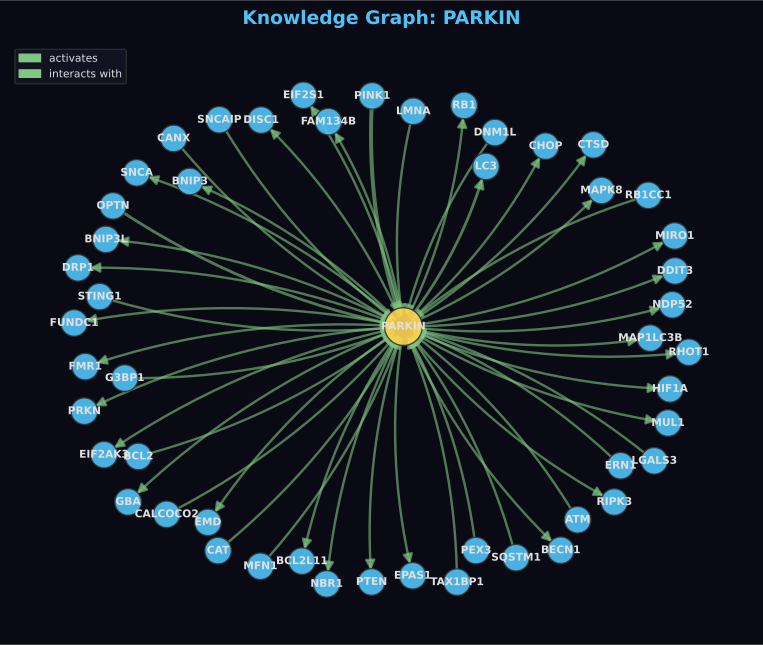
pathway PARKIN

pathway PARKIN

Debate Impact (2)

debate overview

debate overview

debate impact

debate impact

Linked Wiki Pages (14)

Entities from this analysis that have detailed wiki pages

BDNF Gene gene Brain-Derived Neurotrophic Factor (BDNF) protein Dorsal Motor Nucleus of the Vagus cell CHAT Gene gene HDAC1 Gene gene HDAC2 Gene gene UAB TSPO PET Neuroinflammation in PD Trial clinical_trial Neuroinflammation PET Imaging in CBS/PSP diagnostic Immune Atlas: Neuroinflammation Analysis analysis Neuroinflammation and Microglia Pathway in Alzheim mechanism Neuroinflammation in Corticobasal Degeneration mechanism Neuroinflammation in Corticobasal Syndrome mechanism neuroinflammation mechanism Neuroinflammation in PD mechanism

Key Papers (10)

TLR4 and CD14 trafficking and its influence on LPS-induced pro-inflammatory signaling.
Cellular and molecular life sciences : CMLS 2021 · PMID: 33057840
The role of the microbiota in glaucoma.
Molecular aspects of medicine 2023 · PMID: 37866106
Gastrodin regulates the TLR4/TRAF6/NF-κB pathway to reduce neuroinflammation and microglial activation in an AD model.
Phytomedicine : international journal of phytotherapy and phytopharmacology 2024 · PMID: 38552431
TLR4 and CD14 trafficking and its influence on LPS-induced pro-inflammatory signaling.
Cellular and molecular life sciences : CMLS 2021 · PMID: 33057840
Wild Mouse Gut Microbiota Promotes Host Fitness and Improves Disease Resistance.
Cell 2017 · PMID: 29056339
Diabetes and Alzheimer's disease crosstalk.
Neuroscience and biobehavioral reviews 2016 · PMID: 26969101
Four European Salmonella Typhimurium datasets collected to develop WGS-based source attribution methods.
Scientific data 2020 · PMID: 32127544
Experience in the corrective treatment of patients with atrioventricular septum.
Gaceta medica de Mexico 2017 · PMID: 28763068
Melatonin metabolism, signaling and possible roles in plants.
The Plant journal : for cell and molecular biology 2021 · PMID: 32645752
Face masks considerably reduce COVID-19 cases in Germany.
Proceedings of the National Academy of Sciences of the United States of America 2020 · PMID: 33273115
Standard analysis view → Full knowledge graph → Hypothesis Exchange →

More Walkthroughs

Walkthrough
Cell type vulnerability in Alzheimers Disease (SEA-AD transcriptomic d
What cell types are most vulnerable in Alzheimers Disease based on SEA-AD transcriptomic data from the Allen Brain Cell
19 hypotheses 281 edges neurodegeneration
Walkthrough
What are the mechanisms by which gut microbiome dysbiosis influences P
What are the mechanisms by which gut microbiome dysbiosis influences Parkinson's disease pathogenesis through the gut-br
20 hypotheses 534 edges neurodegeneration
Walkthrough
Tau propagation mechanisms and therapeutic interception points
Investigate prion-like spreading of tau pathology through connected brain regions, focusing on trans-synaptic transfer,
18 hypotheses 155 edges neurodegeneration
Walkthrough
CRISPR-based therapeutic approaches for neurodegenerative diseases
Evaluate the potential of CRISPR/Cas9 and related gene editing technologies for treating neurodegenerative diseases incl
14 hypotheses 422 edges neurodegeneration
Walkthrough
Gene expression changes in aging mouse brain predicting neurodegenerat
What gene expression changes in the aging mouse brain predict neurodegenerative vulnerability? Use Allen Aging Mouse Bra
43 hypotheses 247 edges neurodegeneration
Walkthrough
Neuroinflammation and microglial priming in early Alzheimer's Disease
Investigate mechanistic links between early microglial priming states, neuroinflammatory signaling, and downstream neuro
20 hypotheses 151 edges neurodegeneration
Walkthrough
Senolytic therapy for age-related neurodegeneration
Senolytics targeting p16/p21+ senescent astrocytes and microglia may reduce SASP-driven neuroinflammation.
15 hypotheses 379 edges neurodegeneration
Walkthrough
Epigenetic reprogramming in aging neurons
Investigate mechanisms of epigenetic reprogramming in aging neurons, including DNA methylation changes, histone modifica
16 hypotheses 178 edges neurodegeneration
Walkthrough
Blood-brain barrier transport mechanisms for antibody therapeutics
Anti-amyloid antibodies (lecanemab, donanemab) have ~0.1% brain penetrance. Engineering improved BBB transcytosis via tr
14 hypotheses 264 edges neurodegeneration
Walkthrough
Circuit-level neural dynamics in neurodegeneration
Analyze circuit-level changes in neurodegeneration using Allen Institute Neural Dynamics data. Focus on: (1) hippocampal
73 hypotheses 317 edges neuroscience
← Back to all showcase analyses