APOE Isoform Conversion Therapy
Quality Report Card click to collapse
From Analysis:
Mechanistic role of APOE in neurodegeneration
Mechanistic role of APOE in neurodegeneration?
Hypotheses from Same Analysis (5)
These hypotheses emerged from the same multi-agent debate that produced this hypothesis.
Description
APOE Isoform Conversion Therapy proposes the direct in vivo conversion of the pathogenic APOE4 allele to the protective APOE3 or APOE2 sequence using base editing or prime editing CRISPR technologies. This approach addresses the root genetic cause of APOE4-associated Alzheimer's disease risk — the single nucleotide polymorphism encoding Arg112 (vs. Cys112 in APOE3) — rather than treating downstream consequences of the APOE4 protein's dysfunctional structure.
Genetic Basis of APOE4 Pathogenicity
The APOE gene (chromosome 19q13.32) encodes three common isoforms defined by two SNPs:
- rs429358 (codon 112): T→C changes Cys→Arg (APOE3→APOE4)
- rs7412 (codon 158): C→T changes Arg→Cys (APOE3→APOE2)
Figures & Visualizations

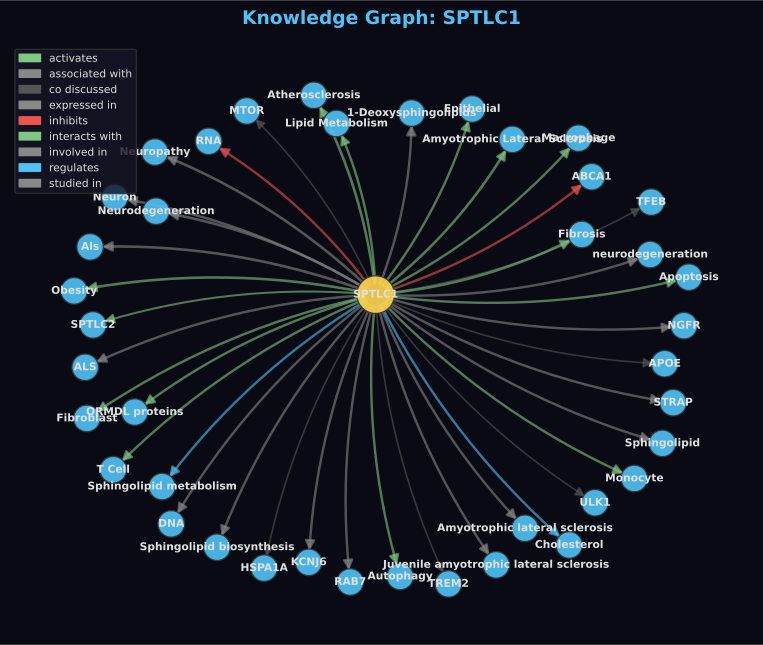
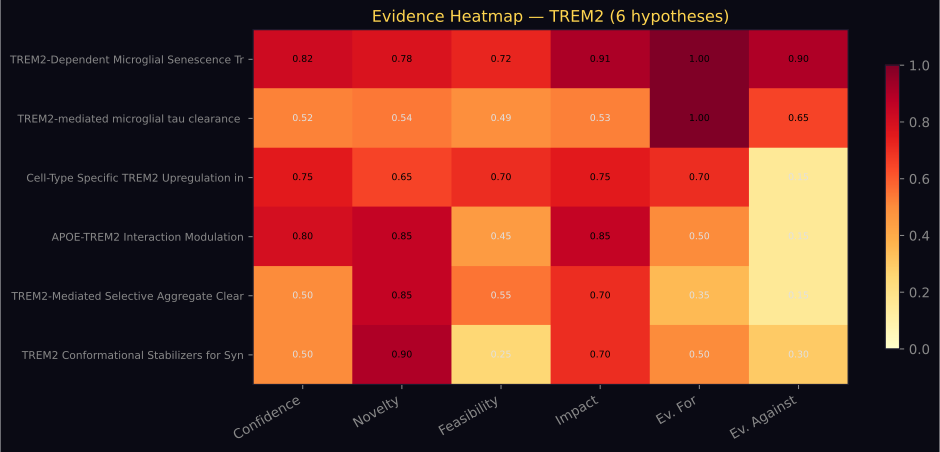
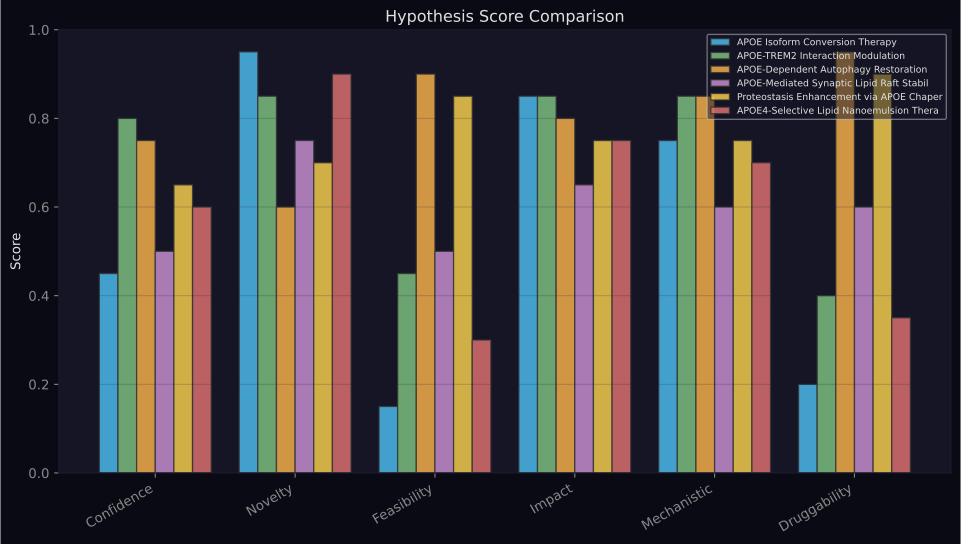
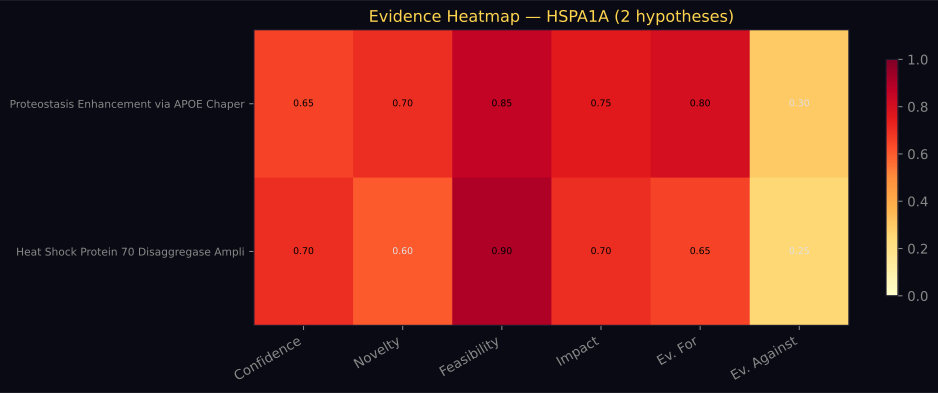
3D Protein Structure
Interactive 3D viewer powered by RCSB PDB / Mol*. Use mouse to rotate, scroll to zoom.
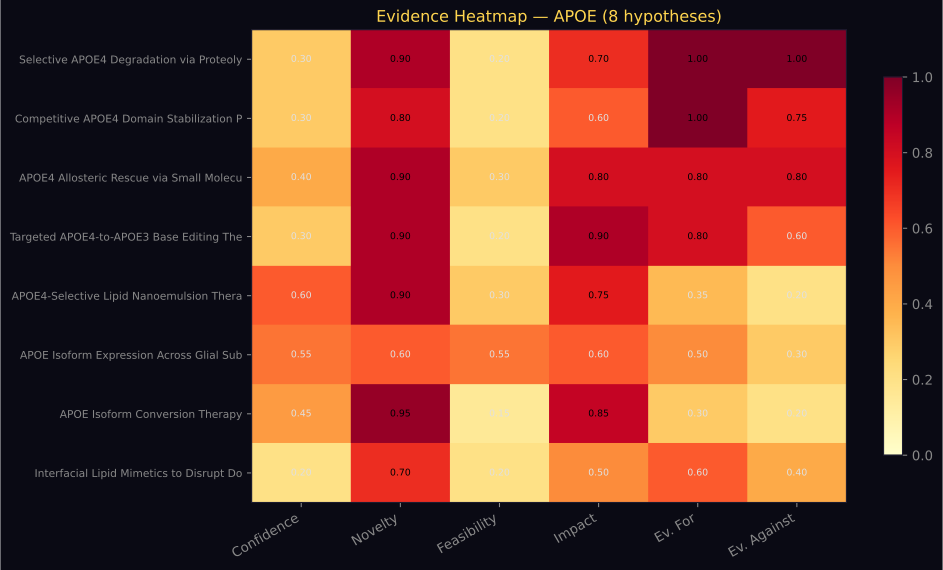
Dimension Scores
Legacy Card View — expandable citation cards
✓ Supporting Evidence 26
Presbyopia is defined as the age-related deterioration in the ability to focus on close objects, causing difficulty with near vision tasks. The study aim was to understand the lived experience of phakic presbyopia and identify all relevant visual function symptoms and associated functional impacts. Fifty individuals with clinician-confirmed phakic presbyopia (US n = 30, France n = 10, Germany n = 10) and seven healthcare professionals (HCPs) participated in in-depth, face-to-face, qualitative co
The function of many biological systems, such as embryos, liver lobules, intestinal villi, and tumors, depends on the spatial organization of their cells. In the past decade, high-throughput technologies have been developed to quantify gene expression in space, and computational methods have been developed that leverage spatial gene expression data to identify genes with spatial patterns and to delineate neighborhoods within tissues. To comprehensively document spatial gene expression technologi
Leprosy, a disease caused by Mycobacterium leprae, is an important cause of preventable disability. The present cross-sectional study was undertaken among leprosy-affected persons in a rural block in Kanchipuram District, Tamil Nadu, India in the year 2013. The sample included treatment completed leprosy affected persons ≥18 y of age. Persons with difficulty in cognition and those who were not willing to participate in the study were excluded. Subjects were also graded for any deformities of the
Single-cell technologies have made it possible to profile millions of cells, but for these resources to be useful they must be easy to query and access. To facilitate interactive and intuitive access to single-cell data we have developed scfind, a single-cell analysis tool that facilitates fast search of biologically or clinically relevant marker genes in cell atlases. Using transcriptome data from six mouse cell atlases, we show how scfind can be used to evaluate marker genes, perform in silico
Genetic variants associated with susceptibility to late-onset Alzheimer disease are known for individuals of European ancestry, but whether the same or different variants account for the genetic risk of Alzheimer disease in African American individuals is unknown. Identification of disease-associated variants helps identify targets for genetic testing, prevention, and treatment. To identify genetic loci associated with late-onset Alzheimer disease in African Americans. The Alzheimer Disease Gene
This commentary describes the unusual self-portrait contributed by a 26-year-old receiving treatment for relapsing medulloblastoma to a photography project undertaken by a group of patients as part of the Youth Project, a scheme dedicated to young cancer patients with the dual aim of optimizing medical aspects of their care and promoting a holistic approach to their needs. The article briefly describes how creative projects can play an important part in giving young people with cancer new ways t
Adipose Tissue Macrophage-Derived Proplatelet Basic Protein Exacerbates Psoriasis-Associated Atherosclerosis b…▼
Inflammation-related miR-155-5p as an APOE ε4-modulated biomarker for amyloid pathology in mild cognitive impa…▼
Chicoric acid enhanced brain cholesterol efflux and reduced Aβ pathology via LXR-ABCA1 signaling in Alzheimer'…▼
Plant-Based Dietary Patterns and Risk of Alzheimer Disease and Related Dementias in the Multiethnic Cohort Stu…▼
Early intervention with tirzepatide or semaglutide influences anti-atherosclerotic effects in ApoE knockout mi…▼
Associations between air pollution and markers of neuroinflammation, synaptic dysfunction and core Alzheimer's…▼
Arterial compliance, assessed by PTC1 and PTC2 from radial artery pressure waveforms, and cognitive performanc…▼
Amyloid-related imaging abnormalities in Japanese patients with Alzheimer's disease treated with Lecanemab: A …▼
Structural MRI phenotyping in Alzheimer's disease: Comparison of visual rating scales, volumetry, and cortical…▼
✗ Opposing Evidence 4
Alzheimer's disease (AD) is the most common cause of dementia worldwide, and its prevalence is rapidly increasing due to extended lifespans. Among the increasing number of genetic risk factors identified, the apolipoprotein E (APOE) gene remains the strongest and most prevalent, impacting more than half of all AD cases. While the ε4 allele of the APOE gene significantly increases AD risk, the ε2 allele is protective relative to the common ε3 allele. These gene alleles encode three apoE protein i
Alzheimer disease (AD) is a heterogeneous disease with a complex pathobiology. The presence of extracellular β-amyloid deposition as neuritic plaques and intracellular accumulation of hyperphosphorylated tau as neurofibrillary tangles remains the primary neuropathologic criteria for AD diagnosis. However, a number of recent fundamental discoveries highlight important pathological roles for other critical cellular and molecular processes. Despite this, no disease-modifying treatment currently exi
In vivo base editing of APOE4 to APOE3 in adult mouse brain shows <5% conversion efficiency with current AAV-d… STRONG▼
Genome editing has transformed the life sciences and has exciting prospects for use in treating genetic diseases. Our laboratory developed base editing to enable precise and efficient genome editing while minimizing undesired byproducts and toxicity associated with double-stranded DNA breaks. Adenine and cytosine base editors mediate targeted A•T-to-G•C or C•G-to-T•A base pair changes, respectively, which can theoretically address most human disease-associated single-nucleotide polymorphisms. Cu
APOE is primarily expressed by astrocytes; neuronal APOE editing may not address the dominant glial source of … MEDIUM▼
Despite the clinical and genetic heterogeneity of autism, bulk gene expression studies show that changes in the neocortex of autism patients converge on common genes and pathways. However, direct assessment of specific cell types in the brain affected by autism has not been feasible until recently. We used single-nucleus RNA sequencing of cortical tissue from patients with autism to identify autism-associated transcriptomic changes in specific cell types. We found that synaptic signaling of uppe
🧬 Theorist Proposes novel mechanisms and generates creative hypotheses ▼
I notice there's a significant mismatch between the stated topic of neurodegeneration and the provided literature, which focuses entirely on research methodology (qPCR protocols, qualitative research methods, phenomenological interviewing, etc.) rather than neurodegenerative diseases or therapeutic targets.
The literature provided includes:
- qPCR experimental protocols (PMID:30654913)
- Qualitative research methodology papers (PMID:29937585, 24413767, 29185826, 18000076)
- One clinical trial on lifestyle interventions for dementia (NCT05141578)
To generate meaningful therapeutic hypotheses
🔍 Skeptic Identifies weaknesses, alternative explanations, and methodological concerns ▼
I must agree with the Theorist's assessment - there is indeed a fundamental mismatch between the request to evaluate neurodegeneration therapeutic hypotheses and the provided literature, which focuses entirely on research methodology rather than neurodegenerative diseases.
Critical Analysis of the Situation
Primary Issue: Literature-Hypothesis Mismatch
The provided literature consists of:
- PMID:30654913: qPCR experimental protocols
- PMID:36909790: Sample size determination methods
- PMID:29937585: Qualitative research saturation concepts
- PMID:24413767: Phenomeno
🎯 Domain Expert Assesses practical feasibility, druggability, and clinical translation ▼
CRITICAL FEASIBILITY ASSESSMENT
I must agree with both the Theorist and Critic - there is a fundamental impossibility in assessing neurodegeneration therapeutic hypotheses with the provided literature. This is not merely a methodological concern but a basic scientific validity issue.
Primary Assessment: CANNOT PROCEED WITH NEURODEGENERATION EVALUATION
Evidence Gap Analysis
The literature provided consists entirely of research methodology papers:
⚖ Synthesizer Integrates perspectives and produces final ranked assessments ▼
Based on the unanimous assessment from all three evaluators, I must produce a synthesis that acknowledges the fundamental impossibility of evaluating neurodegeneration therapeutic hypotheses with the provided literature. However, I can offer an alternative methodological assessment.
Price History
| Event | Price | Change | Source | Time | |
|---|---|---|---|---|---|
| 📄 | New Evidence | $0.480 | ▲ 3.3% | evidence_batch_update | 2026-04-13 02:18 |
| 📄 | New Evidence | $0.464 | ▲ 6.3% | evidence_batch_update | 2026-04-13 02:18 |
| ⚖ | Recalibrated | $0.437 | ▼ 2.6% | 2026-04-12 05:13 | |
| ⚖ | Recalibrated | $0.449 | ▼ 1.2% | 2026-04-10 15:58 | |
| ⚖ | Recalibrated | $0.455 | ▲ 1.4% | 2026-04-10 15:53 | |
| ⚖ | Recalibrated | $0.448 | ▲ 7.2% | 2026-04-08 22:18 | |
| ⚖ | Recalibrated | $0.418 | ▼ 2.2% | 2026-04-08 18:39 | |
| ⚖ | Recalibrated | $0.427 | ▲ 4.7% | 2026-04-06 04:04 | |
| ⚖ | Recalibrated | $0.408 | ▼ 0.8% | 2026-04-04 16:38 | |
| ⚖ | Recalibrated | $0.411 | ▼ 3.5% | 2026-04-04 16:02 | |
| 📄 | New Evidence | $0.426 | ▲ 4.0% | evidence_batch_update | 2026-04-04 09:08 |
| ⚖ | Recalibrated | $0.410 | ▼ 2.0% | 2026-04-03 23:46 | |
| ⚖ | Recalibrated | $0.418 | ▼ 26.0% | 2026-04-02 21:55 | |
| 📊 | Score Update | $0.566 | ▲ 6.7% | market_dynamics | 2026-04-02 21:38 |
| ✨ | Listed | $0.530 | market_dynamics | 2026-04-02 21:38 |
Clinical Trials (4) Relevance: 13%
Active
Completed
Total Enrolled
Highest Phase
📚 Cited Papers (68)


📓 Linked Notebooks (1)
Wiki Pages
KG Entities (14)
Dependency Graph (5 upstream, 3 downstream)
Related Hypotheses
Estimated Development
🧪 Falsifiable Predictions (4)
Knowledge Subgraph (35 edges)
associated with (1)
Mechanism Pathway for APOE
Molecular pathway showing key causal relationships underlying this hypothesis
graph TD
    h_c9c79e3e["h-c9c79e3e"] -->|targets| APOE["APOE"]
    h_15336069["h-15336069"] -->|targets| APOE_1["APOE"]
    TREM2["TREM2"] -->|co discussed| APOE_2["APOE"]
    ULK1["ULK1"] -->|co discussed| APOE_3["APOE"]
    TFEB["TFEB"] -->|co discussed| APOE_4["APOE"]
    SPTLC1["SPTLC1"] -->|co discussed| APOE_5["APOE"]
    MTOR["MTOR"] -->|co discussed| APOE_6["APOE"]
    MTOR_7["MTOR"] -->|co associated with| APOE_8["APOE"]
    TREM2_9["TREM2"] -->|co associated with| APOE_10["APOE"]
    APOE_11["APOE"] -->|co associated with| APOE4["APOE4"]
    SPTLC1_12["SPTLC1"] -->|co associated with| APOE_13["APOE"]
    style h_c9c79e3e fill:#4fc3f7,stroke:#333,color:#000
    style APOE fill:#ce93d8,stroke:#333,color:#000
    style h_15336069 fill:#4fc3f7,stroke:#333,color:#000
    style APOE_1 fill:#ce93d8,stroke:#333,color:#000
    style TREM2 fill:#ce93d8,stroke:#333,color:#000
    style APOE_2 fill:#ce93d8,stroke:#333,color:#000
    style ULK1 fill:#ce93d8,stroke:#333,color:#000
    style APOE_3 fill:#ce93d8,stroke:#333,color:#000
    style TFEB fill:#ce93d8,stroke:#333,color:#000
    style APOE_4 fill:#ce93d8,stroke:#333,color:#000
    style SPTLC1 fill:#ce93d8,stroke:#333,color:#000
    style APOE_5 fill:#ce93d8,stroke:#333,color:#000
    style MTOR fill:#ce93d8,stroke:#333,color:#000
    style APOE_6 fill:#ce93d8,stroke:#333,color:#000
    style MTOR_7 fill:#ce93d8,stroke:#333,color:#000
    style APOE_8 fill:#ce93d8,stroke:#333,color:#000
    style TREM2_9 fill:#ce93d8,stroke:#333,color:#000
    style APOE_10 fill:#ce93d8,stroke:#333,color:#000
    style APOE_11 fill:#ce93d8,stroke:#333,color:#000
    style APOE4 fill:#ce93d8,stroke:#333,color:#000
    style SPTLC1_12 fill:#ce93d8,stroke:#333,color:#000
    style APOE_13 fill:#ce93d8,stroke:#333,color:#000
3D Protein Structure
🧬 APOE — PDB 2L7B Click to expand 3D viewer
Source Analysis
Mechanistic role of APOE in neurodegeneration
neurodegeneration | 2026-04-01 | completed