APOE-TREM2 Interaction Modulation
Quality Report Card click to collapse
From Analysis:
Mechanistic role of APOE in neurodegeneration
Mechanistic role of APOE in neurodegeneration?
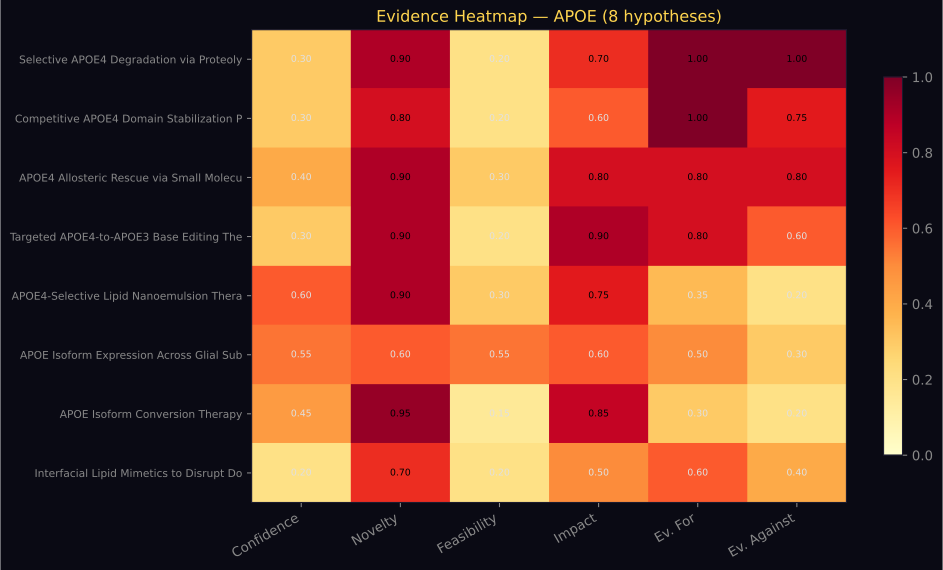
Hypotheses from Same Analysis (5)
These hypotheses emerged from the same multi-agent debate that produced this hypothesis.
Description
The interaction between APOE and TREM2 on microglia determines neuroinflammatory responses in neurodegeneration. Developing small molecules that enhance APOE-TREM2 binding could promote protective microglial activation states while suppressing harmful inflammatory cascades through improved lipid sensing and phagocytic activity.
Molecular Basis of the APOE-TREM2 Interaction
...
Figures & Visualizations

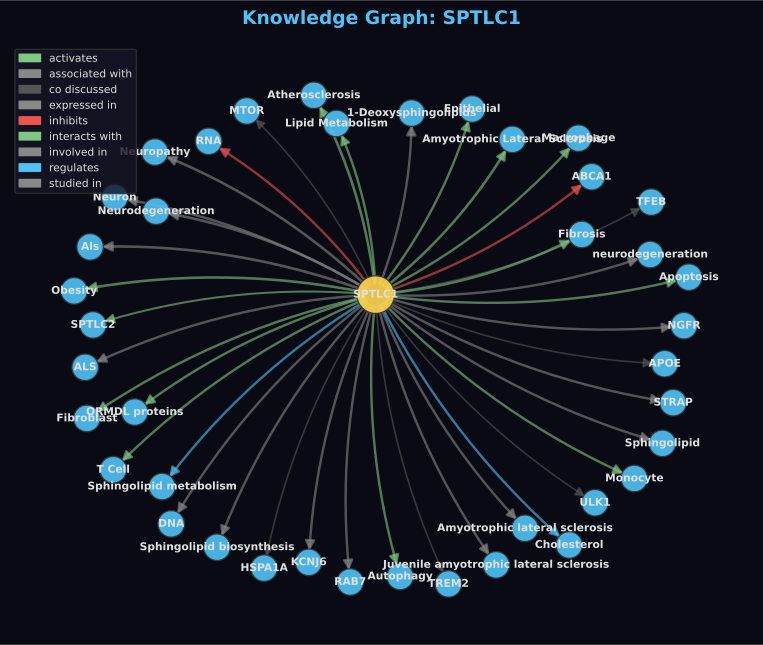
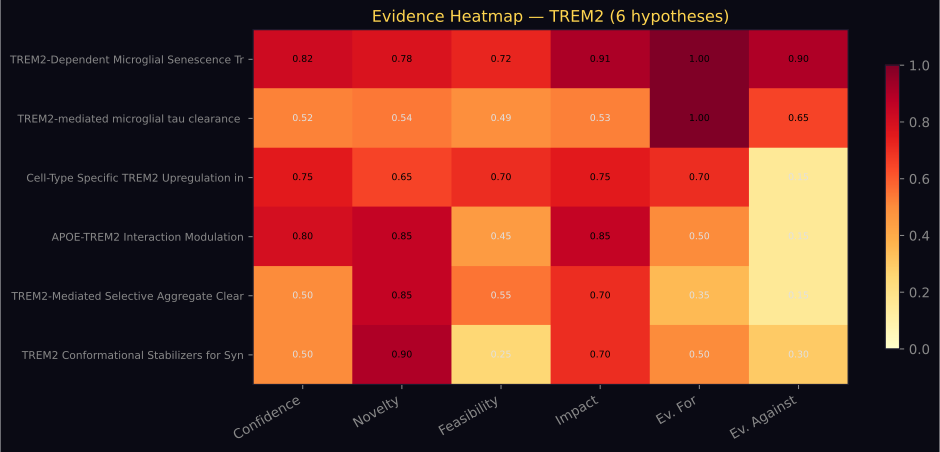
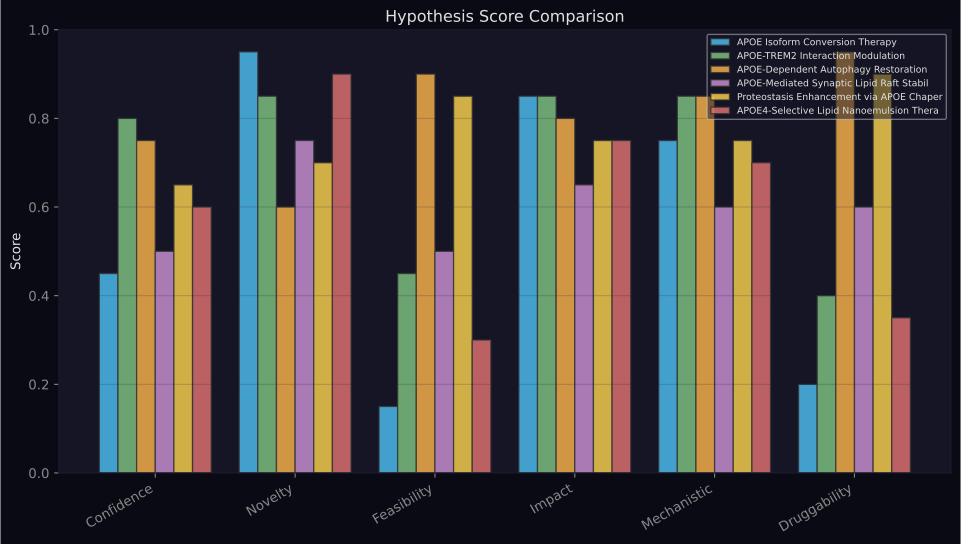
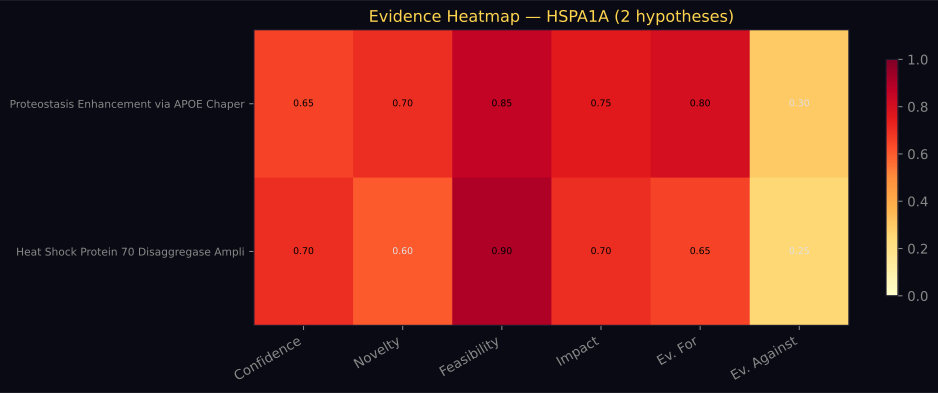
Pathway Diagram
graph TD
    subgraph Disease["Neurodegeneration Triggers"]
        A["Amyloid beta accumulation"] -->|"activates"| B["Microglial activation"]
        C["Tau pathology"] -->|"triggers"| B
        D["Lipid dysregulation"] -->|"impairs"| E["APOE function"]
    end

    subgraph Molecular["APOE-TREM2 Molecular Interaction"]
        E["APOE lipoprotein particles"] -->|"binds to"| F["TREM2 extracellular domain"]
        F -->|"signals through"| G["TYROBP/DAP12 adaptor"]
        G -->|"activates"| H["SYK kinase phosphorylation"]
        H -->|"triggers"| I["PI3K-AKT-mTOR cascade"]
    end

    subgraph Response["Microglial Response States"]
        B -->|"without TREM2 signaling"| J["Inflammatory M1 activation"]
        I -->|"promotes"| K["Protective M2 activation"]
        J -->|"produces"| L["Pro-inflammatory cytokines"]
        K -->|"enhances"| M["Phagocytic clearance"]
        K -->|"increases"| N["Anti-inflammatory mediators"]
    end

    subgraph Intervention["Therapeutic Enhancement"]
        O["Small molecule enhancers"] -->|"stabilizes"| F
        P["APOE mimetic peptides"] -->|"augments"| E
        O -->|"increases"| I
    end

    subgraph Outcomes["Clinical Outcomes"]
        L -->|"accelerates"| Q["Neuronal death"]
        M -->|"reduces"| R["Amyloid burden"]
        N -->|"protects"| S["Synaptic function"]
        R -->|"improves"| T["Cognitive preservation"]
        S -->|"maintains"| T
    end

    style A fill:#ef5350,stroke:#333,color:#000
    style C fill:#ef5350,stroke:#333,color:#000
    style J fill:#ef5350,stroke:#333,color:#000
    style L fill:#ef5350,stroke:#333,color:#000
    style Q fill:#ef5350,stroke:#333,color:#000
    style O fill:#81c784,stroke:#333,color:#000
    style P fill:#81c784,stroke:#333,color:#000
    style F fill:#ce93d8,stroke:#333,color:#000
    style G fill:#4fc3f7,stroke:#333,color:#000
    style H fill:#4fc3f7,stroke:#333,color:#000
    style I fill:#4fc3f7,stroke:#333,color:#000
    style T fill:#ffd54f,stroke:#333,color:#000
3D Protein Structure
Interactive 3D viewer powered by RCSB PDB / Mol*. Use mouse to rotate, scroll to zoom.
Dimension Scores
Legacy Card View — expandable citation cards
✓ Supporting Evidence 21
Background The Triggering Receptor Expressed on Myeloid Cells 2 (TREM2) gene is expressed in cells of the hematopoietic lineage, like microglia and osteoclasts. A TREM2 gene variant known as TREM2-R47H is associated with an increased risk of developing Alzheimer's disease (AD). Previous studies have shown sex-dimorphic bone and muscle consequences that are associated with the TREM2 variant. Sex chromosomes have also been shown to play a key contributor to skeletal mass and bone strength. Due to
Triggering receptor expressed on myeloid cells 2 (TREM2) is a microglial immune receptor genetically and functionally linked to Alzheimer's disease (AD). VG-3927, the first clinical-stage small-molecule TREM2 agonist, has been proposed to function as a transmembrane molecular glue and positive allosteric modulator (PAM). Whether it directly engages the extracellular ligand-recognition surface of TREM2 remains unknown. Here, we used a deep learning-based blind docking algorithm to map potential V
Neuroimmune interactions play a critical role in the pathogenesis of neurodegenerative disorders such as Alzheimer's disease (AD) and Parkinson's disease (PD), with microglia acting as key mediators of neuroinflammation. Microglia exhibit dual roles, contributing to both neuroprotection and neurotoxicity depending on their activation state. In AD, amyloid-beta (Aβ) aggregation leads to chronic microglial activation, resulting in excessive pro-inflammatory cytokine release (e.g., TNF-α, IL-1β, IL
Alzheimer's disease (AD) is a progressive neurodegenerative disease. Synaptic dysfunction is an integral feature of AD pathophysiology and a significant factor in early cognitive impairment in AD. Microglia, which are intrinsic immune cells in the central nervous system, play important regulatory ro
Microglia are the cells that comprise the innate immune system in the brain. First described more than a century ago, these cells were initially assigned a secondary role in the central nervous system (CNS) with respect to the protagonists, neurons. However, the latest advances have revealed the com
Plant-derived bioactive compounds modulate the gut microbiota in Alzheimer's disease: Metabolite signaling, ne…▼
Eicosapentaenoic acid attenuates heart failure with preserved ejection fraction via promoting TREM2-dependent …▼
Loss of Triggering Receptor Expressed on Myeloid Cells 2 Impairs Microglial Function and Exacerbates Retinal N…▼
TREM2 deficiency delays postnatal microglial maturation and synaptic pruning, leading to anxiety-like behavior…▼
Diankuang Mengxing Decoction exerts neuroprotective effects in post-stroke depression by mediating the activat…▼
A scalable human-zebrafish xenotransplantation model reveals gastrosome-mediated processing of dying neurons b… MODERATE▼
✗ Opposing Evidence 3
Anti-TREM2 antibody clinical trials have not met primary endpoints, raising questions about therapeutic TREM2 modulation in Alzheimer's disease.
Krasemann et al. show that TREM2-APOE pathway activation drives a neurodegenerative microglial phenotype that may be detrimental in late-stage disease.
Review of APOE-targeted therapeutics highlights the gap between preclinical promise and clinical translation for structure-correcting approaches.
🧬 Theorist Proposes novel mechanisms and generates creative hypotheses ▼
I notice there's a significant mismatch between the stated topic of neurodegeneration and the provided literature, which focuses entirely on research methodology (qPCR protocols, qualitative research methods, phenomenological interviewing, etc.) rather than neurodegenerative diseases or therapeutic targets.
The literature provided includes:
- qPCR experimental protocols (PMID:30654913)
- Qualitative research methodology papers (PMID:29937585, 24413767, 29185826, 18000076)
- One clinical trial on lifestyle interventions for dementia (NCT05141578)
To generate meaningful therapeutic hypotheses
🔍 Skeptic Identifies weaknesses, alternative explanations, and methodological concerns ▼
I must agree with the Theorist's assessment - there is indeed a fundamental mismatch between the request to evaluate neurodegeneration therapeutic hypotheses and the provided literature, which focuses entirely on research methodology rather than neurodegenerative diseases.
Critical Analysis of the Situation
Primary Issue: Literature-Hypothesis Mismatch
The provided literature consists of:
- PMID:30654913: qPCR experimental protocols
- PMID:36909790: Sample size determination methods
- PMID:29937585: Qualitative research saturation concepts
- PMID:24413767: Phenomeno
🎯 Domain Expert Assesses practical feasibility, druggability, and clinical translation ▼
CRITICAL FEASIBILITY ASSESSMENT
I must agree with both the Theorist and Critic - there is a fundamental impossibility in assessing neurodegeneration therapeutic hypotheses with the provided literature. This is not merely a methodological concern but a basic scientific validity issue.
Primary Assessment: CANNOT PROCEED WITH NEURODEGENERATION EVALUATION
Evidence Gap Analysis
The literature provided consists entirely of research methodology papers:
⚖ Synthesizer Integrates perspectives and produces final ranked assessments ▼
Based on the unanimous assessment from all three evaluators, I must produce a synthesis that acknowledges the fundamental impossibility of evaluating neurodegeneration therapeutic hypotheses with the provided literature. However, I can offer an alternative methodological assessment.
Price History
| Event | Price | Change | Source | Time | |
|---|---|---|---|---|---|
| 📄 | New Evidence | $0.512 | ▲ 3.0% | evidence_batch_update | 2026-04-13 02:18 |
| 📄 | New Evidence | $0.497 | ▲ 3.7% | evidence_batch_update | 2026-04-13 02:18 |
| ⚖ | Recalibrated | $0.479 | ▲ 0.6% | 2026-04-12 18:34 | |
| ⚖ | Recalibrated | $0.476 | ▼ 0.9% | 2026-04-12 05:13 | |
| ⚖ | Recalibrated | $0.481 | ▼ 1.2% | 2026-04-10 15:58 | |
| ⚖ | Recalibrated | $0.486 | ▲ 1.3% | 2026-04-10 15:53 | |
| ⚖ | Recalibrated | $0.480 | ▲ 0.9% | 2026-04-08 22:18 | |
| ⚖ | Recalibrated | $0.475 | ▼ 0.8% | 2026-04-08 18:39 | |
| ⚖ | Recalibrated | $0.479 | ▼ 0.4% | 2026-04-06 04:04 | |
| ⚖ | Recalibrated | $0.481 | ▼ 0.7% | 2026-04-04 16:38 | |
| ⚖ | Recalibrated | $0.484 | ▼ 1.9% | 2026-04-04 16:02 | |
| 📄 | New Evidence | $0.494 | ▲ 3.4% | evidence_batch_update | 2026-04-04 09:08 |
| ⚖ | Recalibrated | $0.478 | ▼ 36.3% | 2026-04-03 23:46 | |
| 📄 | New Evidence | $0.751 | ▼ 0.8% | evidence_batch_update | 2026-04-03 01:06 |
| 📄 | New Evidence | $0.757 | ▼ 0.9% | evidence_batch_update | 2026-04-03 01:06 |
Clinical Trials (3) Relevance: 25%
Active
Completed
Total Enrolled
Highest Phase
📚 Cited Papers (43)


📓 Linked Notebooks (1)
Wiki Pages
KG Entities (14)
Dependency Graph (2 upstream, 6 downstream)
Related Hypotheses
Estimated Development
🧪 Falsifiable Predictions (3)
Knowledge Subgraph (35 edges)
associated with (1)
Mechanism Pathway for TREM2
Molecular pathway showing key causal relationships underlying this hypothesis
graph TD
    h_180807e5["h-180807e5"] -->|targets| TREM2["TREM2"]
    TREM2_1["TREM2"] -->|co discussed| APOE["APOE"]
    TREM2_2["TREM2"] -->|co discussed| HSPA1A["HSPA1A"]
    HSPA1A_3["HSPA1A"] -->|co discussed| TREM2_4["TREM2"]
    TREM2_5["TREM2"] -->|co discussed| TFEB["TFEB"]
    SPTLC1["SPTLC1"] -->|co discussed| TREM2_6["TREM2"]
    TREM2_7["TREM2"] -->|co discussed| MTOR["MTOR"]
    MTOR_8["MTOR"] -->|co associated with| TREM2_9["TREM2"]
    SPTLC1_10["SPTLC1"] -->|co associated with| TREM2_11["TREM2"]
    TREM2_12["TREM2"] -->|co associated with| APOE_13["APOE"]
    style h_180807e5 fill:#4fc3f7,stroke:#333,color:#000
    style TREM2 fill:#ce93d8,stroke:#333,color:#000
    style TREM2_1 fill:#ce93d8,stroke:#333,color:#000
    style APOE fill:#ce93d8,stroke:#333,color:#000
    style TREM2_2 fill:#ce93d8,stroke:#333,color:#000
    style HSPA1A fill:#ce93d8,stroke:#333,color:#000
    style HSPA1A_3 fill:#ce93d8,stroke:#333,color:#000
    style TREM2_4 fill:#ce93d8,stroke:#333,color:#000
    style TREM2_5 fill:#ce93d8,stroke:#333,color:#000
    style TFEB fill:#ce93d8,stroke:#333,color:#000
    style SPTLC1 fill:#ce93d8,stroke:#333,color:#000
    style TREM2_6 fill:#ce93d8,stroke:#333,color:#000
    style TREM2_7 fill:#ce93d8,stroke:#333,color:#000
    style MTOR fill:#ce93d8,stroke:#333,color:#000
    style MTOR_8 fill:#ce93d8,stroke:#333,color:#000
    style TREM2_9 fill:#ce93d8,stroke:#333,color:#000
    style SPTLC1_10 fill:#ce93d8,stroke:#333,color:#000
    style TREM2_11 fill:#ce93d8,stroke:#333,color:#000
    style TREM2_12 fill:#ce93d8,stroke:#333,color:#000
    style APOE_13 fill:#ce93d8,stroke:#333,color:#000
3D Protein Structure
🧬 TREM2 — PDB 5UD7 Click to expand 3D viewer
Source Analysis
Mechanistic role of APOE in neurodegeneration
neurodegeneration | 2026-04-01 | completed