TREM2-Mediated Selective Aggregate Clearance Pathway
Quality Report Card click to collapse
From Analysis:
Protein aggregation cross-seeding across neurodegenerative diseases
Protein aggregation cross-seeding across neurodegenerative diseases?
Hypotheses from Same Analysis (6)
These hypotheses emerged from the same multi-agent debate that produced this hypothesis.
Description
Background and Rationale
Protein aggregation represents a central pathological hallmark across multiple neurodegenerative diseases, including Alzheimer's disease (AD), Parkinson's disease (PD), and frontotemporal dementia (FTD). While traditional therapeutic approaches have focused on preventing aggregate formation or broadly enhancing clearance mechanisms, recent insights into the heterogeneous nature of pathological protein assemblies have revealed new opportunities for precision intervention. Cross-seeded protein aggregates—heterocomplexes formed when misfolded proteins from different sources template each other's aggregation—represent particularly toxic species that may drive disease progression more aggressively than homologous aggregates.
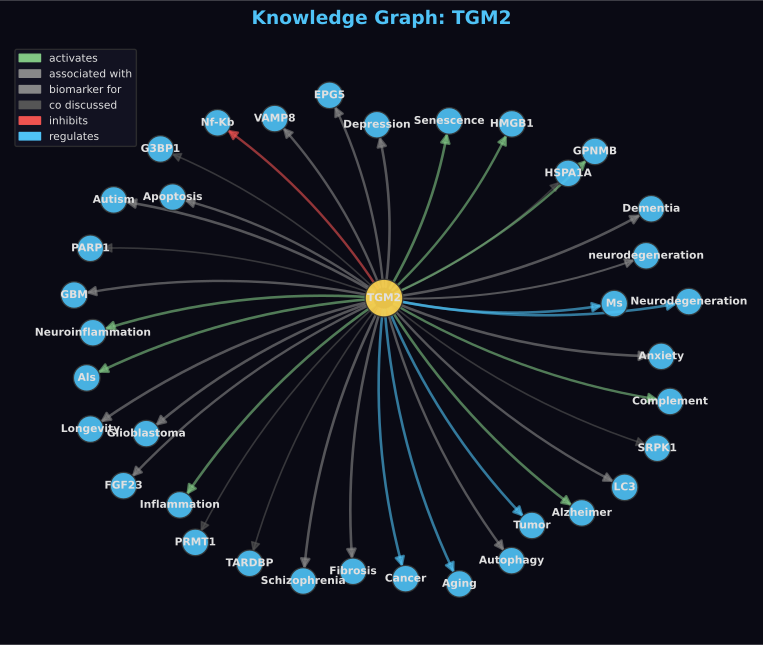
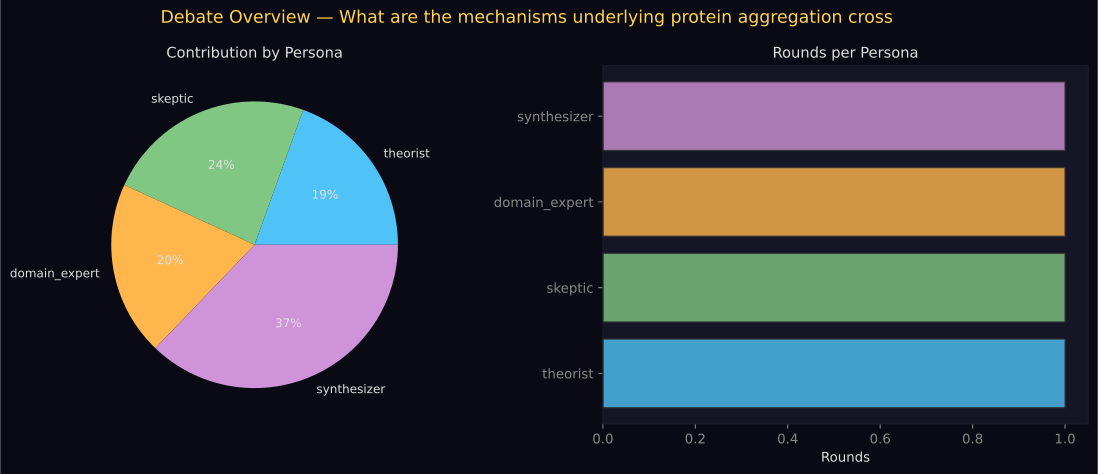
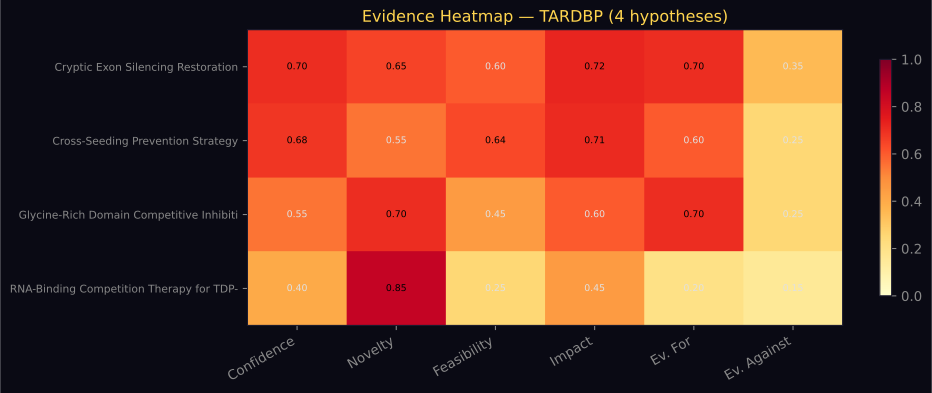
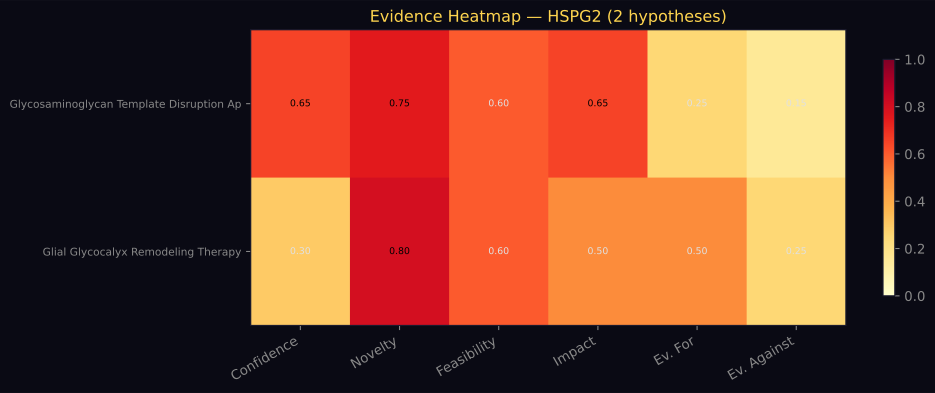
...Figures & Visualizations

Curated Mechanism Pathway
Curated pathway diagram from expert analysis
graph TD
    A["Pathological Protein Aggregates"] --> B["Cross-Seeded Heterocomplexes"]
    A --> C["Homologous Aggregates"]

    B --> D["Uniquely Toxic Conformations"]
    D --> E["Enhanced Neuronal Damage"]

    F["TREM2 on Microglia"] --> G["Lipid Ligand Recognition"]
    G --> H["TREM2-DAP12 Signaling"]
    H --> I["SYK Kinase Activation"]

    I --> J["PI3K/AKT Pathway"]
    I --> K["PLCgamma Calcium Flux"]

    J --> L["Phagocytic Cup Formation"]
    K --> L

    L --> M["Selective Aggregate Recognition"]
    M --> N["Cross-Seeded Aggregate Uptake"]
    M --> O["Homologous Aggregate Sparing"]

    N --> P["Lysosomal Degradation"]
    P --> Q["Clearance of Toxic Species"]

    R["TREM2 Agonist Therapy"] --> S["Enhanced TREM2 Surface Expression"]
    S --> T["Boosted Phagocytic Capacity"]
    T --> M

    Q --> U["Reduced Cross-Seeding Cascade"]
    U --> V["Slowed Neurodegeneration"]

    style A fill:#4a1942,stroke:#ce93d8,color:#e0e0e0
    style F fill:#1a3a4a,stroke:#4fc3f7,color:#e0e0e0
    style N fill:#1a3a2a,stroke:#81c784,color:#e0e0e0
    style V fill:#2a3a1a,stroke:#c5e1a5,color:#e0e0e0
3D Protein Structure
Interactive 3D viewer powered by RCSB PDB / Mol*. Use mouse to rotate, scroll to zoom.
Dimension Scores
Legacy Card View — expandable citation cards
✓ Supporting Evidence 19
Provides a comprehensive review of TREM2 in neurodegeneration, potentially supporting engineered protein aggre… MEDIUM▼
Triggering receptor expressed on myeloid cells 2 (TREM2) is a cell surface transmembrane receptor from the TREM receptor family, predominantly expressed on the microglia in the central nervous system (CNS). TREM2-initiated signaling plays a crucial role in regulating neuroinflammation and neurodegeneration, particularly in the context of neurodegenerative diseases such as Alzheimer's disease (AD) and Parkinson's disease (PD), through the activation of downstream signaling pathways and transcript
Investigates TREM2 targeting in neuroinflammation, suggesting potential for engineered protein clearance appro… MEDIUM▼
Parkinson's disease (PD) is a neurodegenerative disorder of the central nervous system (CNS) that predominantly affects middle-aged and elderly populations, characterized by the progressive loss of dopaminergic neurons in the substantia nigra and the abnormal aggregation of α-synuclein (α-Syn) as its core pathological features. Its pathogenesis is complex, and the crosstalk among genetic factors, microenvironmental factors and neuroinflammation has emerged as a central research focus at present.
After publication of this article, it came to the attention of the authors that their names had been reordered. Professor. Jia Cao and Prof. Jin-yi Liu are the co-corresponding authors, and Prof. Jin-yi Liu should be the last author.
TREM2+ disease-associated microglia form compact barriers around amyloid plaques, limiting toxic halo expansio… STRONG▼
Alzheimer's disease (AD) is a detrimental neurodegenerative disease with no effective treatments. Due to cellular heterogeneity, defining the roles of immune cell subsets in AD onset and progression has been challenging. Using transcriptional single-cell sorting, we comprehensively map all immune populations in wild-type and AD-transgenic (Tg-AD) mouse brains. We describe a novel microglia type associated with neurodegenerative diseases (DAM) and identify markers, spatial localization, and pathw
The mechanistic target of rapamycin (mTOR) signaling pathway plays a major role in key cellular processes including metabolism and differentiation; however, the role of mTOR in microglia and its importance in Alzheimer's disease (AD) have remained largely uncharacterized. We report that selective lo
Microglia play a crucial role in brain homeostasis through phagocytosis of amyloid-β (Aβ) fibrils, a hallmark of Alzheimer disease (AD) pathology. The balance between Aβ production and clearance is critical for AD pathogenesis, with impaired clearance mechanisms potentially contributing to disease p
Microglia are a specialized type of neuroimmune cells that undergo morphological and molecular changes through multiple signaling pathways in response to pathological protein aggregates, neuronal death, tissue injury, or infections. Microglia express Trem2, which serves as a receptor for a multitude
Triggering Receptor Expressed on Myeloid Cells-2 Regulates Innate Lymphoid Cell Levels in Bleomycin-Induced Pu…▼
Plant-derived bioactive compounds modulate the gut microbiota in Alzheimer's disease: Metabolite signaling, ne…▼
Loss of Triggering Receptor Expressed on Myeloid Cells 2 Impairs Microglial Function and Exacerbates Retinal N…▼
TREM2 deficiency delays postnatal microglial maturation and synaptic pruning, leading to anxiety-like behavior…▼
Hierarchical Targeting of TREM2(+) Myeloid Cells via Acid-Triggered OMVs Reprogram Immunosuppression and Suppr…▼
TREM2-mediated microglial phagocytosis of inhibitory synapses contributes to prolonged FS-induced epileptogene… MODERATE▼
A scalable human-zebrafish xenotransplantation model reveals gastrosome-mediated processing of dying neurons b… MODERATE▼
✗ Opposing Evidence 3
Flattery is one of the oldest and most commonly used impression-management tactics in everyday life. Though it often brings benefits to the flatterer, less is known about how it affects the target. In the present research, we explore when and why being flattered can be costly for leaders-common targets of flattery-depending on how they respond to it. We suggest that leaders who are observed rewarding flatterers risk appearing naïve to others. Across seven studies and six supplementary studies (N
Excessive TREM2 activation in late-stage disease may promote inflammatory DAM states rather than protective ph… MEDIUM▼
Predictive testing for Huntington disease (HD) in 25% at-risk individuals is testing with full knowledge, and sometimes assuming, that the parent does not want to know his status. The goal of this study was to understand: (1) the differences in the motivation between 25% and 50% at-risk individuals to be tested and (2) the consequences of "double disclosure", including parental reactions. Test requests from 25% at-risk individuals were rare (155/1611, 10%). We compared their motivation with thos
TREM2-mediated microglial activation may inadvertently accelerate tau spreading by releasing tau-containing ex… MEDIUM▼
🧬 Theorist Proposes novel mechanisms and generates creative hypotheses ▼
Mechanistically Novel Hypotheses: Protein Aggregation Cross-Seeding in Neurodegeneration
Hypothesis 1: Galectin-3 as a Universal Sensor-Dependent Cross-Seeding Platform at Damaged Endo/Lysosomal Membranes
Mechanism
Galectin-3 (LGALS3) functions as a "damage scaffold" that simultaneously recruits multiple aggregation-prone proteins (Aβ42, α-synuclein, TDP-43) to ruptured endolysosomal membranes, creating a localized high-concentration environment that favors cross-nucleation. The galectin carbohydrate recognition domain recognizes exposed glycans on damaged organelle membranes
🔍 Skeptic Identifies weaknesses, alternative explanations, and methodological concerns ▼
Critical Evaluation: Protein Aggregation Cross-Seeding Hypotheses
Hypothesis 1: Galectin-3 as a Universal Sensor-Dependent Cross-Seeding Platform
1. Strongest Specific Weakness: The Mechanism Conflates Co-Localization with Catalytic Cross-Seeding Activity
The proposal argues that galectin-3 simultaneously recruits Aβ42, α-synuclein, and TDP-43 to damaged endolysosomal membranes, creating a high-concentration environment that favors cross-nucleation. However, the cited evidence demonstrates only co-localization, not catalysis. Galectin-3 is a lectin with established carbohy
🎯 Domain Expert Assesses practical feasibility, druggability, and clinical translation ▼
Domain Expert Assessment: Cross-Seeding Hypotheses in Neurodegeneration
Preliminary Note on Hypothesis Characterization
The presented hypotheses are mechanistically interesting but pre-clinical, occupying an intermediate translational readiness level between basic discovery and therapeutic development. The galectin-3 proposal in particular represents a sophisticated speculation that requires significant experimental derisking before reaching IND-enabling studies. I will therefore evaluate translational potential not against an abstract standard, but against what is achievable
⚖ Synthesizer Integrates perspectives and produces final ranked assessments ▼
{"ranked_hypotheses":[{"rank":1,"title":"Galectin-3 as Damage-Sensor Scaffold for Multimeric Cross-Seeding at Compromised Endo/Lysosomal Membranes","mechanism":"Galectin-3's carbohydrate recognition domain binds exposed glycans on ruptured endolysosomal membranes while its intrinsically disordered N-terminus provides a phase-separated condensation surface that recruits aggregation-prone proteins (Aβ42, α-synuclein, TDP-43) into localized high-concentration environments favoring cross-nucleation.","target_gene":"LGALS3","confidence_score":0.55,"novelty_score":0.75,"feasibility_score":0.40,"im
Price History
| Event | Price | Change | Source | Time | |
|---|---|---|---|---|---|
| 📄 | New Evidence | $0.473 | ▲ 3.4% | evidence_batch_update | 2026-04-13 02:18 |
| 📄 | New Evidence | $0.457 | ▲ 6.2% | evidence_batch_update | 2026-04-13 02:18 |
| ⚖ | Recalibrated | $0.430 | ▼ 1.3% | 2026-04-10 15:58 | |
| ⚖ | Recalibrated | $0.436 | ▲ 1.5% | 2026-04-10 15:53 | |
| ⚖ | Recalibrated | $0.429 | ▲ 0.3% | 2026-04-08 18:39 | |
| ⚖ | Recalibrated | $0.428 | ▼ 0.8% | 2026-04-04 16:38 | |
| ⚖ | Recalibrated | $0.432 | ▼ 3.4% | 2026-04-04 16:02 | |
| 📄 | New Evidence | $0.447 | ▲ 4.0% | evidence_batch_update | 2026-04-04 09:08 |
| ⚖ | Recalibrated | $0.430 | ▼ 32.4% | 2026-04-03 23:46 | |
| 📄 | New Evidence | $0.636 | ▼ 0.6% | evidence_batch_update | 2026-04-03 01:06 |
| 📄 | New Evidence | $0.640 | ▲ 45.9% | evidence_batch_update | 2026-04-03 01:06 |
| ⚖ | Recalibrated | $0.438 | ▼ 34.3% | 2026-04-02 21:55 | |
| 📊 | Score Update | $0.668 | ▲ 15.1% | market_dynamics | 2026-04-02 21:38 |
| ✨ | Listed | $0.580 | market_dynamics | 2026-04-02 21:38 |
Clinical Trials (5) Relevance: 26%
Active
Completed
Total Enrolled
Highest Phase
📚 Cited Papers (50)


📓 Linked Notebooks (1)
Wiki Pages
KG Entities (14)
Dependency Graph (3 upstream, 5 downstream)
Related Hypotheses
Estimated Development
🧪 Falsifiable Predictions (4)
Knowledge Subgraph (43 edges)
co associated with (11)
implicated in (1)
targets (5)
Mechanism Pathway for TREM2
Molecular pathway showing key causal relationships underlying this hypothesis
graph TD
    h_3460f820["h-3460f820"] -->|targets| TREM2["TREM2"]
    TREM2_1["TREM2"] -->|co discussed| HSPG2["HSPG2"]
    TREM2_2["TREM2"] -->|co discussed| G3BP1["G3BP1"]
    TREM2_3["TREM2"] -->|co discussed| TARDBP["TARDBP"]
    TREM2_4["TREM2"] -->|co discussed| TGM2["TGM2"]
    TGM2_5["TGM2"] -->|co discussed| TREM2_6["TREM2"]
    G3BP1_7["G3BP1"] -->|co discussed| TREM2_8["TREM2"]
    HSPG2_9["HSPG2"] -->|co discussed| TREM2_10["TREM2"]
    TREM2_11["TREM2"] -->|co discussed| PHB2["PHB2"]
    TREM2_12["TREM2"] -->|co discussed| DNAJB6["DNAJB6"]
    HSPG2_13["HSPG2"] -->|co associated with| TREM2_14["TREM2"]
    TARDBP_15["TARDBP"] -->|co associated with| TREM2_16["TREM2"]
    PHB2_17["PHB2"] -->|co associated with| TREM2_18["TREM2"]
    DNAJB6_19["DNAJB6"] -->|co associated with| TREM2_20["TREM2"]
    style h_3460f820 fill:#4fc3f7,stroke:#333,color:#000
    style TREM2 fill:#ce93d8,stroke:#333,color:#000
    style TREM2_1 fill:#ce93d8,stroke:#333,color:#000
    style HSPG2 fill:#ce93d8,stroke:#333,color:#000
    style TREM2_2 fill:#ce93d8,stroke:#333,color:#000
    style G3BP1 fill:#ce93d8,stroke:#333,color:#000
    style TREM2_3 fill:#ce93d8,stroke:#333,color:#000
    style TARDBP fill:#ce93d8,stroke:#333,color:#000
    style TREM2_4 fill:#ce93d8,stroke:#333,color:#000
    style TGM2 fill:#ce93d8,stroke:#333,color:#000
    style TGM2_5 fill:#ce93d8,stroke:#333,color:#000
    style TREM2_6 fill:#ce93d8,stroke:#333,color:#000
    style G3BP1_7 fill:#ce93d8,stroke:#333,color:#000
    style TREM2_8 fill:#ce93d8,stroke:#333,color:#000
    style HSPG2_9 fill:#ce93d8,stroke:#333,color:#000
    style TREM2_10 fill:#ce93d8,stroke:#333,color:#000
    style TREM2_11 fill:#ce93d8,stroke:#333,color:#000
    style PHB2 fill:#ce93d8,stroke:#333,color:#000
    style TREM2_12 fill:#ce93d8,stroke:#333,color:#000
    style DNAJB6 fill:#ce93d8,stroke:#333,color:#000
    style HSPG2_13 fill:#ce93d8,stroke:#333,color:#000
    style TREM2_14 fill:#ce93d8,stroke:#333,color:#000
    style TARDBP_15 fill:#ce93d8,stroke:#333,color:#000
    style TREM2_16 fill:#ce93d8,stroke:#333,color:#000
    style PHB2_17 fill:#ce93d8,stroke:#333,color:#000
    style TREM2_18 fill:#ce93d8,stroke:#333,color:#000
    style DNAJB6_19 fill:#ce93d8,stroke:#333,color:#000
    style TREM2_20 fill:#ce93d8,stroke:#333,color:#000
3D Protein Structure
🧬 TREM2 — PDB 5UD7 Click to expand 3D viewer
Source Analysis
Protein aggregation cross-seeding across neurodegenerative diseases
neurodegeneration | 2026-04-01 | completed