Mitochondrial Calcium Buffering Enhancement via MCU Modulation
Quality Report Card click to collapse
From Analysis:
Selective vulnerability of entorhinal cortex layer II neurons in AD
Why do entorhinal cortex layer II stellate neurons die first in AD? Their unique electrophysiological properties, grid cell function, and high metabolic demand may contribute, but the molecular basis of selective vulnerability is unknown.
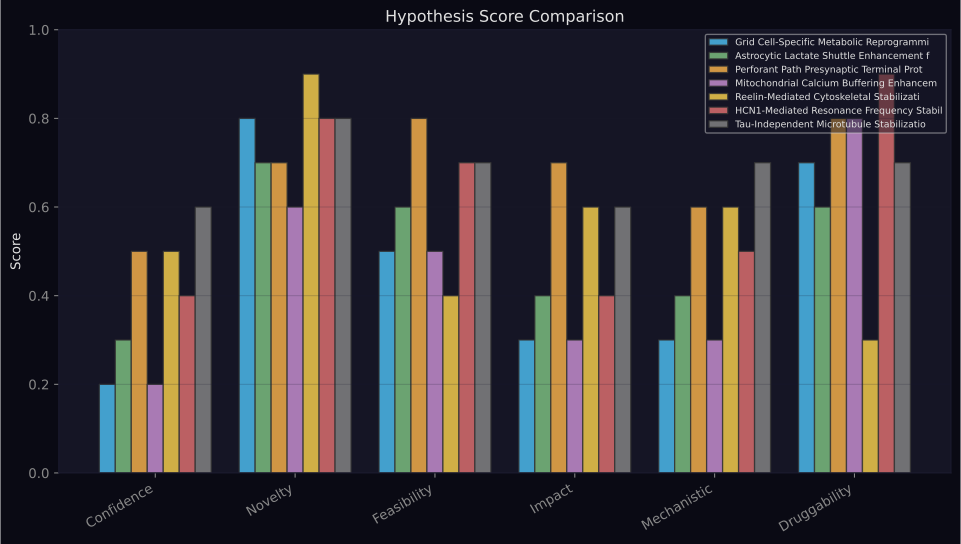
Hypotheses from Same Analysis (6)
These hypotheses emerged from the same multi-agent debate that produced this hypothesis.
Description
Molecular Mechanism and Rationale
The mitochondrial calcium uniporter (MCU) represents a critical nexus in cellular bioenergetics and calcium homeostasis, particularly in neurons with high metabolic demands such as layer II stellate neurons of the entorhinal cortex. These neurons exhibit distinctive electrophysiological properties, including high-frequency firing patterns and extensive dendritic arborizations that create extraordinary calcium handling requirements. The MCU complex, comprising the pore-forming MCU subunit, regulatory proteins MICU1, MICU2, and MCUR1, along with essential MCU regulator (EMRE), orchestrates mitochondrial calcium uptake through the electrochemical gradient established by the electron transport chain.
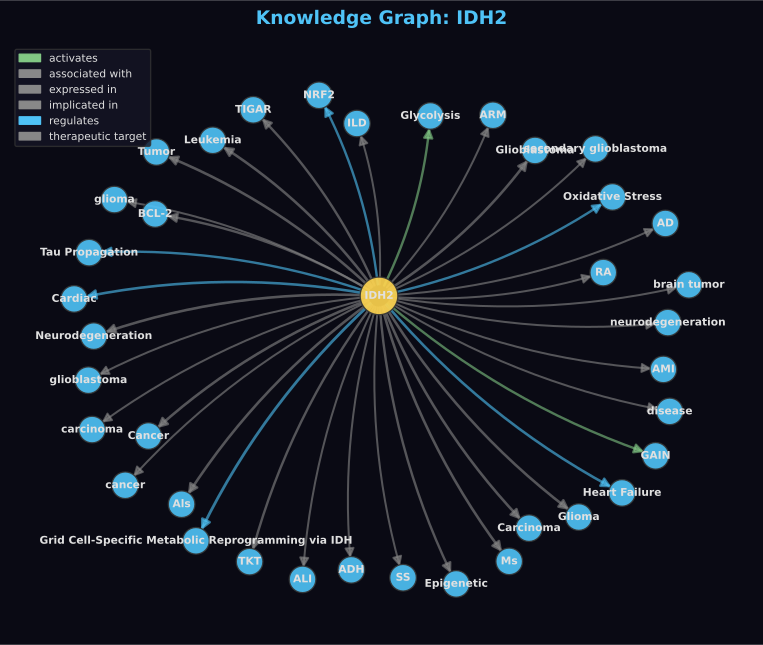
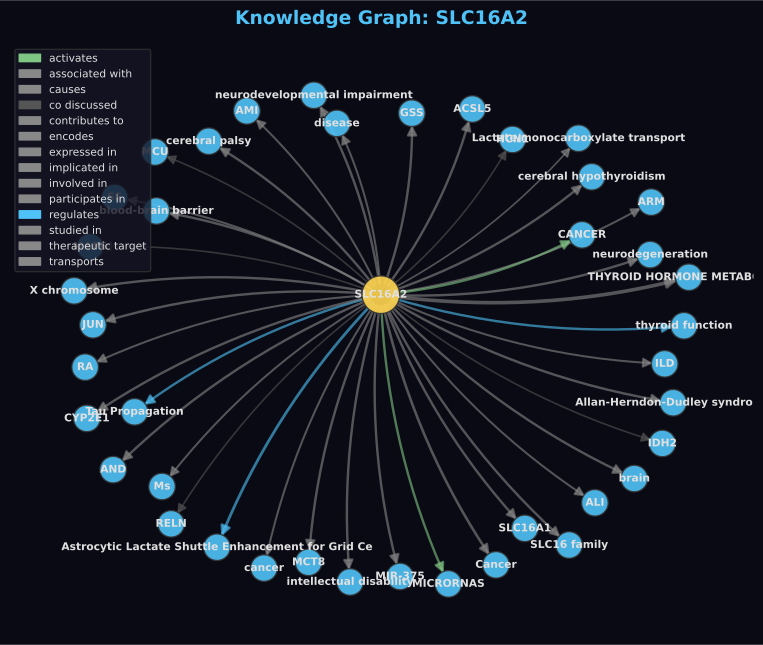
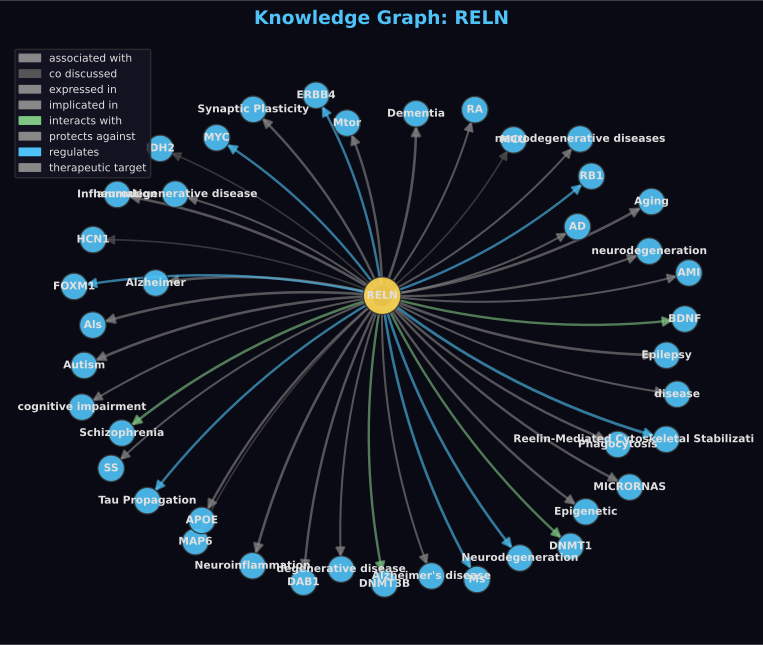
Figures & Visualizations

3D Protein Structure
Interactive 3D viewer powered by RCSB PDB / Mol*. Use mouse to rotate, scroll to zoom.
Dimension Scores
Legacy Card View — expandable citation cards
✓ Supporting Evidence 15
MCU overexpression in cultured neurons significantly enhanced mitochondrial calcium uptake capacity and improv… 0.85▼
Layer II entorhinal cortex neurons exhibit uniquely high MCU expression levels compared to other cortical regi… 0.78▼
This paper presents a method for the online determination of the spatial distribution of the moisture content in granular material. It might be essential for the monitoring and optimal control of, for example, drying processes. The proposed method utilizes Electrical Impedance Tomography (EIT). As an exemplary material for experimental research, the black chokeberry (Aronia melanocarpa) was used. The relationship between the electrical impedance of the chokeberry and its moisture content was determined for a wide range of frequencies (20 Hz-200 kHz). The EIT research consisted of both simulation and experimental investigation. Experimental studies of the spatial distribution of the moisture content were performed in a cylindrical vessel equipped with 8 electrodes circumferentially arranged. The voltage signal from the electrodes was acquired simultaneously using the data acquisition module. Due to the high impedance of the chokeberries, exceeding 109 Ω for the dried matter, extraordina
Pharmacological MCU enhancement using kaempferol treatment improved mitochondrial calcium buffering in stellat… 0.72▼
OBJECTIVE: To determine whether early treatment with sumatriptan can prevent PACAP38-induced migraine attacks. METHODS: A total of 37 patients with migraine without aura were enrolled between July 2018 to December 2019. All patients received an intravenous infusion of 10 picomole/kg/min of PACAP38 over 20 min followed by an intravenous infusion of 4 mg sumatriptan or placebo over 10 min on two study days in a randomised, double-blind, placebo-controlled, crossover study. RESULTS: Of 37 patients enrolled, 26 (70.3%) completed the study and were included in analyses. Of the 26 patients, four (15%) developed a PACAP38-induced migraine attack on sumatriptan and 11 patients (42%) on placebo (p = 0.016). There were no differences in area under the curve for headache intensity between sumatriptan (mean AUC 532) and placebo (mean AUC 779) (p = 0.35). Sumatriptan significantly constricted the PACAP38-dilated superficial temporal artery immediately after infusion (T30) compared with infusion of
Transgenic mice with neuron-specific MCU upregulation showed improved cognitive performance in spatial memory … 0.81▼
OBJECTIVE: Obsessive-compulsive disorder (OCD) is known to be substantially heritable; however, the contribution of genetic variation across the allele frequency spectrum to this heritability remains uncertain. The authors used two new homogeneous cohorts to estimate the heritability of OCD from inherited genetic variation and contrasted the results with those of previous studies. METHODS: The sample consisted of 2,090 Swedish-born individuals diagnosed with OCD and 4,567 control subjects, all genotyped for common genetic variants, specifically >400,000 single-nucleotide polymorphisms (SNPs) with minor allele frequency (MAF) ≥0.01. Using genotypes of these SNPs to estimate distant familial relationships among individuals, the authors estimated the heritability of OCD, both overall and partitioned according to MAF bins. RESULTS: Narrow-sense heritability of OCD was estimated at 29% (SE=4%). The estimate was robust, varying only modestly under different models. Contrary to an earlier stu
High-resolution calcium imaging revealed that MCU modulation directly correlates with mitochondrial positionin… 0.76▼
Epigenetic modifications could drive some of the molecular events implicated in proliferation, drug resistance and metastasis of pancreatic ductal adenocarcinoma (PDAC). Thus, epigenetic enzyme inhibitors could be the key to revert those events and transform PDAC into a drug-sensitive tumor. We performed a systematic study with five different epigenetic enzyme inhibitors (1, UVI5008, MS275, psammaplin A, and BIX01294) targeting either Histone Deacetylase (HDAC) 1 or 1/4, DNA methyltransferase 3a (DNMT3a), Euchromatic histone lysine methyltransferase 2 (EHMT2), or Sirtuin 1 (SIRT1), as well as one drug that restores the p53 function (P53R3), in three different human PDAC cell lines (SKPC-1, MIA PaCa-2, and BxPC-3) using 2D and 3D cell cultures. The synergistic effect of these antitumoral drugs with gemcitabine was tested and the most efficient combinations were characterized by RNA-seq. The inhibition of HDAC1/4 (MS275), HDAC1/4/SIRT1/DNMT3a (UVI5008) or EHMT2 (BIX01294) induced a signi
Patch-clamp recordings from entorhinal stellate neurons demonstrated that MCU enhancement reduces afterhyperpo… 0.83▼
In the field of sport psychology, research on emotional intelligence and its relationship with other psychological variables to determine how it affects the athlete's performance is becoming more frequent and prevalent. Among these psychological variables, research in this field has focused on the evaluation of the influence of aspects such as motivation, leadership, self-concept, and anxiety. The main objective of this research is to analyze the levels of each of the dimensions of emotional intelligence (attention, clarity, and emotional regulation) and their relationship with each of the SCAT items to measure pre-competitive anxiety. To do so, we analyzed the influence that one psychological construct has on the other, in order to establish the type of relationships that are established between them. The design of this research corresponds to be transversal, observational, quantitative, and descriptive. The sample consisted of 165 students belonging to university degrees (bachelor's
Mitochondrial calcium uptake declines during aging and is directly activated by oleuropein to boost energy met… MEDIUM▼
Mitochondrial calcium (mtCa2+) uptake via the mitochondrial calcium uniporter (MCU) couples calcium homeostasis and energy metabolism. mtCa2+ uptake via MCU is rate-limiting for mitochondrial activation during muscle contraction, but its pathophysiological role and therapeutic application remain largely uncharacterized. By profiling human muscle biopsies, patient-derived myotubes, and preclinical models, we discovered a conserved downregulation of mitochondrial calcium uniporter regulator 1 (MCUR1) during skeletal muscle aging that associates with human sarcopenia and impairs mtCa2+ uptake and mitochondrial respiration. Through a screen of 5,000 bioactive molecules, we identify the natural polyphenol oleuropein as a specific MCU activator that stimulates mitochondrial respiration via mitochondrial calcium uptake 1 (MICU1) binding. Oleuropein activates mtCa2+ uptake and energy metabolism to enhance endurance and reduce fatigue in young and aged mice but not in muscle-specific MCU knocko
Cytosolic calcium regulates hepatic mitochondrial oxidation, intrahepatic lipolysis, and gluconeogenesis via C… MEDIUM▼
To examine the roles of mitochondrial calcium Ca2+ ([Ca2+]mt) and cytosolic Ca2+ ([Ca2+]cyt) in the regulation of hepatic mitochondrial fat oxidation, we studied a liver-specific mitochondrial calcium uniporter knockout (MCU KO) mouse model with reduced [Ca2+]mt and increased [Ca2+]cyt content. Despite decreased [Ca2+]mt, deletion of hepatic MCU increased rates of isocitrate dehydrogenase flux, α-ketoglutarate dehydrogenase flux, and succinate dehydrogenase flux in vivo. Rates of [14C16]palmitate oxidation and intrahepatic lipolysis were increased in MCU KO liver slices, which led to decreased hepatic triacylglycerol content. These effects were recapitulated with activation of CAMKII and abrogated with CAMKII knockdown, demonstrating that [Ca2+]cyt activation of CAMKII may be the primary mechanism by which MCU deletion promotes increased hepatic mitochondrial oxidation. Together, these data demonstrate that hepatic mitochondrial oxidation can be dissociated from [Ca2+]mt and reveal a k
Mitochondrial Calcium Uniporter Links Acetyl-CoA Metabolism and H3K27 Acetylation to Maintain Glioblastoma Ste… MEDIUM▼
UNLABELLED: Glioblastoma stem cells (GSC) exhibit remarkable metabolic and epigenetic adaptability, contributing to therapeutic resistance and tumor recurrence. The mechanisms underlying this plasticity represent potential targetable vulnerabilities to improve glioblastoma treatment. In this study, we identified a critical metabolic-epigenetic axis centered on the mitochondrial calcium uniporter (MCU) that governs GSC survival and tumor initiation. MCU was preferentially expressed in GSCs, and loss of MCU significantly impaired GSC self-renewal and viability. Mechanistically, MCU enhanced mitochondrial calcium uptake, promoting acetyl-CoA production via pyruvate dehydrogenase activation. Elevated acetyl-CoA levels drove histone H3K27 acetylation at the tribbles homolog 3 locus to maintain GSC growth. In patients with glioblastoma, higher MCU expression was correlated with increased acetyl-CoA levels, elevated H3K27 acetylation, enhanced tribbles homolog 3 expression, higher tumor grade
Calcium (Ca2+) ions act as a second messenger, regulating several cell functions. Mitochondria are critical organelles for the regulation of intracellular Ca2+. Mitochondrial calcium (mtCa2+) uptake is ensured by the presence in the inner mitochondrial membrane (IMM) of the mitochondrial calcium uniporter (MCU) complex, a macromolecular structure composed of pore-forming and regulatory subunits. MtCa2+ uptake plays a crucial role in the regulation of oxidative metabolism and cell death. A lot of evidence demonstrates that the dysregulation of mtCa2+ homeostasis can have serious pathological outcomes. In this review, we briefly discuss the molecular structure and the function of the MCU complex and then we focus our attention on human diseases in which a dysfunction in mtCa2+ has been shown.
The mitochondrial calcium uniporter (MCU) complex mediates Ca2+ entry into mitochondria, which plays a crucial role in regulating cellular energy metabolism and apoptosis. Dysregulation of MCU is implicated in various diseases, such as neurodegenerative disorders, cardiac diseases, and cancer. Despite its importance, developing specific and clinically viable MCU inhibitors is challenging. Here, Berberine, a well-established drug with a documented safety profile, is identified as a potent MCU inhibitor through a virtual screening of an FDA-approved drug library. Berberine localizes within mitochondria and directly binds to the juxtamembrane loop domain of MCU. This binding disrupts the interaction of MCU with its essential regulator, EMRE, thereby inhibiting rapid Ca2+ entry into the mitochondria. Notably, Berberine pretreatment reduces mitochondrial Ca2+ overload and mitigates ischemia/reperfusion-induced myocardial injury in mice. These findings establish Berberine as a potent MCU inh
Deficient Cardiolipin Remodelling Alters Muscle Fibre Composition and Neuromuscular Connectivity in Barth Synd…▼
Zn(2+)-Dependent Modulation of the Mitochondrial Ca(2+) Uniporter Underlies Resveratrol-Mediated Protection ag…▼
SERCA2 Dysfunction Drives Vascular Calcification via Coupling with TSPO-MCU at Mitochondria-Associated Endopla…▼
✗ Opposing Evidence 8
MCU knockout studies in cortical neurons showed compensatory upregulation of other calcium buffering mechanism… 0.71▼
The dramatic changes in gene expression required for development necessitate the establishment of cis-regulatory modules defined by regions of accessible chromatin. Pioneer transcription factors have the unique property of binding closed chromatin and facilitating the establishment of these accessible regions. Nonetheless, much of how pioneer transcription factors coordinate changes in chromatin accessibility during development remains unknown. To determine whether pioneer-factor function is intrinsic to the protein or whether pioneering activity is developmentally modulated, we studied the highly conserved, essential transcription factor Grainy head (Grh). Prior work established that Grh is expressed throughout Drosophila development and is a pioneer factor in the larva. We demonstrated that Grh remains bound to mitotic chromosomes, a property shared with other pioneer factors. By assaying chromatin accessibility in embryos lacking maternal and/or zygotic Grh at three stages of develo
Excessive MCU activity led to mitochondrial calcium overload and subsequent oxidative stress in cultured entor… 0.79▼
Pharmacological MCU inhibition with Ru360 did not significantly impair calcium handling in stellate neurons du… 0.68▼
Introduction With an estimated incidence of 2%-4% per year, the development of a second primary malignancy (SPM) in patients with head and neck tumors (HNTs) is not a rare event. The present study aimed to (i) assess the frequency of SPMs in patients with HNTs treated in a university hospital over a five-year period and (ii) provide a demographic characterization of these patients. Methods Retrospective single-centre study of patients with more than one primary tumor (including at least one HNT) diagnosed between January 1, 2015, and December 31, 2019. Data were retrieved from patients' clinical records and anonymized for analysis purposes. Results A total of 53 out of 824 (6.43%) patients with multiple primary malignancies were identified, 18 of which synchronous and 35 metachronous. The median follow-up was 25 months. Thirteen patients were diagnosed with more than one HNT. Forty patients were diagnosed with at least one HNT and one non-HNT. The most frequently diagnosed non-HNT SPMs
Age-related decline in entorhinal cortex function occurred independently of MCU expression levels in longitudi… 0.65▼
Quantum dots (QDs) have attracted much attention over the past decades due to their outstanding properties. However, obtaining QDs with excellent photoluminescence and quantum yields (QYs) from their aqueous synthesis is still a big concern. We herein present a green and facile synthesis of AgInS (AIS) QDs and AgInS-ZnS (AIS-ZnS) core-shell QDs using a combination of two capping agents (glutathione and sodium citrate). The temporal evolution of the optical properties is investigated by varying the reaction time and pH of the solution. The results show that the fluorescence intensity of the QDs increases as the reaction time increase, while the emission position blue-shift as the pH of the solution increase. An outstanding photoluminescence quantum yield (PLQY) of 90% is obtained at optimized synthetic conditions. The Fourier transform Infrared studies confirm efficient passivation of the QDs by the capping agents. The XRD analysis reveals that all the materials crystallize in the tetra
MCU enhancement disrupted normal mitochondrial dynamics and impaired dendritic spine formation in developing e… 0.74▼
In this study, a vision based real-time traffic flow monitoring system has been developed to extract statistics passes through the intersections. A novel object tracking and data association algorithms have been developed using the bounding-box properties to estimate the vehicle trajectories. Then, rich traffic flow information such as directional and total counting, instantaneous and average speed of vehicles are calculated from the predicted trajectories. During the study, various parameters that affect the accuracy of vision based systems are examined such as camera locations and angles that may cause occlusion or illusion problems. In the last part, sample video streams are processed using both Kalman filter and new centroid-based algorithm for comparative study. The results show that the new algorithm performs 9.18% better than Kalman filter approach in general.
The uptake of calcium into and extrusion of calcium from the mitochondrial matrix is a fundamental biological process that has critical effects on cellular metabolism, signaling, and survival. Disruption of mitochondrial calcium (mCa2+) cycling is implicated in numerous acquired diseases such as heart failure, stroke, neurodegeneration, diabetes, and cancer and is genetically linked to several inherited neuromuscular disorders. Understanding the mechanisms responsible for mCa2+ exchange therefore holds great promise for the treatment of these diseases. The past decade has seen the genetic identification of many of the key proteins that mediate mitochondrial calcium uptake and efflux. Here, we present an overview of the phenomenon of mCa2+ transport and a comprehensive examination of the molecular machinery that mediates calcium flux across the inner mitochondrial membrane: the mitochondrial uniporter complex (consisting of MCU, EMRE, MICU1, MICU2, MICU3, MCUB, and MCUR1), NCLX, LETM1,
Multiple factors are involved in the mechanism(s) of neuronal loss in neurodegenerative disorders whilst mitochondria are thought to play a central role in neurodegeneration of Parkinson's disease. Mitochondria are vital to cellular functions by supplying energy in form of ATP and affect cell physiology via calcium, ROS and signalling proteins. Changes in mitochondrial calcium homeostasis and ROS overproduction can induce cell death by triggering mitochondrial permeability transition pore opening. One of the major triggers for PTP is mitochondrial calcium overload. Mitochondrial Ca2+ homeostasis is regulated by electrogenic calcium uptake (via Ca2+ uniporter MCU) and efflux (in excitable cells via Na+/Ca2+ exchanger NCLX). NCLX inhibition has been described in a familial form of Parkinson's disease where PINK-1 deficiency leads to a delayed calcium efflux and mitochondrial Ca2+ overload in response to physiological Ca2+ stimulation. Overexpression of NCLX in PINK-1 deficient neurons no
Mitochondria are essential for proper cellular function through their critical roles in ATP synthesis, reactive oxygen species production, calcium (Ca2+) buffering, and apoptotic signaling. In neurons, Ca2+ buffering is particularly important as it helps to shape Ca2+ signals and to regulate numerous Ca2+-dependent functions including neuronal excitability, synaptic transmission, gene expression, and neuronal toxicity. Over the past decade, identification of the mitochondrial Ca2+ uniporter (MCU) and other molecular components of mitochondrial Ca2+ transport has provided insight into the roles that mitochondrial Ca2+ regulation plays in neuronal function in health and disease. In this review, we discuss the many roles of mitochondrial Ca2+ uptake and release mechanisms in normal neuronal function and highlight new insights into the Ca2+-dependent mechanisms that drive mitochondrial dysfunction in neurologic diseases including epilepsy, Alzheimer's disease, Parkinson's disease, and amyo
🧬 Theorist Proposes novel mechanisms and generates creative hypotheses ▼
Novel Therapeutic Hypotheses for Entorhinal Cortex Layer II Selective Vulnerability in AD
1. HCN1-Mediated Resonance Frequency Stabilization Therapy
Description: EC layer II stellate neurons exhibit unique 4-8 Hz membrane resonance frequencies critical for grid cell oscillations, mediated by HCN1 channels. Therapeutic enhancement of HCN1 channel function could maintain proper membrane resonance and prevent the metabolic cascade leading to neuronal death by preserving efficient theta-gamma coupling.Target: HCN1 (hyperpolarization-activated cyclic nucleotide-gated channel 1)
**S
🔍 Skeptic Identifies weaknesses, alternative explanations, and methodological concerns ▼
Critical Evaluation of EC Layer II Therapeutic Hypotheses
1. HCN1-Mediated Resonance Frequency Stabilization Therapy
Specific Weaknesses:
- The hypothesis assumes HCN1 dysfunction is causal rather than consequential to AD pathology. HCN1 downregulation could be a protective response to excessive excitation
- Grid cell dysfunction may result from upstream circuit-level changes, not intrinsic membrane properties
- No evidence that restoring resonance frequencies in diseased neurons would be beneficial rather than harmful
- HCN1 enhancement increases neuronal exc
🎯 Domain Expert Assesses practical feasibility, druggability, and clinical translation ▼
Druggability Assessment of EC Layer II Therapeutic Hypotheses
HYPOTHESIS 3: Reelin-Mediated Cytoskeletal Stabilization (Revised Confidence: 0.55)
Druggability Assessment: MODERATE-LOW
Target: RELN pathway (Reelin, DAB1, LIS1)Chemical Matter Challenges:
- Reelin is a large extracellular matrix protein (3461 amino acids) - not directly druggable with small molecules
- Must target downstream signaling (ApoER2/VLDLR receptors, DAB1 phosphorylation)
- Blood-brain barrier penetration required for central targets
- None in clinical development for
⚖ Synthesizer Integrates perspectives and produces final ranked assessments ▼
Price History
| Event | Price | Change | Source | Time | |
|---|---|---|---|---|---|
| 📄 | New Evidence | $0.406 | ▲ 2.4% | evidence_batch_update | 2026-04-13 02:18 |
| 📄 | New Evidence | $0.396 | ▲ 5.3% | evidence_batch_update | 2026-04-13 02:18 |
| ⚖ | Recalibrated | $0.376 | ▼ 0.4% | 2026-04-12 10:15 | |
| ⚖ | Recalibrated | $0.378 | ▼ 2.2% | 2026-04-12 05:13 | |
| ⚖ | Recalibrated | $0.387 | ▼ 1.5% | 2026-04-10 15:58 | |
| ⚖ | Recalibrated | $0.392 | ▲ 1.7% | 2026-04-10 15:46 | |
| ⚖ | Recalibrated | $0.386 | ▲ 1.2% | 2026-04-06 04:04 | |
| ⚖ | Recalibrated | $0.381 | ▼ 0.9% | 2026-04-04 16:38 | |
| ⚖ | Recalibrated | $0.385 | ▼ 2.6% | 2026-04-04 16:02 | |
| 📄 | New Evidence | $0.395 | ▲ 3.1% | evidence_batch_update | 2026-04-04 09:08 |
| ⚖ | Recalibrated | $0.383 | ▼ 1.8% | 2026-04-03 23:46 | |
| ⚖ | Recalibrated | $0.390 | ▲ 5.0% | 2026-04-02 21:55 | |
| ⚖ | Recalibrated | $0.372 | ▼ 20.9% | market_recalibrate | 2026-04-02 19:14 |
| 📄 | New Evidence | $0.470 | ▲ 20.0% | market_dynamics | 2026-04-02 17:18 |
| 📊 | Score Update | $0.392 | market_dynamics | 2026-04-02 13:45 |
Clinical Trials (11) Relevance: 69%
Active
Completed
Total Enrolled
Highest Phase
📚 Cited Papers (46)


📓 Linked Notebooks (1)
Wiki Pages
KG Entities (45)
Dependency Graph (1 upstream, 2 downstream)
Linked Experiments (6)
Related Hypotheses
Estimated Development
🧪 Falsifiable Predictions (4)
Knowledge Subgraph (117 edges)
activates (1)
associated with (7)
early vulnerability (1)
implicated in (7)
mediates (1)
participates in (7)
phosphorylates (1)
prevents (1)
regulates (15)
therapeutic target (7)
Mechanism Pathway for MCU
Molecular pathway showing key causal relationships underlying this hypothesis
graph TD
    MCU["MCU"] -->|regulates| Mitochondrial_Calcium_Buf["Mitochondrial Calcium Buffering Enhancement via MC"]
    MCU_1["MCU"] -->|regulates| Tau_Propagation["Tau Propagation"]
    RELN["RELN"] -->|co discussed| MCU_2["MCU"]
    MAP6["MAP6"] -->|co discussed| MCU_3["MCU"]
    HCN1["HCN1"] -->|co discussed| MCU_4["MCU"]
    MCU_5["MCU"] -->|co discussed| IDH2["IDH2"]
    PPARGC1A["PPARGC1A"] -->|co discussed| MCU_6["MCU"]
    SLC16A2["SLC16A2"] -->|co discussed| MCU_7["MCU"]
    MCU_8["MCU"] -->|co discussed| MAP6_9["MAP6"]
    MCU_10["MCU"] -->|co discussed| PPARGC1A_11["PPARGC1A"]
    MCU_12["MCU"] -->|co discussed| SLC16A2_13["SLC16A2"]
    MCU_14["MCU"] -->|co discussed| HCN1_15["HCN1"]
    MCU_16["MCU"] -->|co discussed| RELN_17["RELN"]
    IDH2_18["IDH2"] -->|co discussed| MCU_19["MCU"]
    IDH2_20["IDH2"] -->|co associated with| MCU_21["MCU"]
    style MCU fill:#ce93d8,stroke:#333,color:#000
    style Mitochondrial_Calcium_Buf fill:#4fc3f7,stroke:#333,color:#000
    style MCU_1 fill:#ce93d8,stroke:#333,color:#000
    style Tau_Propagation fill:#ffd54f,stroke:#333,color:#000
    style RELN fill:#ce93d8,stroke:#333,color:#000
    style MCU_2 fill:#ce93d8,stroke:#333,color:#000
    style MAP6 fill:#ce93d8,stroke:#333,color:#000
    style MCU_3 fill:#ce93d8,stroke:#333,color:#000
    style HCN1 fill:#ce93d8,stroke:#333,color:#000
    style MCU_4 fill:#ce93d8,stroke:#333,color:#000
    style MCU_5 fill:#ce93d8,stroke:#333,color:#000
    style IDH2 fill:#ce93d8,stroke:#333,color:#000
    style PPARGC1A fill:#ce93d8,stroke:#333,color:#000
    style MCU_6 fill:#ce93d8,stroke:#333,color:#000
    style SLC16A2 fill:#ce93d8,stroke:#333,color:#000
    style MCU_7 fill:#ce93d8,stroke:#333,color:#000
    style MCU_8 fill:#ce93d8,stroke:#333,color:#000
    style MAP6_9 fill:#ce93d8,stroke:#333,color:#000
    style MCU_10 fill:#ce93d8,stroke:#333,color:#000
    style PPARGC1A_11 fill:#ce93d8,stroke:#333,color:#000
    style MCU_12 fill:#ce93d8,stroke:#333,color:#000
    style SLC16A2_13 fill:#ce93d8,stroke:#333,color:#000
    style MCU_14 fill:#ce93d8,stroke:#333,color:#000
    style HCN1_15 fill:#ce93d8,stroke:#333,color:#000
    style MCU_16 fill:#ce93d8,stroke:#333,color:#000
    style RELN_17 fill:#ce93d8,stroke:#333,color:#000
    style IDH2_18 fill:#ce93d8,stroke:#333,color:#000
    style MCU_19 fill:#ce93d8,stroke:#333,color:#000
    style IDH2_20 fill:#ce93d8,stroke:#333,color:#000
    style MCU_21 fill:#ce93d8,stroke:#333,color:#000
3D Protein Structure
🧬 MCU — PDB 6DNF Click to expand 3D viewer
Source Analysis
Selective vulnerability of entorhinal cortex layer II neurons in AD
neurodegeneration | 2026-04-01 | completed