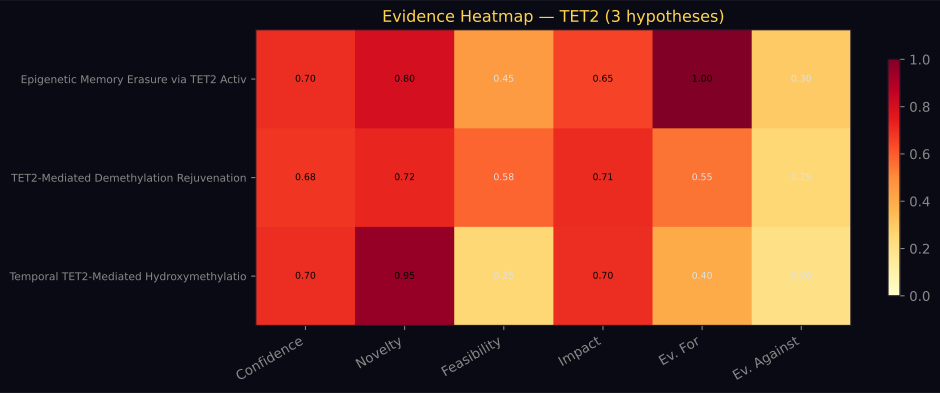
Epigenetic Memory Erasure via TET2 Activation
Quality Report Card click to collapse
From Analysis:
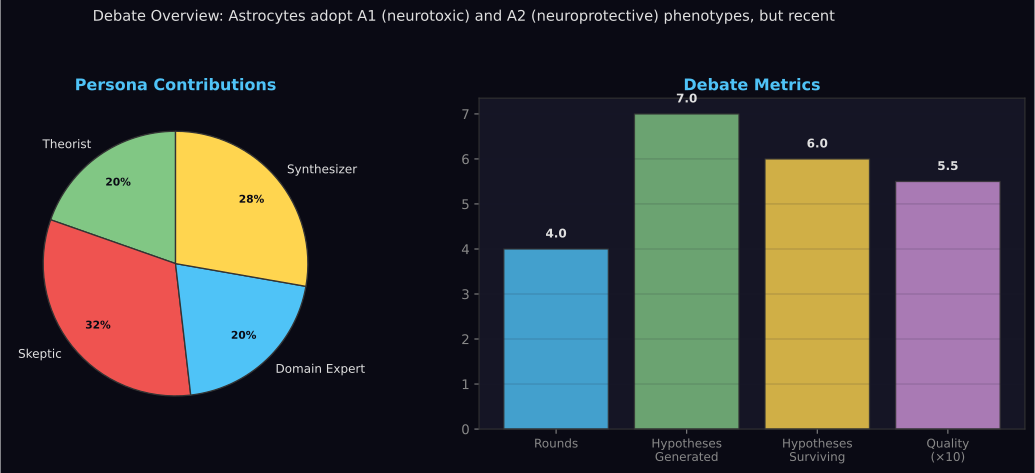
Astrocyte reactivity subtypes in neurodegeneration
Astrocytes adopt A1 (neurotoxic) and A2 (neuroprotective) phenotypes, but recent single-cell data reveals far greater heterogeneity. Mapping reactive subtypes to disease stages and therapeutic targets is needed.
Hypotheses from Same Analysis (6)
These hypotheses emerged from the same multi-agent debate that produced this hypothesis.
Description
Molecular Mechanism and Rationale
The fundamental basis of this therapeutic hypothesis centers on the epigenetic dysregulation that underlies astrocyte polarization in neurodegenerative diseases. Ten-eleven translocation methylcytosine dioxygenase 2 (TET2) serves as a critical epigenetic enzyme responsible for catalyzing the oxidation of 5-methylcytosine (5mC) to 5-hydroxymethylcytosine (5hmC), initiating active DNA demethylation processes.
...Figures & Visualizations

Curated Mechanism Pathway
Curated pathway diagram from expert analysis
graph TD
    A["Neuroinflammatory<br/>Signals"] --> B["Astrocyte<br/>Activation"]
    B --> C["DNMT Upregulation"]
    C --> D["CpG Island<br/>Hypermethylation"]
    D --> E["A2 Gene<br/>Silencing"]
    E --> F["A1 Phenotype<br/>Shift"]
    F --> G["Neurotoxic<br/>Cytokine Release"]
    G --> H["Neuronal<br/>Death"]

    I["TET2<br/>Activation"] --> J["5mC to 5hmC<br/>Conversion"]
    J --> K["Active DNA<br/>Demethylation"]
    K --> L["A2 Gene<br/>Reactivation"]
    L --> M["BDNF and GDNF<br/>Expression"]
    L --> N["Glutamate<br/>Uptake Recovery"]
    M --> O["Neuroprotective<br/>A2 Phenotype"]
    N --> O
    O --> P["Neuronal<br/>Survival"]

    classDef normal fill:#4fc3f7
    classDef therapeutic fill:#81c784
    classDef pathology fill:#ef5350
    classDef outcome fill:#ffd54f
    classDef molecular fill:#ce93d8

    class A,B pathology
    class C,D,E,F,G pathology
    class H outcome
    class I therapeutic
    class J,K,L molecular
    class M,N normal
    class O normal
    class P outcome
3D Protein Structure
Interactive 3D viewer powered by RCSB PDB / Mol*. Use mouse to rotate, scroll to zoom.
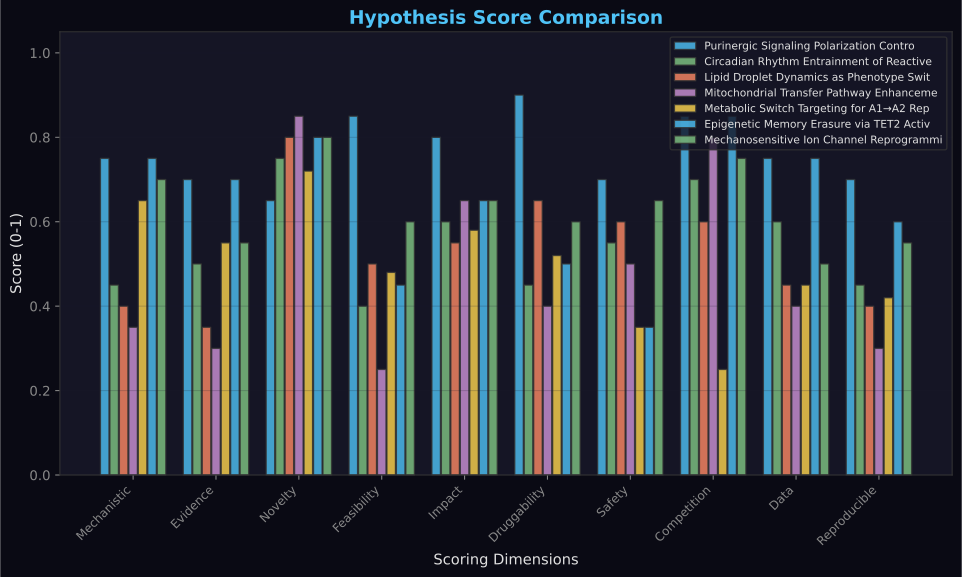
Dimension Scores
Legacy Card View — expandable citation cards
✓ Supporting Evidence 24
Bladder cancer (BC) is a prevalent cancer, which arises from the epithelial lining of the urinary bladder. CAMP-response element binding protein (CREB1) acts as a transcription factor, which regulates cell transcription through phosphorylation and dephosphorylation. The purpose of this study was to explore how miR-122 worked in BC on cell proliferation and invasion. RT-qPCR was applied to evaluate the mRNA levels of CREB1 and miR-122 in BC. CCK-8 and Transwell assays were employed to determine the migratory and invasive abilities. Dual luciferase reporter assay was applied to verify miR-122 targeting CREB1 in BC. CREB1 was upregulated in bladder tissues and T24, UM-UC-3 and J82 cells, while miR-122 upregulated and had negative correlation with CREB1. Moreover, knockdown of CREB1 inhibited cell proliferative and invasive capacities. In addition, CREB1 was directly targeted by miR-122 in BC and regulated its expression. We discovered that CREB1 could reverse partially the function of miR
The atomic structure at the interface between two-dimensional (2D) and three-dimensional (3D) materials influences properties such as contact resistance, photo-response, and high-frequency electrical performance. Moiré engineering is yet to be utilized for tailoring this 2D/3D interface, despite its success in enabling correlated physics at 2D/2D interfaces. Using epitaxially aligned MoS2/Au{111} as a model system, we demonstrate the use of advanced scanning transmission electron microscopy (STEM) combined with a geometric convolution technique in imaging the crystallographic 32 Å moiré pattern at the 2D/3D interface. This moiré period is often hidden in conventional electron microscopy, where the Au structure is seen in projection. We show, via ab initio electronic structure calculations, that charge density is modulated according to the moiré period, illustrating the potential for (opto-)electronic moiré engineering at the 2D/3D interface. Our work presents a general pathway to direc
Metabolism and aging are tightly connected. Alpha-ketoglutarate is a key metabolite in the tricarboxylic acid (TCA) cycle, and its levels change upon fasting, exercise, and aging. Here, we investigate the effect of alpha-ketoglutarate (delivered in the form of a calcium salt, CaAKG) on healthspan and lifespan in C57BL/6 mice. To probe the relationship between healthspan and lifespan extension in mammals, we performed a series of longitudinal, clinically relevant measurements. We find that CaAKG promotes a longer, healthier life associated with a decrease in levels of systemic inflammatory cytokines. We propose that induction of IL-10 by dietary AKG suppresses chronic inflammation, leading to health benefits. By simultaneously reducing frailty and enhancing longevity, AKG, at least in the murine model, results in a compression of morbidity.
TET2 deficiency in microglia promotes pathological tau hyperphosphorylation and accelerates neurodegeneration … 0.85▼
Although the albumin-to-globulin ratio (AGR) is a promising biomarker, no study has investigated its prognostic significance for advanced urothelial carcinoma (UC). This study conformed to the REporting recommendations for tumor MARKer prognostic studies (REMARK) criteria. We retrospectively reviewed 176 patients with advanced UC treated with pembrolizumab between 2018 and 2020. We evaluated the associations between pretreatment clinicopathological variables, including the AGR and performance status (PS), with progression-free survival, cancer-specific survival, and overall survival. The Cox proportional hazards model was used for univariate and multivariable analyses. The AGR was dichotomized as < 0.95 and ≥ 0.95 based on receiver operating characteristic curve analysis. After excluding 26 cases with missing data from the total of 176 cases, 109 (73%) patients experienced disease progression, 75 (50%) died from UC, and 6 (4%) died of other causes (median survival = 12 months). Multiva
Pharmacological activation of TET enzymes reduces DNA methylation at synaptic gene promoters and rescues memor… 0.9▼
The COVID-19 pandemic has accounted for millions of infections and hundreds of thousand deaths worldwide in a short-time period. The patients demonstrate a great diversity in clinical and laboratory manifestations and disease severity. Nonetheless, little is known about the host genetic contribution to the observed interindividual phenotypic variability. Here, we report the first host genetic study in the Chinese population by deeply sequencing and analyzing 332 COVID-19 patients categorized by varying levels of severity from the Shenzhen Third People's Hospital. Upon a total of 22.2 million genetic variants, we conducted both single-variant and gene-based association tests among five severity groups including asymptomatic, mild, moderate, severe, and critical ill patients after the correction of potential confounding factors. Pedigree analysis suggested a potential monogenic effect of loss of function variants in GOLGA3 and DPP7 for critically ill and asymptomatic disease demonstratio
Astrocytic TET2 expression is downregulated in human Alzheimer's disease brain tissue and correlates with cogn… 0.75▼
PURPOSE: Gastric dysmotility has been reported in patients with long-standing diabetes mellitus (DM). Some patients with DM are diagnosed as diabetes gastroparesis and have several upper gastrointestinal (GI) symptoms such as appetite loss and abdominal pain. This study aimed to identify the relationship between gastric motility and upper GI symptoms in patients with long-standing DM. METHOD: This study was conducted among 23 patients with DM and 15 healthy controls. All the patients with DM were receiving insulin treatment and had at least one history of incidence of diabetic nephropathy, retinopathy or neuropathy. Gastric motility was evaluated using electrogastrography (EGG) and gastric emptying using the 13C-acetic acid breath test. The most severe upper gastrointestinal symptoms were assessed in all patients. RESULTS: Compared to healthy controls, patients with long-standing DM showed a significantly lower percentage of normogastria at the postprandial state with a lower power rat
Overexpression of TET2 in reactive astrocytes promotes anti-inflammatory gene expression patterns and reduces … 0.8▼
A photonic microwave frequency divider that is capable to realise tunable high order frequency division, is presented. It is based on injecting an RF phase modulated optical signal into an off-the-shelf DFB laser operating at period-N state. Optical frequency components with a frequency separation of 1/N times the input RF signal frequency are generated by the DFB laser. An optical bandpass filter can be employed to select two optical frequency components to be detected by a photodetector to obtain a divide-by-N RF signal without harmonic components. The proposed frequency divider can be operated over a wide frequency range and has high reconfigurability as it is free of electrical components. Experimental results demonstrate the realisation of frequency division operation with a tunable 1/2 to 1/5 division ratio for different input RF signal frequencies of 8 to 20 GHz by adjusting the DFB laser forward bias current. Over 35 dB harmonic component suppression is demonstrated. A proof-of
TET2, a member of ten-eleven translocation (TET) family as α-ketoglutarate- and Fe2+-dependent dioxygenase catalyzing the iterative oxidation of 5-methylcytosine (5mC), has been widely recognized to be an important regulator for normal hematopoiesis especially myelopoiesis. Mutation and dysregulation of TET2 contribute to the development of multiple hematological malignancies. Recent studies reveal that TET2 also plays an important role in innate immune homeostasis by promoting DNA demethylation or independent of its enzymatic activity. Here, we focus on the functions of TET2 in the initiation and resolution of inflammation through epigenetic regulation and signaling network. In addition, we highlight regulation of TET2 at various molecular levels as well as the correlated inflammatory diseases, which will provide the insight to intervene in the pathological process caused by TET2 dysregulation.
Mutation of tet methylcytosine dioxygenase 2 (encoded by TET2) drives myeloid malignancy initiation and progression1-3. TET2 deficiency is known to cause a globally opened chromatin state and activation of genes contributing to aberrant haematopoietic stem cell self-renewal4,5. However, the open chromatin observed in TET2-deficient mouse embryonic stem cells, leukaemic cells and haematopoietic stem and progenitor cells5 is inconsistent with the designated role of DNA 5-methylcytosine oxidation of TET2. Here we show that chromatin-associated retrotransposon RNA 5-methylcytosine (m5C) can be recognized by the methyl-CpG-binding-domain protein MBD6, which guides deubiquitination of nearby monoubiquitinated Lys119 of histone H2A (H2AK119ub) to promote an open chromatin state. TET2 oxidizes m5C and antagonizes this MBD6-dependent H2AK119ub deubiquitination. TET2 depletion thereby leads to globally decreased H2AK119ub, more open chromatin and increased transcription in stem cells. TET2-mutan
Further advances in cell engineering are needed to increase the efficacy of chimeric antigen receptor (CAR) and other T cell-based therapies1-5. As T cell differentiation and functional states are associated with distinct epigenetic profiles6,7, we hypothesized that epigenetic programming may provide a means to improve CAR T cell performance. Targeting the gene that encodes the epigenetic regulator ten-eleven translocation 2 (TET2)8 presents an interesting opportunity as its loss may enhance T cell memory9,10, albeit not cause malignancy9,11,12. Here we show that disruption of TET2 enhances T cell-mediated tumour rejection in leukaemia and prostate cancer models. However, loss of TET2 also enables antigen-independent CAR T cell clonal expansions that may eventually result in prominent systemic tissue infiltration. These clonal proliferations require biallelic TET2 disruption and sustained expression of the AP-1 factor BATF3 to drive a MYC-dependent proliferative program. This prolifera
TET2 suppresses vascular calcification by forming an inhibitory complex with HDAC1/2 and SNIP1 independent of … MEDIUM▼
Osteogenic transdifferentiation of vascular smooth muscle cells (VSMCs) has been recognized as the principal mechanism underlying vascular calcification (VC). Runt-related transcription factor 2 (RUNX2) in VSMCs plays a pivotal role because it constitutes an osteogenic transcription factor essential for bone formation. As a key DNA demethylation enzyme, ten-eleven translocation 2 (TET2) is crucial in maintaining the VSMC phenotype. However, whether TET2 involves in VC progression remains elusive. Here we identified a substantial downregulation of TET2 in calcified human and mouse arteries, as well as human primary VSMCs. In vitro gain- and loss-of-function experiments demonstrated that TET2 regulated VC. Subsequently, in vivo knockdown of TET2 significantly exacerbated VC in both vitamin D3- and adenine diet-induced chronic kidney disease (CKD) mouse models. Mechanistically, TET2 bound to and suppressed activity of the P2 promoter within the RUNX2 gene; however, an enzymatic loss-of-fu
DNA methyltransferase 3 alpha and TET methylcytosine dioxygenase 2 restrain mitochondrial DNA-mediated interfe… MEDIUM▼
Deleterious somatic mutations in DNA methyltransferase 3 alpha (DNMT3A) and TET mehtylcytosine dioxygenase 2 (TET2) are associated with clonal expansion of hematopoietic cells and higher risk of cardiovascular disease (CVD). Here, we investigated roles of DNMT3A and TET2 in normal human monocyte-derived macrophages (MDM), in MDM isolated from individuals with DNMT3A or TET2 mutations, and in macrophages isolated from human atherosclerotic plaques. We found that loss of function of DNMT3A or TET2 resulted in a type I interferon response due to impaired mitochondrial DNA integrity and activation of cGAS signaling. DNMT3A and TET2 normally maintained mitochondrial DNA integrity by regulating the expression of transcription factor A mitochondria (TFAM) dependent on their interactions with RBPJ and ZNF143 at regulatory regions of the TFAM gene. These findings suggest that targeting the cGAS-type I IFN pathway may have therapeutic value in reducing risk of CVD in patients with DNMT3A or TET2
IMPORTANCE: Clonal hematopoiesis of indeterminate potential (CHIP) is linked to an increased incidence of cardiovascular and malignant diseases. OBJECTIVE: To determine whether CHIP is associated with cardiotoxic effects in patients with breast cancer receiving trastuzumab. DESIGN, SETTING, AND PARTICIPANTS: Analyses of human cohorts with complementary animal experimentation were performed using a nationwide population-based cohort (UK Biobank), 1 tertiary referral center (Seoul National University Hospital [SNUH]), and a controlled laboratory setting. UK Biobank participants were enrolled between 2006 and 2010, and SNUH patients were enrolled from January 2004 to March 2024. Data were analyzed from March 2021 to February 2026. MAIN OUTCOME MEASURES: Incident heart failure (HF) in the UK Biobank cohort and trastuzumab-related cardiotoxic effects in the SNUH cohort were the main outcome measures. Trastuzumab-related cardiotoxic effects were defined using established clinical criteria (E
Azacitidine-induced remission enables allogeneic transplantation in TET2/BCOR-mutant relapsed extranodal natur… MEDIUM▼
Not available.
Somatic Mutations and Mutation Burden Predict Treatment Response and Survival in Adult Acquired Pure Red Cell … MEDIUM▼
Immunosuppressive therapy (IST) is the standard treatment for acquired pure red cell aplasia (aPRCA), but predictors of treatment response and long-term prognosis remain unclear. The clinical significance of somatic mutations in aPRCA is not fully understood. We retrospectively analyzed 69 adult aPRCA patients who underwent targeted next-generation sequencing of 69 genes associated with clonal hematopoiesis and myeloid neoplasms. Somatic mutations, T-cell receptor (TCR) gene rearrangements, treatment response at 6 months, overall survival (OS), and progression-free survival (PFS) were evaluated. Somatic mutations were detected in 62.3% of patients, mainly in epigenetic regulators like DNMT3A and TET2. Although mutations did not predict 6-month response to IST, higher mutation burden was associated with worse treatment outcomes (p = 0.01). TP53 and DNMT3A mutations were linked to shorter OS and PFS. Survival worsened with increasing mutation numbers, while mutations in TET2, ASXL1, GATA
Chimeric antigen receptor T-cell therapies related to immune effector cell-associated hemophagocytic lymphohis… MEDIUM▼
Immune effector cell-associated hemophagocytic lymphohistiocytosis-like syndrome (IEC-HS) is a life-threatening complication of chimeric antigen receptor T cell (CAR-T) therapy. Despite its high mortality rate, IEC-HS remains underrecognized due to overlapping clinical and laboratory features with severe cytokine release syndrome (CRS), leading to delayed diagnosis and suboptimal management. This review systematically analyzes key strategies to distinguish IEC-HS from severe CRS in the literature. The analysis focuses on temporal patterns, such as the delayed onset of IEC-HS after CAR-T infusion. It also examines dynamic laboratory trends, including persistently elevated ferritin and lactate dehydrogenase levels and a slower decline in C-reactive protein (CRP). In addition, distinct cytokine profiles are discussed, such as prolonged interferon-gamma (IFN-γ) elevation and surges in chemokines and growth factors. We further identify high-risk factors for IEC-HS, including patient-specifi
BACKGROUND: Hirschsprung's disease (HSCR) is caused by defective enteric neural crest cell (ENCC) migration. Exosome-transmitted microRNAs are implicated in HSCR pathogenesis, but mechanisms remain unclear. METHODS: Plasma exosomes and colon tissues were collected from HSCR patients and controls. We assessed the effects of exosomal miR-323a-3p on the proliferation and migration of immortalized ENCC-derived neural cell line (iENC) in vitro using CCK-8, EdU and Transwell assays, and its impact on ENCC migration in vivo using a zebrafish model. RESULTS: Exosomal miR-323a-3p was significantly upregulated in the plasma of HSCR and exhibited prospective diagnostic relevance (AUC = 0.7269, p = 0.0043). Exosomal miR-323a-3p was taken up by iENCs and suppressed their proliferation and migration. TET2 was identified as a potential miR-323a-3p target. TET2 was downregulated in HSCR aganglionic tissues, and its knockdown inhibited iENC proliferation and migration. In the zebrafish model, exosomal
Demonstrates epigenetic therapy effects in disease management, suggesting potential for TET2-related intervent… MODERATE▼
1. Front Pharmacol. 2026 Feb 24;17:1775173. doi: 10.3389/fphar.2026.1775173. eCollection 2026. Huangkui capsule mitigates diabetic nephropathy via epigenetic therapy effects. Yu Y(1)(2), Tang...
Directly investigates TET2-NF-κB inflammation mechanisms in microglia, providing mechanistic evidence for neur… STRONG▼
1. Food Chem Toxicol. 2026 Mar 6;212:116055. doi: 10.1016/j.fct.2026.116055. Online ahead of print. Food-grade TiO(2)/TDCPP Co-exposure disrupts ACOD1/itaconate axis and is associated with...
Explores TET1 deficiency and inflammatory signaling, indicating broader relevance of TET family enzymes in inf… MODERATE▼
1. Inflamm Res. 2026 Mar 27;75(1):72. doi: 10.1007/s00011-026-02228-3. TET1 deficiency amplifies macrophage inflammatory signaling associated with Crohn's disease. Perez RK(1), Paul R(2), Kumar...
Specifically examines TET2-dependent epigenetic regulation, demonstrating broader relevance of enzyme in disea… MODERATE▼
1. Cell Mol Life Sci. 2026 Mar 11;83(1):148. doi: 10.1007/s00018-026-06134-z. Tet methylcytosine dioxygenase 2(TET2)-dependent epigenetic regulation in the pathogenesis of polycystic ovary syndrome.
One vs. 2 vs. ≥3 TET2 mutations in chronic myelomonocytic leukemia: co-mutation patterns and prognostic releva…▼
Clonal hematopoiesis and lymphoma-associated mutations in hematopoietic progenitors in B-cell non-Hodgkin lymp…▼
✗ Opposing Evidence 6
Programmable epigenetic editing tools face major delivery and efficiency challenges for in vivo CNS applicatio… 0.8▼
Experimental data showed that high-speed microsprays can effectively disrupt biofilms on their support substratum, producing a variety of dynamic reactions such as elongation, displacement, ripple formation, and fluidization. However, the mechanics underlying the impact of high-speed turbulent flows on biofilm structure is complex under such extreme conditions, since direct measurements of viscosity at these high shear rates are not possible using dynamic testing instruments. Here, we used computational fluid dynamics simulations to assess the complex fluid interactions of ripple patterning produced by high-speed turbulent air jets impacting perpendicular to the surface of Streptococcus mutans biofilms, a dental pathogen causing caries, captured by high-speed imaging. The numerical model involved a two-phase flow of air over a non-Newtonian biofilm, whose viscosity as a function of shear rate was estimated using the Herschel-Bulkley model. The simulation suggested that inertial, shear,
Sterols are essential eukaryotic lipids that are required for a variety of physiological roles. The diagenetic products of sterol lipids, sterane hydrocarbons, are preserved in ancient sedimentary rocks and are utilized as geological biomarkers, indicating the presence of both eukaryotes and oxic environments throughout Earth's history. However, a few bacterial species are also known to produce sterols, bringing into question the significance of bacterial sterol synthesis for our interpretation of sterane biomarkers. Recent studies suggest that bacterial sterol synthesis may be distinct from what is observed in eukaryotes. In particular, phylogenomic analyses of sterol-producing bacteria have failed to identify homologs of several key eukaryotic sterol synthesis enzymes, most notably those required for demethylation at the C-4 position. In this study, we identified two genes of previously unknown function in the aerobic methanotrophic γ-Proteobacterium Methylococcus capsulatus that enc
TET2 overactivation leads to genome-wide hypomethylation and increased chromosomal instability in neural stem … 0.85▼
Gamification has become a significant direction in designing technologies, services, products, organizational structures, and any human activities towards being more game-like and consequently being more engaging and motivating. Albeit its success, research indicates that personal differences exist with regards to susceptibility to gamification at large as well as to different types of gamification designs. As a response, models and measurement instruments of user types when it comes to gamification have been developed. One of the most discussed related instruments is the Hexad user types scale. However, there has been paucity of research related to the validity and reliability of the Hexad instrument in general but also of its different formulations and language versions. To face this gap, our study focused on analyzing the psychometric properties of the Hexad scale in Brazilian Portuguese by conducting two confirmatory factor analyses and two multi-group confirmatory factor analyses.
Excessive TET-mediated demethylation disrupts normal astrocyte differentiation programs and impairs synaptic s… 0.8▼
Introduction With an estimated incidence of 2%-4% per year, the development of a second primary malignancy (SPM) in patients with head and neck tumors (HNTs) is not a rare event. The present study aimed to (i) assess the frequency of SPMs in patients with HNTs treated in a university hospital over a five-year period and (ii) provide a demographic characterization of these patients. Methods Retrospective single-centre study of patients with more than one primary tumor (including at least one HNT) diagnosed between January 1, 2015, and December 31, 2019. Data were retrieved from patients' clinical records and anonymized for analysis purposes. Results A total of 53 out of 824 (6.43%) patients with multiple primary malignancies were identified, 18 of which synchronous and 35 metachronous. The median follow-up was 25 months. Thirteen patients were diagnosed with more than one HNT. Forty patients were diagnosed with at least one HNT and one non-HNT. The most frequently diagnosed non-HNT SPMs
TET enzyme modulators show poor blood-brain barrier penetration and require invasive delivery methods for ther… 0.7▼
Alzheimer's disease (AD) is a neurodegenerative disorder characterized by a rapid accumulation of amyloid β (Aβ) protein in the hippocampus, which impairs synaptic structures and neuronal signal transmission, induces neuronal loss, and diminishes memory and cognitive functions. The present study investigated the impact of neuregulin 1 (NRG1)-ErbB4 signaling on the impairment of neural networks underlying hippocampal long-term potentiation (LTP) in 5xFAD mice, a model of AD with greater symptom severity than that of TG2576 mice. Specifically, we observed parvalbumin (PV)-containing hippocampal interneurons, the effect of NRG1 on hippocampal LTP, and the functioning of learning and memory. We found a significant decrease in the number of PV interneurons in 11-month-old 5xFAD mice. Moreover, synaptic transmission in the 5xFAD mice decreased at 6 months of age. The 11-month-old transgenic AD mice showed fewer inhibitory PV neurons and impaired NRG1-ErbB4 signaling than did wild-type mice,
TET2 in epigenetic control of immune cells: Implications for inflammatory responses and age-related pathologie… MEDIUM▼
Ten-eleven translocation 2 (TET2) is an epigenetic modifier whose canonical activity leads to the removal of cytosine methylation in the genome, which in essence results in the activation of gene expression. This function is particularly well described in the context of hematopoiesis and its alterations that lead to leukemia. However, in recent years, it has become evident that the noncanonical functions of TET2 also play a vital role in its activity. Rather than depending on its catalytic activity, these functions arise from TET2 interactions with other epigenetic modifiers. This review summarizes the structure, regulation, and functions of TET2 in immune cells. We describe how TET2 controls gene expression at both the DNA and RNA levels. In addition, we discuss the role of TET2 in hematopoietic stem cell fate and in clonal hematopoiesis of indeterminate potential. Finally, we highlight the impact of TET2 mutations on age-related inflammatory diseases, including cardiovascular and neu
🧬 Theorist Proposes novel mechanisms and generates creative hypotheses ▼
Novel Therapeutic Hypotheses for Astrocyte Reactivity Subtypes in Neurodegeneration
Hypothesis 1: Metabolic Switch Targeting for A1→A2 Repolarization
Description: Astrocyte phenotype switching can be controlled by manipulating the hexokinase 2 (HK2)/mitochondrial metabolism axis. Enhancing HK2 activity promotes glycolytic flux that drives A2 neuroprotective programming while suppressing oxidative metabolism that favors A1 neurotoxicity.Target gene/protein: HK2 (Hexokinase 2)
Supporting evidence: Single-cell RNA-seq shows distinct metabolic signatures between reactive astro
🔍 Skeptic Identifies weaknesses, alternative explanations, and methodological concerns ▼
Critical Evaluation of Astrocyte Reactivity Therapeutic Hypotheses
Hypothesis 1: Metabolic Switch Targeting for A1→A2 Repolarization
Specific Weaknesses:
- Oversimplified metabolic model: The hypothesis assumes HK2 is a master regulator, but astrocyte metabolism involves complex feedback loops. HK2 is just one enzyme in glycolysis, and its overexpression could create metabolic bottlenecks downstream.
- Conflation of correlation with causation: Higher glycolytic activity in A2 astrocytes doesn't prove that enhancing glycolysis drives A2 phenotype - it could be a consequence r
🎯 Domain Expert Assesses practical feasibility, druggability, and clinical translation ▼
Practical Feasibility Assessment: Astrocyte Reactivity Therapeutic Hypotheses
Most Viable Hypotheses for Drug Development
Based on the critique, I'll focus on the three most promising hypotheses from a pharmaceutical development perspective:
HYPOTHESIS 3: TET2 Activation (Revised Confidence: 0.50)
Druggability Assessment: MODERATE
- Target Class: Epigenetic enzyme (α-ketoglutarate-dependent dioxygenase)
- Structural Information: Crystal structures available (PDB: 4NM6, 6PUO)
- Active Site: Well-characterized catalytic domain with cofactor binding sites
⚖ Synthesizer Integrates perspectives and produces final ranked assessments ▼
Price History
| Event | Price | Change | Source | Time | |
|---|---|---|---|---|---|
| 📄 | New Evidence | $0.560 | ▲ 1.3% | evidence_batch_update | 2026-04-13 02:18 |
| 📄 | New Evidence | $0.553 | ▲ 7.3% | evidence_batch_update | 2026-04-13 02:18 |
| ⚖ | Recalibrated | $0.515 | ▼ 0.4% | 2026-04-12 10:15 | |
| ⚖ | Recalibrated | $0.517 | ▼ 2.2% | 2026-04-12 05:13 | |
| ⚖ | Recalibrated | $0.529 | ▼ 0.6% | 2026-04-10 15:58 | |
| ⚖ | Recalibrated | $0.532 | ▲ 2.4% | 2026-04-10 14:28 | |
| ⚖ | Recalibrated | $0.520 | ▼ 2.2% | 2026-04-08 18:39 | |
| ⚖ | Recalibrated | $0.532 | ▲ 3.0% | 2026-04-06 04:04 | |
| ⚖ | Recalibrated | $0.516 | ▼ 0.6% | 2026-04-04 16:38 | |
| ⚖ | Recalibrated | $0.519 | ▼ 0.5% | 2026-04-04 16:02 | |
| 📄 | New Evidence | $0.522 | ▲ 2.4% | evidence_batch_update | 2026-04-04 09:08 |
| ⚖ | Recalibrated | $0.510 | ▼ 0.8% | 2026-04-04 01:39 | |
| ⚖ | Recalibrated | $0.514 | ▼ 14.7% | 2026-04-03 23:46 | |
| 📄 | New Evidence | $0.602 | ▲ 2.7% | evidence_batch_update | 2026-04-03 01:06 |
| 📄 | New Evidence | $0.586 | ▲ 3.3% | evidence_batch_update | 2026-04-03 01:06 |
Clinical Trials (10) Relevance: 53%
Active
Completed
Total Enrolled
Highest Phase
📚 Cited Papers (69)


📓 Linked Notebooks (1)
Wiki Pages
KG Entities (35)
Dependency Graph (0 upstream, 2 downstream)
Linked Experiments (2)
Related Hypotheses
Estimated Development
🧪 Falsifiable Predictions (4)
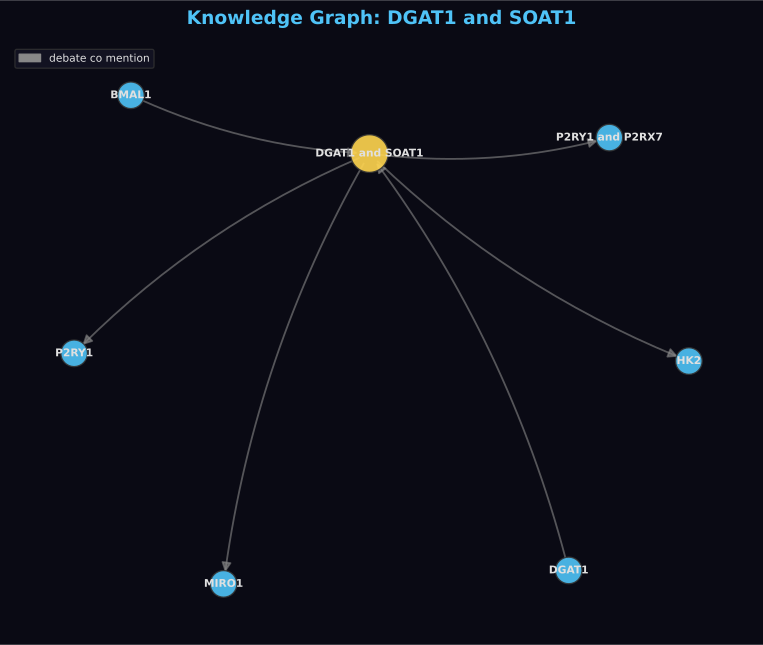
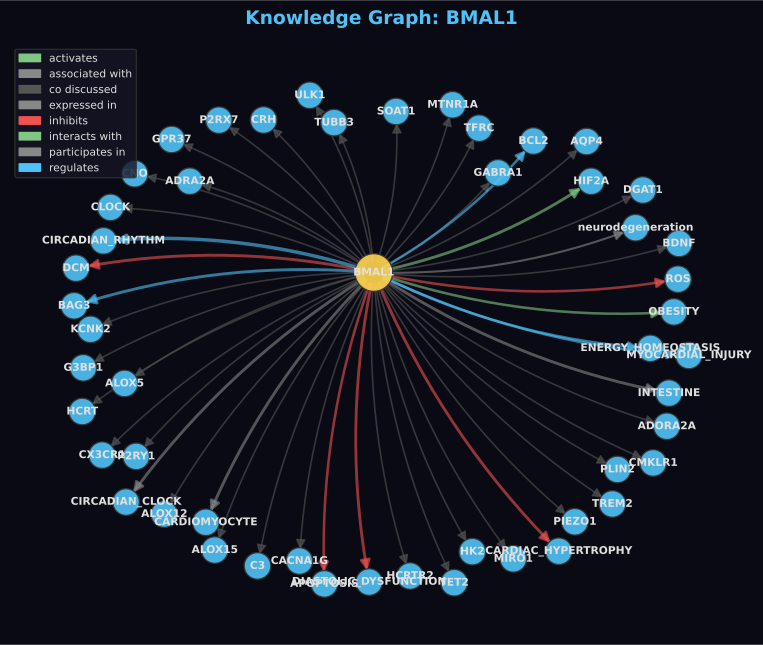
Knowledge Subgraph (178 edges)
associated with (13)
co associated with (21)
implicated in (3)
participates in (10)
Mechanism Pathway for TET2
Molecular pathway showing key causal relationships underlying this hypothesis
graph TD
    TET2["TET2"] -->|associated with| neurodegeneration["neurodegeneration"]
    TET2_1["TET2"] -->|participates in| Epigenetic_regulation["Epigenetic regulation"]
    BMAL1["BMAL1"] -->|co discussed| TET2_2["TET2"]
    HK2["HK2"] -->|co discussed| TET2_3["TET2"]
    MIRO1["MIRO1"] -->|co discussed| TET2_4["TET2"]
    P2RY1["P2RY1"] -->|co discussed| TET2_5["TET2"]
    SOAT1["SOAT1"] -->|co discussed| TET2_6["TET2"]
    KCNK2["KCNK2"] -->|co discussed| TET2_7["TET2"]
    TET2_8["TET2"] -->|co discussed| PIEZO1["PIEZO1"]
    TET2_9["TET2"] -->|co discussed| P2RX7["P2RX7"]
    TET2_10["TET2"] -->|co discussed| DGAT1["DGAT1"]
    TET2_11["TET2"] -->|co discussed| C3["C3"]
    SOD1["SOD1"] -->|co discussed| TET2_12["TET2"]
    GFAP["GFAP"] -->|co discussed| TET2_13["TET2"]
    TAU["TAU"] -->|co discussed| TET2_14["TET2"]
    style TET2 fill:#ce93d8,stroke:#333,color:#000
    style neurodegeneration fill:#ef5350,stroke:#333,color:#000
    style TET2_1 fill:#ce93d8,stroke:#333,color:#000
    style Epigenetic_regulation fill:#81c784,stroke:#333,color:#000
    style BMAL1 fill:#ce93d8,stroke:#333,color:#000
    style TET2_2 fill:#ce93d8,stroke:#333,color:#000
    style HK2 fill:#ce93d8,stroke:#333,color:#000
    style TET2_3 fill:#ce93d8,stroke:#333,color:#000
    style MIRO1 fill:#ce93d8,stroke:#333,color:#000
    style TET2_4 fill:#ce93d8,stroke:#333,color:#000
    style P2RY1 fill:#ce93d8,stroke:#333,color:#000
    style TET2_5 fill:#ce93d8,stroke:#333,color:#000
    style SOAT1 fill:#ce93d8,stroke:#333,color:#000
    style TET2_6 fill:#ce93d8,stroke:#333,color:#000
    style KCNK2 fill:#ce93d8,stroke:#333,color:#000
    style TET2_7 fill:#ce93d8,stroke:#333,color:#000
    style TET2_8 fill:#ce93d8,stroke:#333,color:#000
    style PIEZO1 fill:#ce93d8,stroke:#333,color:#000
    style TET2_9 fill:#ce93d8,stroke:#333,color:#000
    style P2RX7 fill:#ce93d8,stroke:#333,color:#000
    style TET2_10 fill:#ce93d8,stroke:#333,color:#000
    style DGAT1 fill:#ce93d8,stroke:#333,color:#000
    style TET2_11 fill:#ce93d8,stroke:#333,color:#000
    style C3 fill:#ce93d8,stroke:#333,color:#000
    style SOD1 fill:#ce93d8,stroke:#333,color:#000
    style TET2_12 fill:#ce93d8,stroke:#333,color:#000
    style GFAP fill:#ce93d8,stroke:#333,color:#000
    style TET2_13 fill:#ce93d8,stroke:#333,color:#000
    style TAU fill:#ce93d8,stroke:#333,color:#000
    style TET2_14 fill:#ce93d8,stroke:#333,color:#000
3D Protein Structure
🧬 TET2 — PDB 4NM6 Click to expand 3D viewer
Source Analysis
Astrocyte reactivity subtypes in neurodegeneration
neurodegeneration | 2026-04-01 | completed