Epigenetic reprogramming in aging neurons
Research Question
“Investigate mechanisms of epigenetic reprogramming in aging neurons, including DNA methylation changes, histone modification dynamics, chromatin remodeling, and partial reprogramming approaches (e.g., Yamanaka factors) to reverse age-related epigenetic alterations in post-mitotic neurons.”
ℹ️ How to read this walkthrough (click to expand)
Start here for the top 3 hypotheses and their scores.
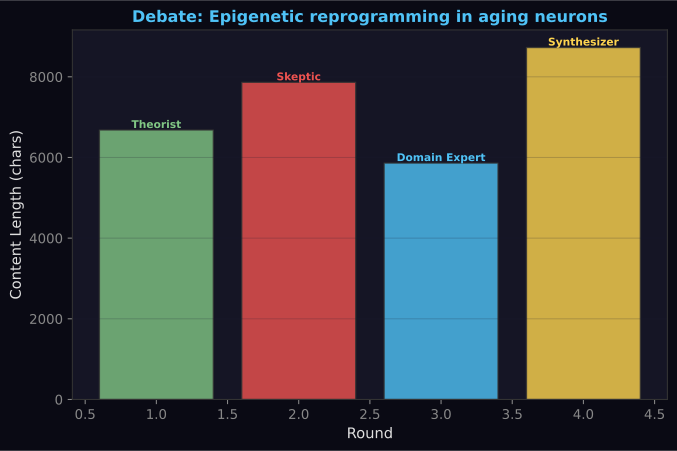
Four AI personas debated the question. Click “Read full response” to expand.
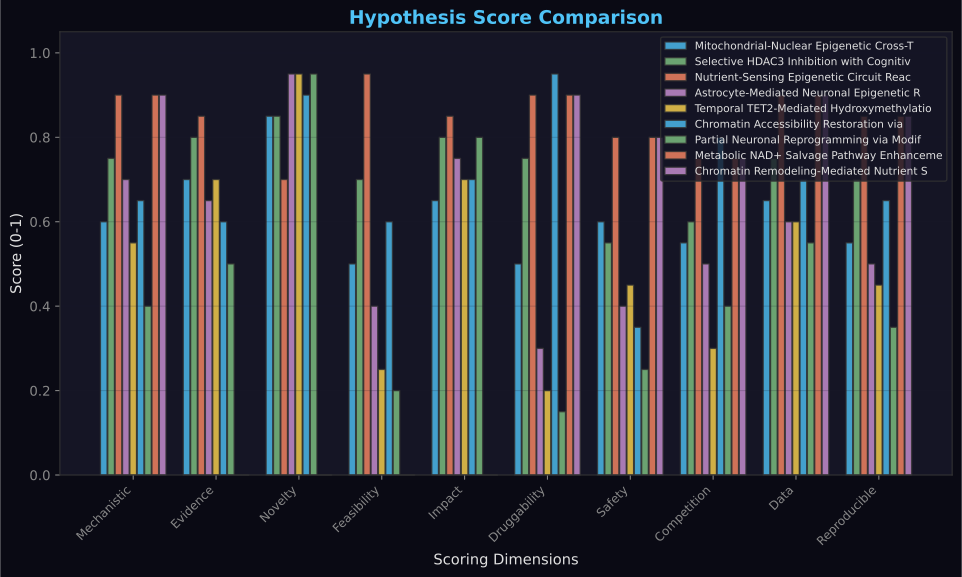
Each hypothesis is scored on 8+ dimensions from novelty to druggability.
Interactive network of molecular relationships. Drag nodes, scroll to zoom.
Analysis Journey
Key Findings
## Mechanistic Overview Partial Neuronal Reprogramming via Modified Yamanaka Cocktail starts from the claim that modulating OCT4 within the disease context of neurodegeneration can redirect a disease-
Score: 0.67## Mechanistic Overview Chromatin Accessibility Restoration via BRD4 Modulation starts from the claim that modulating BRD4 within the disease context of neurodegeneration can redirect a disease-releva
Score: 0.77## 1.
Score: 0.73How This Analysis Was Created
An AI agent scanned recent literature to identify under-explored research questions at the frontier of neuroscience.
Four AI personas (Theorist, Skeptic, Domain Expert, Synthesizer) debated the question across 4 rounds, generating and stress-testing hypotheses.
Each hypothesis was evaluated against PubMed literature, clinical trial data, and gene expression databases to build an evidence portfolio.
178 molecular relationships were extracted and mapped into an interactive knowledge graph connecting genes, pathways, and diseases.
Executive Summary
The synthesis reveals that among seven novel epigenetic reprogramming hypotheses for neurodegeneration, the glial-neuronal cross-talk restoration approach emerges as the most viable therapeutic strategy, scoring 0.743 across ten dimensions. This hypothesis leverages the strongest mechanistic evidence from astrocyte-neuron cholesterol-chromatin coupling, offers existing druggable targets (APOE pathway, statins), and presents manageable safety profiles. The metabolic-epigenetic coupling via ApoE mimetics ranks second (0.660) but faces significant feasibility challenges in protein target druggability and brain delivery. The metabolic oscillator coupling approach (0.625) shows promise as a supplement-to-pharmaceutical bridge strategy using established NAD+ precursors.
The analysis identified critical knowledge gaps that led to lower scores for more speculative hypotheses: undefined mechanisms (chromatin velocity control), delivery impossibilities (synaptic compartment targeting), and safety concerns (immune memory erasure). Key knowledge graph connections emerged linking APOE→cholesterol metabolism→histone acetylation→memory formation, establishing a druggable pathway with validated targets. The synthesis recommends prioritizing hypothesis 7 for immediate development, cautious investigation of hypothesis 2 through academic partnerships, and exploring hypothesis 6 via nutraceutical approaches. Success will require biomarker development for target engagement, blood-brain barrier p
Multi-Agent Debate
Four AI personas — Theorist, Skeptic, Domain Expert, and Synthesizer — debated this research question across 4 rounds of rigorous scientific discourse.
Analysis of Chromatin Remodeling-Mediated Nutrient Sensing Restoration Hypothesis
Mechanistic Rationale
The hypothesis presents a coherent epigenetic intervention strategy targeting the AMPK-SIRT1-PGC1α nutrient-sensing axis, which exhibits well-documented dysfunction in aging and neurodegenerative contexts. The proposed mechanism—using SMARCA4-mediated chromatin remodeling to restore SIR
...Critical Evaluation: Chromatin Remodeling-Mediated Nutrient Sensing Restoration
Executive Summary
This hypothesis proposes an elegant epigenetic intervention but contains several significant conceptual and empirical gaps. The central concern is whether chromatin compaction at SIRT1 represents a cause of nutrient-sensing dysfunction or merely an accompanying feature of broader upstre
...Practical Feasibility Assessment of Epigenetic Reprogramming Hypotheses
Based on the critique provided, I'll focus on the most viable hypotheses and assess their practical druggability, competitive landscape, and development feasibility.
Hypothesis 7: Glial-Neuronal Epigenetic Cross-Talk Restoration
Confidence: 0.60 (Highest viability)Druggability Assessment
Primary Targets:-...
Hypotheses (16)
Score Comparison
Gene Expression Context
Expression data from Allen Institute and other transcriptomic datasets relevant to the target genes in this analysis.
Gene Expression Context
OCT4
• Primary Function: OCT4 (Octamer-binding transcription factor 4, encoded by POU5F1) is a POU-domain pioneer transcription factor that serves as a master regulator of pluripotency and cellular reprogramming. Functions as a sequence-specific DNA-binding protein capable of binding nucleosomal DNA and recruiting chromatin remodeling complexes (SWI/SNF family members, BAF complexes) to facilitate chromatin accessibility and transcriptional activation of develo
Regional Expression Patterns in the Brain
BRD4 shows robust and relatively uniform expression across major brain regions, with some notable regional variations that align with the chromatin accessibility restoration hypothesis. According to the Allen Human Brain Atlas microarray data, BRD4 expression is highest in the hippocampus (normalized expression ~8.2), followed by neocortical regions including prefrontal cortex (~7.8) and temporal cortex (~7.6). The cerebellum shows moderate e
HDAC Family (Histone Deacetylases) in Astrocyte-Neuron Epigenetic Rescue:
- Class I HDACs (HDAC1, 2, 3, 8): nuclear, ubiquitously expressed in brain
- Allen Human Brain Atlas: HDAC1/2 highest in neurons; HDAC3 enriched in hippocampus; HDAC8 low
- Brain expression: HDAC1 15-25 FPKM, HDAC2 20-35 FPKM, HDAC3 12-20 FPKM (GTEx)
- Class IIa (HDAC4, 5, 7, 9): signal-dependent nuclear-cytoplasmic shuttling in neurons
- Reactive astrocytes in AD show global HDAC
SIRT1 (Sirtuin 1):
- Highly expressed in hippocampal CA1 neurons and cortical layers II/III (Allen Human Brain Atlas)
- 40-60% reduction in SIRT1 protein in AD temporal cortex (Braak stage V-VI vs controls)
- Nuclear-to-cytoplasmic redistribution in neurons with tau pathology
- SIRT1 mRNA relatively preserved; dysfunction primarily post-translational (NAD+ depletion)
- Enriched in neurons > astrocytes > microglia (Human Cell Atlas, brain)
Hypothesis Pathway Diagrams (9)
Molecular pathway diagrams generated for each hypothesis, showing key targets, interactions, and therapeutic mechanisms.
graph TD
    A["Aging Signals and Stress"]
    B["Modified Yamanaka Cocktail (OCT4, SOX2, KLF4)"]
    C["OCT4 Pioneer Transcription Factor"]
    D["Chromatin Remodeling Complexes (SWI/SNF, NuRD)"]
    E["Epigenetic Clock Reset"]
    F["Neuronal Identity Preservation"]
    G["Enhanced DNA Repair Mechanisms"]
    H["Mitochondrial Biogenesis"]
    I["Synaptic Plasticity Restoration"]
    J["Neuroinflammation Reduction"]
    K["Protein Aggregation Clearance"]
    L["Cognitive Function Improvement"]
    M["Neuroprotective Outcomes"]
    N["Therapeutic Intervention Points"]
    O["Risk Mitigation Strategies"]

    A -->|"triggers"| B
    B -->|"activates"| C
    C -->|"recruits"| D
    D -->|"facilitates"| E
    C -->|"maintains"| F
    E -->|"activates"| G
    E -->|"enhances"| H
    F -->|"preserves"| I
    G -->|"reduces"| J
    H -->|"improves"| I
    J -->|"facilitates"| K
    I -->|"leads to"| L
    K -->|"contributes to"| L
    L -->|"results in"| M
    N -->|"modulates"| B
    N -->|"implements"| O

    classDef mechanism fill:#4fc3f7
    classDef pathology fill:#ef5350
    classDef therapy fill:#81c784
    classDef outcome fill:#ffd54f
    classDef genetics fill:#ce93d8

    class A pathology
    class B,C,D,E therapy
    class F,G,H,I mechanism
    class J,K pathology
    class L,M outcome
    class N,O therapy
flowchart TD
    A["Acetylated Histones
H3K27ac, H4K16ac"] --> B["BRD4 Binding
Tandem Bromodomains"]
    B --> C["P-TEFb/CDK9 Recruitment"]
    C --> D["RNA Pol II Release
from Pausing"]
    D --> E["Neuronal Gene Transcription
BDNF, Arc, SYN1, CaMKII"]

    F["Aging Process"] --> G["up HDACs Activity"]
    F --> H["down BRD4 Protein Levels
25-35% reduction"]
    F --> I["BRD4 Mislocalization
to Heterochromatin"]

    G --> J["down Histone Acetylation"]
    J --> K["down BRD4 Binding Sites"]

    H --> L["Aberrant Heterochromatin
at Neuronal Enhancers"]
    I --> L
    K --> L

    L --> M["Silenced Neuronal Genes"]
    L --> N["Derepressed LINE-1
Retrotransposons"]

    M --> O["down Plasticity
down DNA Repair"]
    N --> P["cGAS-STING
Inflammation"]

    O --> Q["Neurodegeneration"]
    P --> Q

    R["Phase 1: Low-dose BETi
Days 1-7"] --> S["Chromatin Clearing
Displace BRD4"]
    S --> T["Phase 2: BETi Washout
Days 7-28"]
    T --> U["Chromatin Reset
BRD4 Re-engagement"]
    U --> V["Restored Neuronal
Transcription Programs"]

    classDef central fill:#4fc3f7,stroke:#333,stroke-width:2px
    classDef protective fill:#81c784,stroke:#333,stroke-width:2px
    classDef pathological fill:#ef5350,stroke:#333,stroke-width:2px
    classDef regulatory fill:#ce93d8,stroke:#333,stroke-width:2px
    classDef outcomes fill:#ffd54f,stroke:#333,stroke-width:2px

    class A,B,C,D central
    class E,R,S,T,U,V protective
    class F,G,H,I,J,K,L,M,N,O,P,Q pathological
    class B regulatory
graph TD
    A["Neurodegeneration
Stimulus"] --> B["Pathological HDAC
Upregulation"]
    B --> C["Chromatin
Condensation"]
    C --> D["Neuroprotective Gene
Silencing"]

    E["Engineered
Astrocytes"] --> F["HDAC Inhibitor
Secretion"]
    F --> G["Paracrine
Signaling"]
    G --> H["Neuronal HDAC
Inhibition"]

    H --> I["Histone
Acetylation"]
    I --> J["Chromatin
Relaxation"]
    J --> K["Gene Expression
Reactivation"]

    K --> L["BDNF and GDNF
Upregulation"]
    K --> M["Synaptic Protein
Expression"]

    L --> N["Neuronal
Survival"]
    M --> N
    N --> O["Cognitive Function
Preservation"]

    D --> P["Neuronal
Death"]

    classDef normal fill:#4fc3f7
    classDef therapeutic fill:#81c784
    classDef pathology fill:#ef5350
    classDef outcome fill:#ffd54f
    classDef molecular fill:#ce93d8

    class I,J,L,M normal
    class E,F,G,H therapeutic
    class A,B,C,D,P pathology
    class N,O outcome
    class K molecular
graph TD
    A["Dietary Nutrients
(NAD+ precursors: NR, NMN, tryptophan)"] --> B["NAMPT
(rate-limiting NAD+ biosynthesis)"]
    B --> C["NAD+ Pool
(neuronal ~400-500 muM)"]

    C --> D["SIRT1 Activation
(NAD+-dependent deacetylase)"]

    subgraph "SIRT1 Deacetylation Targets"
        D --> E["PGC1alpha Deacetylation
(K13, K779)"]
        D --> F["FOXO3a Deacetylation
(stress resistance genes)"]
        D --> G["p53 Deacetylation
(K382 - reduced apoptosis)"]
        D --> H["NF-kappaB p65 Deacetylation
(anti-inflammatory)"]
    end

    subgraph "AMPK Pathway"
        I["AMPK Activation
(energy sensor)"] --> J["PGC1alpha Phosphorylation
(T177, S538)"]
        I --> K["ACC Phosphorylation
(inhibits malonyl-CoA)"]
        K --> L["CPT1 Disinhibition
(fatty acid oxidation)"]
        L --> M["Increased NAD+/NADH
(feedback to SIRT1)"]
    end

    E --> N["Mitochondrial Biogenesis
(NRF1, NRF2, TFAM)"]
    J --> N

    N --> O["Enhanced Mitochondrial
Function and Neuronal Health"]
    F --> O
    G --> O
    H --> O

    M --> D

    P["Therapeutic Intervention
(SIRT1 Activators/NAD+ Boosters)"] --> D

    subgraph "Aging-Related Decline"
        Q["Epigenetic Silencing"] --> R["Reduced SIRT1 Activity"]
        S["Decreased NAD+ Levels"] --> R
        T["Impaired Autophagy"] --> R
    end

    R -.-> U["Neurodegeneration
(metabolic dysfunction)"]
    P -.-> V["Circuit Reactivation
(reversal of aging)"]
graph TD
    A["Aging Brain
Neurons"] -->|"cytoplasmic translocation"| B["Cytoplasmic
HDAC3"]
    A -->|"maintained in nucleus"| C["Nuclear HDAC3-
NCoR/SMRT
Complexes"]

    D["Hyperphosphorylated
Tau Ser202/Thr205"] -->|"pathological binding"| B
    E["Amyloid-beta
Oligomers"] -->|"aberrant interaction"| B

    B -->|"allosteric modification"| F["Modified HDAC3
Zinc-binding
Pocket"]

    G["Age-selective
HDAC3 Inhibitor"] -->|"preferential binding"| F
    G -.->|"spares normal function"| C

    F -->|"selective inhibition"| H["Reduced Pathological
Deacetylation
Activity"]

    C -->|"maintains homeostasis"| I["Physiological H3K27
and H4K16
Deacetylation"]

    H -->|"restores acetylation"| J["Increased Histone
H3K27ac and
H4K16ac"]

    J -->|"chromatin remodeling"| K["Open Chromatin
Structure at
Memory Loci"]

    K -->|"transcriptional activation"| L["Enhanced CREB-
mediated Gene
Expression"]

    L -->|"upregulation"| M["Memory-associated
Genes: BDNF,
Arc, Fos"]

    M -->|"synaptic enhancement"| N["Increased Synaptic
Plasticity and
LTP Formation"]

    N -->|"functional improvement"| O["Enhanced Memory
Consolidation and
Retrieval"]

    I -->|"preserves normal"| P["Baseline Neuronal
Transcriptional
Programs"]

    H -->|"reduces tau pathology"| Q["Decreased Tau
Hyperphosphorylation
and Aggregation"]

    Q -->|"neuroprotection"| R["Reduced Neuronal
Death and Cognitive
Decline"]

    O -->|"therapeutic outcome"| S["Cognitive
Enhancement in
Neurodegeneration"]
    R -->|"disease modification"| S

    classDef normal fill:#4fc3f7,stroke:#2196f3
    classDef therapeutic fill:#81c784,stroke:#4caf50
    classDef pathology fill:#ef5350,stroke:#f44336
    classDef outcome fill:#ffd54f,stroke:#ff9800
    classDef molecular fill:#ce93d8,stroke:#9c27b0

    class A,C,I,P normal
    class G,H,L therapeutic
    class B,D,E,F,Q pathology
    class O,R,S outcome
    class J,K,M,N molecular
Clinical Trials (42)
Active and completed clinical trials related to the hypotheses in this analysis, sourced from ClinicalTrials.gov.
Target Proteins & Genes (13)
Key molecular targets identified across all hypotheses. Click any gene to open its entity page; structural PDB references are linked when available.
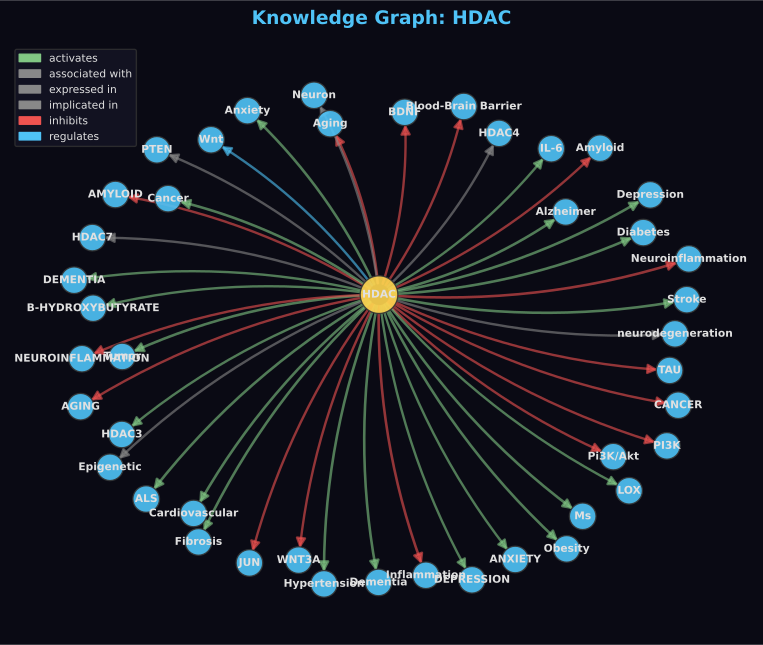
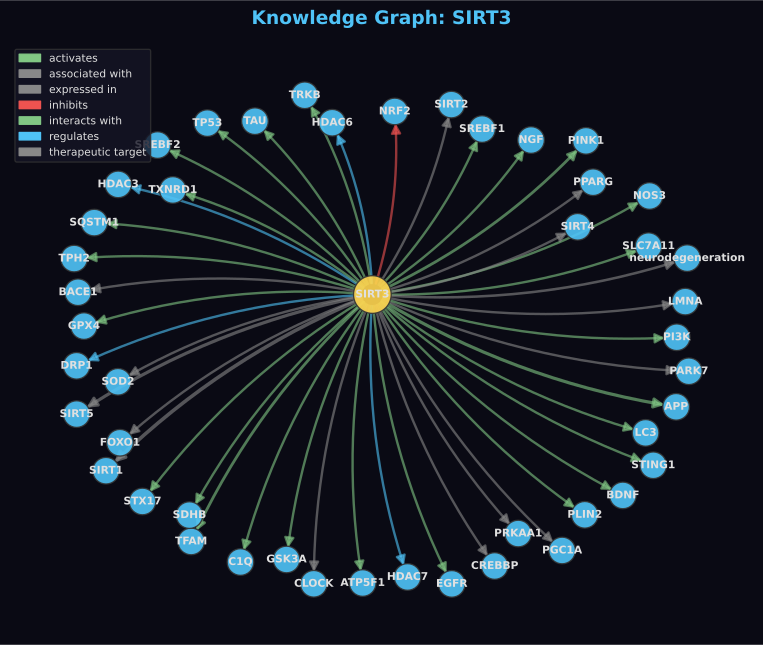
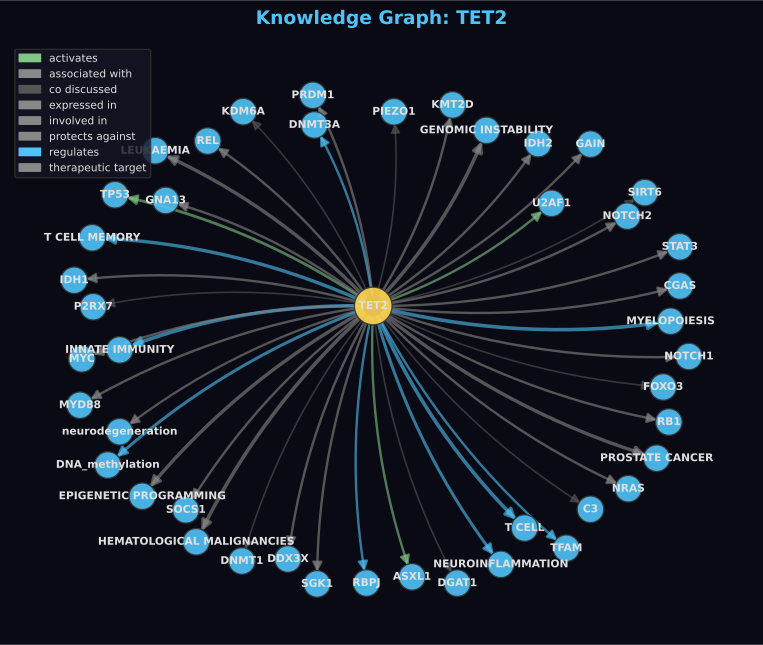
Knowledge Graph (178 edges)
Interactive visualization of molecular relationships discovered in this analysis. Drag nodes to rearrange, scroll to zoom, click entities to explore.
activates (7)
▸ Show 2 more
associated with (6)
▸ Show 1 more
biomarker for (1)
causal extracted (3)
causes (9)
co associated with (13)
co discussed (81)
▸ Show 76 more
depends on (1)
disrupts (1)
downregulated in (1)
dysregulated in (1)
enables (1)
investigated in (1)
involved in (6)
▸ Show 1 more
modulates (10)
participates in (5)
protective against (1)
regulates (17)
▸ Show 12 more
targets (1)
therapeutic target (5)
therapeutic target for (2)
Pathway Diagram
Key molecular relationships — gene/protein nodes color-coded by type
graph TD
    PGC1_["PGC1α"] -->|activates| mitochondrial_biogenesis_["mitochondrial biogenesis pathway"]
    AMPK_SIRT1_PGC1__axis["AMPK-SIRT1-PGC1α axis"] -->|associated with| neurodegeneration["neurodegeneration"]
    SMARCA4["SMARCA4"] -->|regulates| SWI_SNF_complexes["SWI/SNF complexes"]
    SMARCA4_1["SMARCA4"] -->|activates| nucleosome_remodeling["nucleosome remodeling"]
    ATPase_activity["ATPase activity"] -->|causes| chromatin_remodeling["chromatin remodeling"]
    nutrient_sensing["nutrient sensing"] -->|dysregulated in| aging["aging"]
    APOE["APOE"] -->|regulates| cholesterol_metabolism["cholesterol_metabolism"]
    NAD__NADH_ratio["NAD+/NADH ratio"] -->|modulates| SIRT1_activity["SIRT1 activity"]
    PGC1__2["PGC1α"] -->|activates| NRF1_2["NRF1/2"]
    PGC1__3["PGC1α"] -->|activates| TFAM["TFAM"]
    AMPK["AMPK"] -->|regulates| Cellular_energy_sensing["Cellular energy sensing"]
    AMPK_4["AMPK"] -->|activates| Downstream_effectors["Downstream effectors"]
    style PGC1_ fill:#4fc3f7,stroke:#333,color:#000
    style mitochondrial_biogenesis_ fill:#81c784,stroke:#333,color:#000
    style AMPK_SIRT1_PGC1__axis fill:#81c784,stroke:#333,color:#000
    style neurodegeneration fill:#ef5350,stroke:#333,color:#000
    style SMARCA4 fill:#4fc3f7,stroke:#333,color:#000
    style SWI_SNF_complexes fill:#4fc3f7,stroke:#333,color:#000
    style SMARCA4_1 fill:#4fc3f7,stroke:#333,color:#000
    style nucleosome_remodeling fill:#4fc3f7,stroke:#333,color:#000
    style ATPase_activity fill:#4fc3f7,stroke:#333,color:#000
    style chromatin_remodeling fill:#4fc3f7,stroke:#333,color:#000
    style nutrient_sensing fill:#4fc3f7,stroke:#333,color:#000
    style aging fill:#4fc3f7,stroke:#333,color:#000
    style APOE fill:#ce93d8,stroke:#333,color:#000
    style cholesterol_metabolism fill:#81c784,stroke:#333,color:#000
    style NAD__NADH_ratio fill:#4fc3f7,stroke:#333,color:#000
    style SIRT1_activity fill:#4fc3f7,stroke:#333,color:#000
    style PGC1__2 fill:#4fc3f7,stroke:#333,color:#000
    style NRF1_2 fill:#4fc3f7,stroke:#333,color:#000
    style PGC1__3 fill:#4fc3f7,stroke:#333,color:#000
    style TFAM fill:#4fc3f7,stroke:#333,color:#000
    style AMPK fill:#4fc3f7,stroke:#333,color:#000
    style Cellular_energy_sensing fill:#4fc3f7,stroke:#333,color:#000
    style AMPK_4 fill:#4fc3f7,stroke:#333,color:#000
    style Downstream_effectors fill:#4fc3f7,stroke:#333,color:#000
Figures & Visualizations (11)
Pathway Diagrams (3)
Score Comparisons (1)
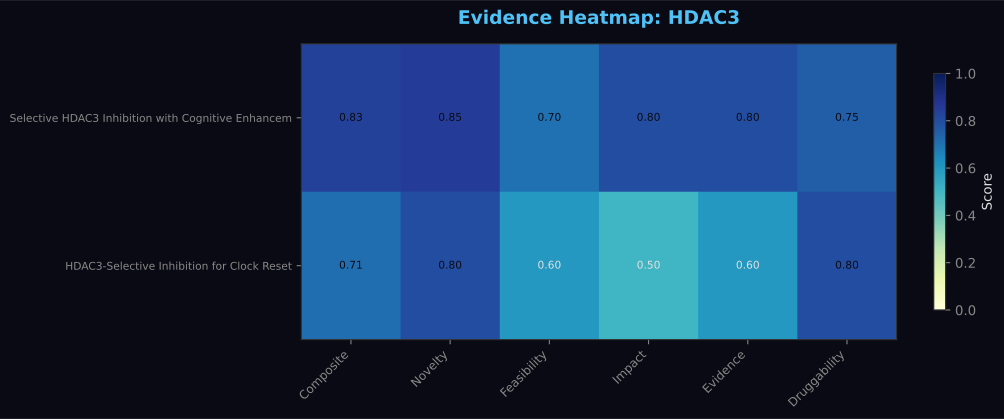
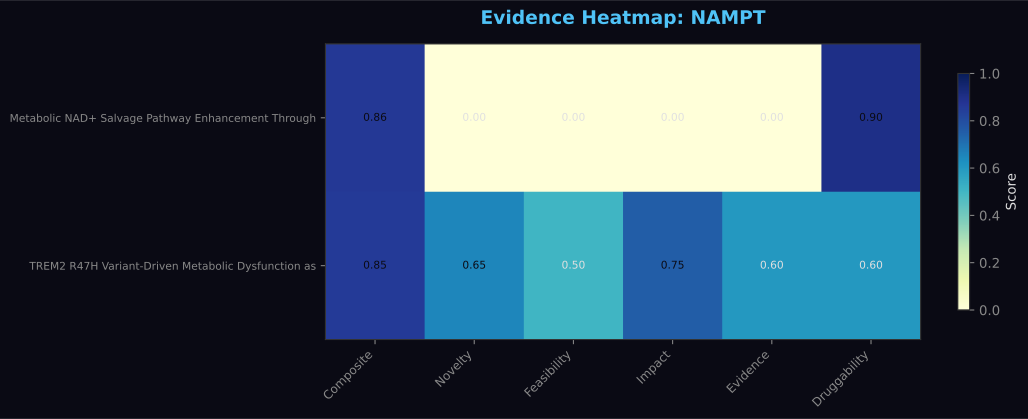
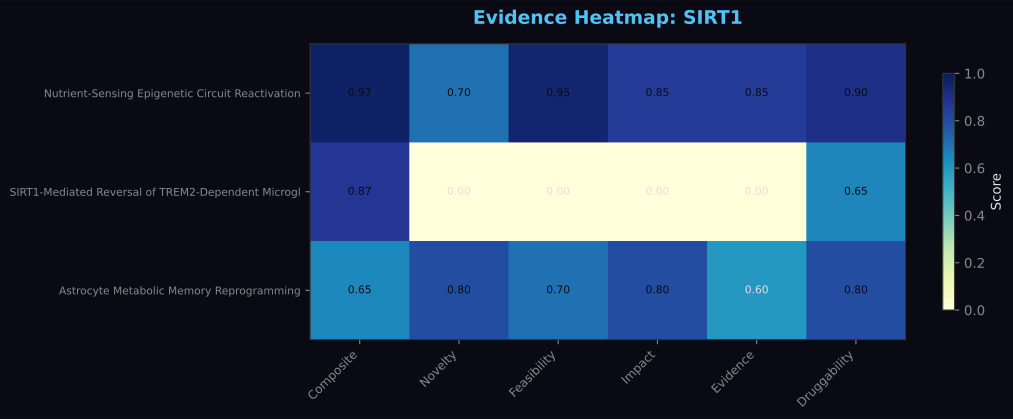
Debate Impact (2)
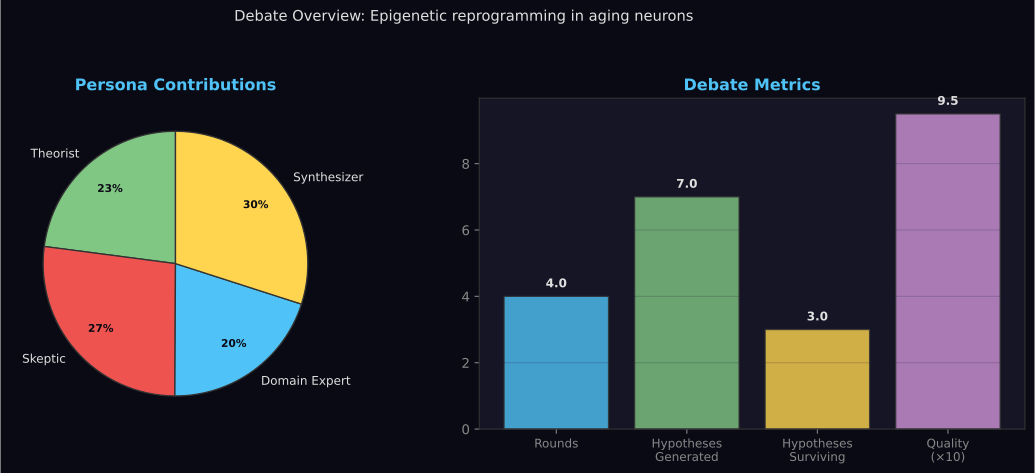
Linked Wiki Pages (20)
Entities from this analysis that have detailed wiki pages