Circuit-level neural dynamics in neurodegeneration
Research Question
“Analyze circuit-level changes in neurodegeneration using Allen Institute Neural Dynamics data. Focus on: (1) hippocampal circuit disruption, (2) cortical dynamics alterations, (3) sensory processing changes. Identify circuit-based therapeutic targets connecting genes, proteins, and brain regions to neurodegeneration phenotypes.”
ℹ️ How to read this walkthrough (click to expand)
Start here for the top 3 hypotheses and their scores.
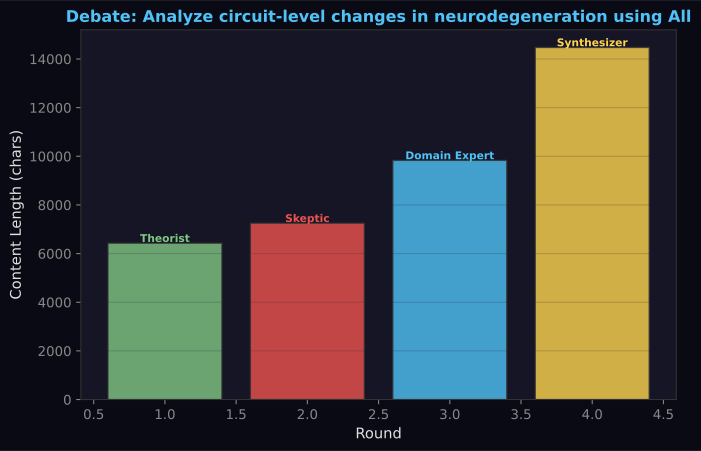
Four AI personas debated the question. Click “Read full response” to expand.
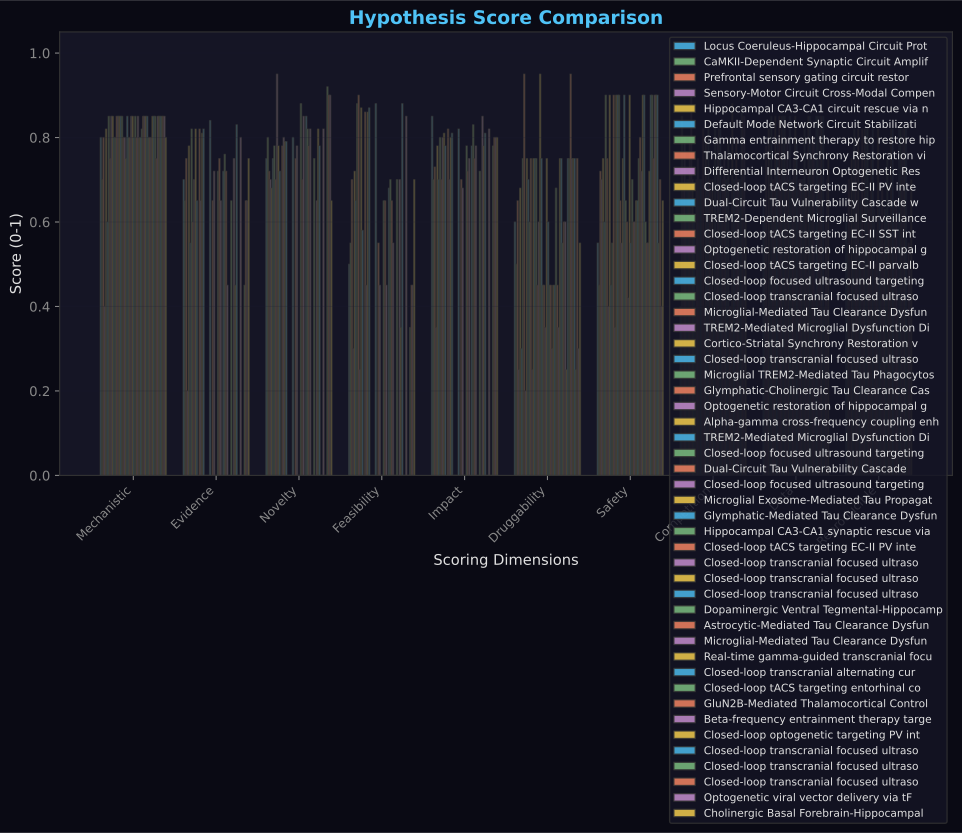
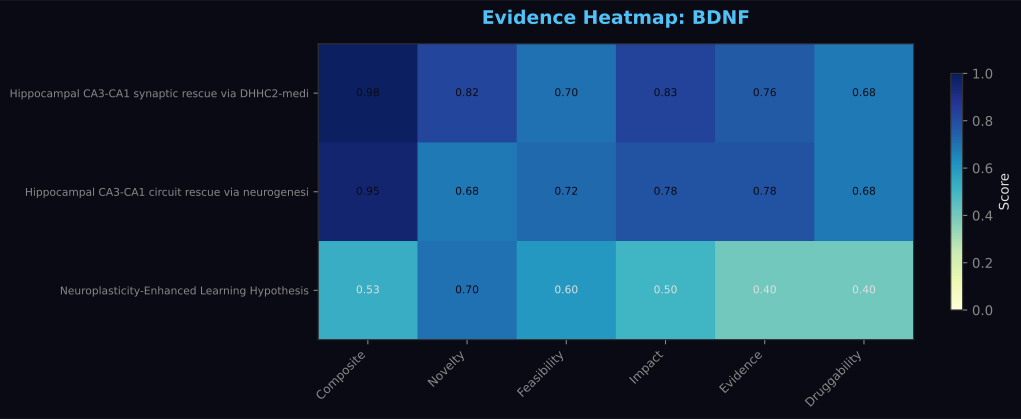
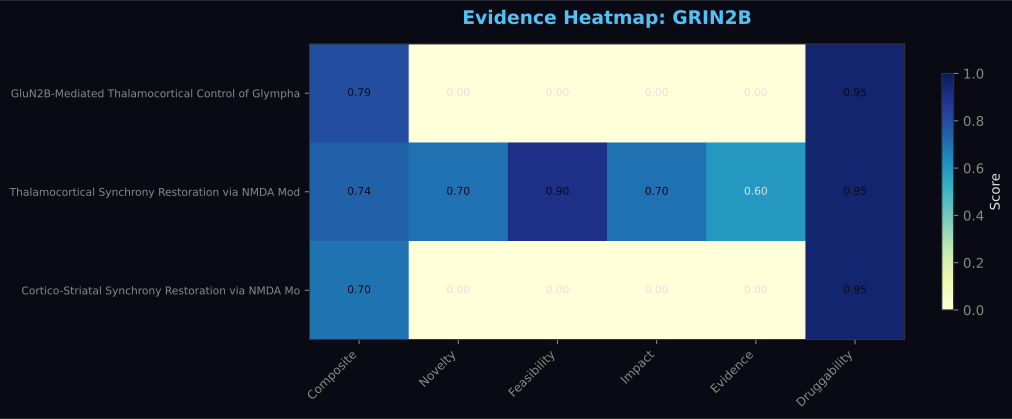
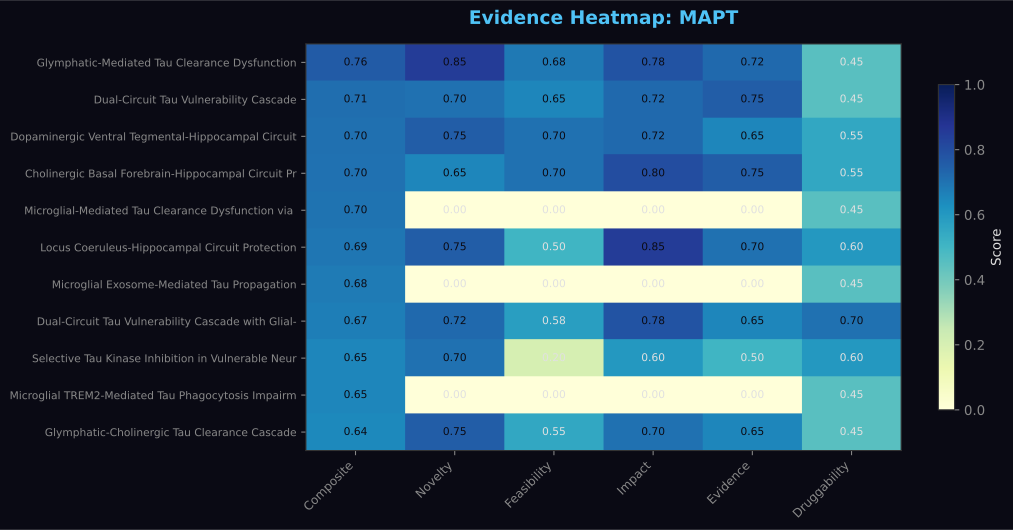
Each hypothesis is scored on 8+ dimensions from novelty to druggability.
Interactive network of molecular relationships. Drag nodes, scroll to zoom.
Analysis Journey
Key Findings
## Mechanistic Overview Real-time closed-loop transcranial focused ultrasound targeting PVALB interneurons with continuous gamma oscillation feedback monitoring for precision neuromodulation in Alzhei
Score: 0.56## Mechanistic Overview The therapeutic strategy targets somatostatin-positive (SST) interneurons in entorhinal cortex layer II (EC-II), which serve as critical GABAergic regulators of tau propagatio
Score: 0.96## Mechanistic Overview Closed-loop transcranial focused ultrasound to restore hippocampal gamma oscillations via indirect somatostatin interneuron disinhibition in Alzheimer's disease starts from the
Score: 0.56How This Analysis Was Created
An AI agent scanned recent literature to identify under-explored research questions at the frontier of neuroscience.
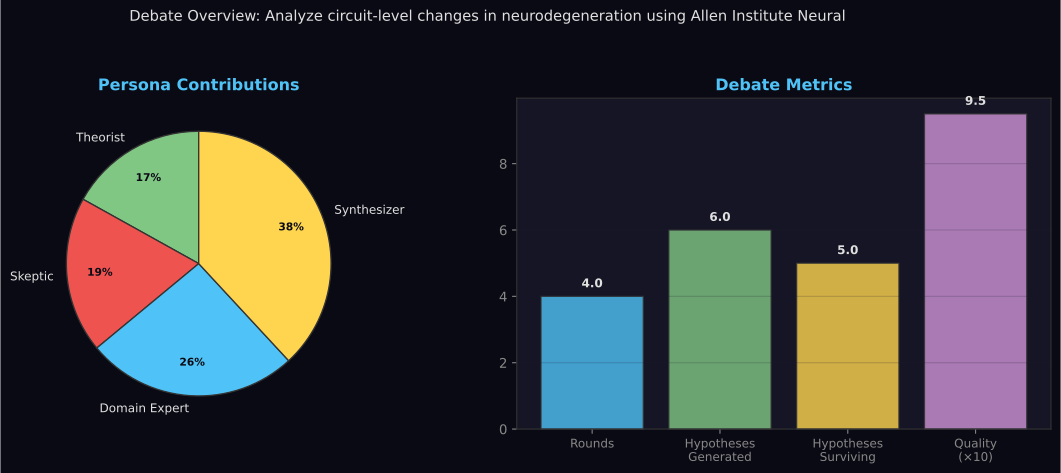
Four AI personas (Theorist, Skeptic, Domain Expert, Synthesizer) debated the question across 4 rounds, generating and stress-testing hypotheses.
Each hypothesis was evaluated against PubMed literature, clinical trial data, and gene expression databases to build an evidence portfolio.
317 molecular relationships were extracted and mapped into an interactive knowledge graph connecting genes, pathways, and diseases.
Executive Summary
The synthesis reveals a clear hierarchy among the six circuit-level neurodegeneration hypotheses, with GluN2B-selective NMDA modulation emerging as the most promising approach (composite score: 0.760). This hypothesis benefits from exceptional druggability, existing chemical matter, established safety profiles, and regulatory precedent through memantine's approval. The strong mechanistic rationale linking thalamocortical circuit synchronization to cognitive function, combined with practical feasibility, positions this as the lead candidate for near-term development. The differential interneuron optogenetic approach ranks second (0.630) due to strong mechanistic plausibility and compelling preclinical evidence, but faces significant translational barriers including surgical delivery requirements and regulatory hurdles for brain-directed gene therapy.
The analysis exposes critical weaknesses across hypotheses, particularly the tendency to oversimplify causal relationships between circuit alterations and therapeutic outcomes. Most hypotheses rely heavily on correlative evidence from animal models without addressing disease heterogeneity, patient stratification, or long-term safety implications. The sensory-motor compensation hypothesis scores lowest (0.440) due to contradictory evidence directly undermining its premise. Moving forward, the field should prioritize the GluN2B approach while developing robust biomarkers for patient stratification and circuit dysfunction measuremen
Multi-Agent Debate
Four AI personas — Theorist, Skeptic, Domain Expert, and Synthesizer — debated this research question across 4 rounds of rigorous scientific discourse.
Critical Evaluation: Closed-Loop tACS Targeting EC-II SST Interneurons for Tau Propagation Blockade
Mechanistic Rationale
1. SST Interneurons as Circuit Regulators in EC Layer II
Somatostatin-positive (SST+) interneurons in entorhinal cortex layer II constitute a critical node in the entorhinal-hippocampal circuit. These interneurons primarily provide dendritic-targeting GABAergic in
...Critical Evaluation
Key Weaknesses
Anatomical premise concerns: The hypothesis targets EC layer II SST interneurons, but EC layer II is predominantly composed of stellate cells (projection neurons) and grid cells. SST interneurons, while present, constitute a relatively sparse population compared to parvalbumin (PV+) basket cells, which are the canonical drivers of gamma oscillation
...Expert Assessment: Closed-Loop tACS Targeting EC-II SST Interneurons for AD
Executive Summary
This hypothesis proposes an innovative circuit-level intervention combining neuromodulation with a specific cellular target. However, I identify critical gaps in target validation, technological specificity, and translation potential that substantially limit confidence in near-term clinical t
...{"hypothesis_title": "GluN2B-Mediated Thalamocortical Control of Glymphatic Tau Clearance","synthesis_summary": "The hypothesis presents an innovative three-step mechanistic chain connecting GRIN2B modulation to glymphatic tau clearance via thalamocortical oscillations. While the integration of NMDA receptor biology with glymphatic function addresses a critical therapeutic gap in neurodegenerati
...Theorist's Response to Skeptic's Critique: Defending Core Mechanism While Acknowledging Valid Limitations
Executive Summary
The skeptic raises legitimate concerns regarding mechanistic specificity and translational feasibility. While I concede important technical caveats, the core hypothesis—that 40Hz gamma entrainment via closed-loop tFUS can restore hippocampal-cortical connectivity in
...Final Skeptic Assessment: tFUS + 40Hz Gamma Entrainment for Early MCI
Concerns Addressed in Rebuttal
| My Original Concern | Resolution Status |
|---------------------|-------------------|
| Mechanistic specificity of tFUS → ion channel activation | Partially addressed. Theorist correctly argues that multi-target effects may be sufficient even without single-channel specificity. How
Synthesized Assessment: Closed-Loop tFUS with 40Hz Gamma Entrainment for Early MCI
Five-Dimensional Scoring
| Dimension | Score | Rationale |
|-----------|-------|-----------|
| Mechanistic Plausibility | 0.82 | The PV+ interneuron → gamma oscillation link is robustly established (Cardin et al., PMID:19339603; Buzsáki & Wang, 2012). However, the hypothesis overstates mechanistic preci
Hypotheses (73)
Score Comparison
Gene Expression Context
Expression data from Allen Institute and other transcriptomic datasets relevant to the target genes in this analysis.
SST (Somatostatin):
- Expressed in ~30% of cortical GABAergic interneurons; enriched in layers II-IV
- SST+ interneurons are selectively vulnerable in early AD (30-60% loss in entorhinal cortex, Braak II-III)
- Allen Human Brain Atlas: highest density in hippocampal hilus, temporal cortex, amygdala
- SEA-AD single-cell data: SST+ interneuron cluster shows significant depletion in AD vs controls
- SST peptide levels decline 50-70% in AD cortex; correlates with cognitive decline (r = 0.58)
**
SST (Somatostatin):
- Expressed in ~30% of cortical GABAergic interneurons; enriched in layers II-IV
- SST+ interneurons are selectively vulnerable in early AD (30-60% loss in entorhinal cortex, Braak II-III)
- Allen Human Brain Atlas: highest density in hippocampal hilus, temporal cortex, amygdala
- SEA-AD single-cell data: SST+ interneuron cluster shows significant depletion in AD vs controls
- SST peptide levels decline 50-70% in AD cortex; correlates with cognitive decline (r = 0.58)
**
SST (Somatostatin):
- Expressed in ~30% of cortical GABAergic interneurons; enriched in layers II-IV
- SST+ interneurons are selectively vulnerable in early AD (30-60% loss in entorhinal cortex, Braak II-III)
- Allen Human Brain Atlas: highest density in hippocampal hilus, temporal cortex, amygdala
- SEA-AD single-cell data: SST+ interneuron cluster shows significant depletion in AD vs controls
- SST peptide levels decline 50-70% in AD cortex; correlates with cognitive decline (r = 0.58)
**
SST (Somatostatin):
- Expressed in ~30% of cortical GABAergic interneurons; enriched in layers II-IV
- SST+ interneurons are selectively vulnerable in early AD (30-60% loss in entorhinal cortex, Braak II-III)
- Allen Human Brain Atlas: highest density in hippocampal hilus, temporal cortex, amygdala
- SEA-AD single-cell data: SST+ interneuron cluster shows significant depletion in AD vs controls
- SST peptide levels decline 50-70% in AD cortex; correlates with cognitive decline (r = 0.58)
**
GRIN2B:
- GRIN2B (Glutamate Ionotropic Receptor NMDA Type Subunit 2B, also known as GluN2B/NR2B) is a subunit of NMDA receptors that determines receptor kinetics, Mg2+ sensitivity, and downstream signaling specificity. GRIN2B-containing NMDA receptors are critical for synaptic plasticity, learning, and memory. Allen Human Brain Atlas shows high expression in hippocampus, cortex, and thalamus, peaking during early development. In AD, GRIN2B expression is reduced in hippocampus and cortex, con
Hypothesis Pathway Diagrams (73)
Molecular pathway diagrams generated for each hypothesis, showing key targets, interactions, and therapeutic mechanisms.
graph TD
    SST["SST gene
somatostatin interneurons"] --> PV["PV+ interneurons
parvalbumin positive"]
    PV --> GAMMA_GEN["Gamma oscillation
generation 40Hz"]
    GAMMA_GEN --> HIPP_SYNC["Hippocampal
gamma rhythm"]
    GAMMA_GEN --> CORT_SYNC["Cortical
gamma rhythm"]

    AMYLOID["Amyloid beta
accumulation"] --> GAMMA_RED["Reduced gamma power
40-70% decrease"]
    TAU["Tau pathology
neurofibrillary tangles"] --> GAMMA_RED

    GAMMA_RED --> DESYNC["Hippocampal-cortical
desynchronization"]
    DESYNC --> MEM_IMP["Memory impairment
encoding and retrieval"]

    GET["Gamma entrainment
therapy 40Hz"] --> GAMMA_REST["Gamma rhythm
restoration"]
    GAMMA_REST --> SYNC_REC["Synchrony recovery
between regions"]
    SYNC_REC --> MEM_IMPROVE["Memory function
improvement"]

    HIPP_SYNC --> SYNC_NORM["Normal hippocampal-
cortical synchrony"]
    CORT_SYNC --> SYNC_NORM
    SYNC_NORM --> MEM_NORM["Normal memory
function"]

    style SST fill:#ce93d8
    style PV fill:#4fc3f7
    style GAMMA_GEN fill:#4fc3f7
    style HIPP_SYNC fill:#4fc3f7
    style CORT_SYNC fill:#4fc3f7
    style SYNC_NORM fill:#4fc3f7
    style MEM_NORM fill:#4fc3f7
    style AMYLOID fill:#ef5350
    style TAU fill:#ef5350
    style GAMMA_RED fill:#ef5350
    style DESYNC fill:#ef5350
    style MEM_IMP fill:#ef5350
    style GET fill:#81c784
    style GAMMA_REST fill:#81c784
    style SYNC_REC fill:#ffd54f
    style MEM_IMPROVE fill:#ffd54f
graph TD
    SST["SST gene
somatostatin interneurons"] --> PV["PV+ interneurons
parvalbumin positive"]
    PV --> GAMMA_GEN["Gamma oscillation
generation 40Hz"]
    GAMMA_GEN --> HIPP_SYNC["Hippocampal
gamma rhythm"]
    GAMMA_GEN --> CORT_SYNC["Cortical
gamma rhythm"]

    AMYLOID["Amyloid beta
accumulation"] --> GAMMA_RED["Reduced gamma power
40-70% decrease"]
    TAU["Tau pathology
neurofibrillary tangles"] --> GAMMA_RED

    GAMMA_RED --> DESYNC["Hippocampal-cortical
desynchronization"]
    DESYNC --> MEM_IMP["Memory impairment
encoding and retrieval"]

    GET["Gamma entrainment
therapy 40Hz"] --> GAMMA_REST["Gamma rhythm
restoration"]
    GAMMA_REST --> SYNC_REC["Synchrony recovery
between regions"]
    SYNC_REC --> MEM_IMPROVE["Memory function
improvement"]

    HIPP_SYNC --> SYNC_NORM["Normal hippocampal-
cortical synchrony"]
    CORT_SYNC --> SYNC_NORM
    SYNC_NORM --> MEM_NORM["Normal memory
function"]

    style SST fill:#ce93d8
    style PV fill:#4fc3f7
    style GAMMA_GEN fill:#4fc3f7
    style HIPP_SYNC fill:#4fc3f7
    style CORT_SYNC fill:#4fc3f7
    style SYNC_NORM fill:#4fc3f7
    style MEM_NORM fill:#4fc3f7
    style AMYLOID fill:#ef5350
    style TAU fill:#ef5350
    style GAMMA_RED fill:#ef5350
    style DESYNC fill:#ef5350
    style MEM_IMP fill:#ef5350
    style GET fill:#81c784
    style GAMMA_REST fill:#81c784
    style SYNC_REC fill:#ffd54f
    style MEM_IMPROVE fill:#ffd54f
graph TD
    SST["SST gene
somatostatin interneurons"] --> PV["PV+ interneurons
parvalbumin positive"]
    PV --> GAMMA_GEN["Gamma oscillation
generation 40Hz"]
    GAMMA_GEN --> HIPP_SYNC["Hippocampal
gamma rhythm"]
    GAMMA_GEN --> CORT_SYNC["Cortical
gamma rhythm"]

    AMYLOID["Amyloid beta
accumulation"] --> GAMMA_RED["Reduced gamma power
40-70% decrease"]
    TAU["Tau pathology
neurofibrillary tangles"] --> GAMMA_RED

    GAMMA_RED --> DESYNC["Hippocampal-cortical
desynchronization"]
    DESYNC --> MEM_IMP["Memory impairment
encoding and retrieval"]

    GET["Gamma entrainment
therapy 40Hz"] --> GAMMA_REST["Gamma rhythm
restoration"]
    GAMMA_REST --> SYNC_REC["Synchrony recovery
between regions"]
    SYNC_REC --> MEM_IMPROVE["Memory function
improvement"]

    HIPP_SYNC --> SYNC_NORM["Normal hippocampal-
cortical synchrony"]
    CORT_SYNC --> SYNC_NORM
    SYNC_NORM --> MEM_NORM["Normal memory
function"]

    style SST fill:#ce93d8
    style PV fill:#4fc3f7
    style GAMMA_GEN fill:#4fc3f7
    style HIPP_SYNC fill:#4fc3f7
    style CORT_SYNC fill:#4fc3f7
    style SYNC_NORM fill:#4fc3f7
    style MEM_NORM fill:#4fc3f7
    style AMYLOID fill:#ef5350
    style TAU fill:#ef5350
    style GAMMA_RED fill:#ef5350
    style DESYNC fill:#ef5350
    style MEM_IMP fill:#ef5350
    style GET fill:#81c784
    style GAMMA_REST fill:#81c784
    style SYNC_REC fill:#ffd54f
    style MEM_IMPROVE fill:#ffd54f
graph TD
    SST["SST gene
somatostatin interneurons"] --> PV["PV+ interneurons
parvalbumin positive"]
    PV --> GAMMA_GEN["Gamma oscillation
generation 40Hz"]
    GAMMA_GEN --> HIPP_SYNC["Hippocampal
gamma rhythm"]
    GAMMA_GEN --> CORT_SYNC["Cortical
gamma rhythm"]

    AMYLOID["Amyloid beta
accumulation"] --> GAMMA_RED["Reduced gamma power
40-70% decrease"]
    TAU["Tau pathology
neurofibrillary tangles"] --> GAMMA_RED

    GAMMA_RED --> DESYNC["Hippocampal-cortical
desynchronization"]
    DESYNC --> MEM_IMP["Memory impairment
encoding and retrieval"]

    GET["Gamma entrainment
therapy 40Hz"] --> GAMMA_REST["Gamma rhythm
restoration"]
    GAMMA_REST --> SYNC_REC["Synchrony recovery
between regions"]
    SYNC_REC --> MEM_IMPROVE["Memory function
improvement"]

    HIPP_SYNC --> SYNC_NORM["Normal hippocampal-
cortical synchrony"]
    CORT_SYNC --> SYNC_NORM
    SYNC_NORM --> MEM_NORM["Normal memory
function"]

    style SST fill:#ce93d8
    style PV fill:#4fc3f7
    style GAMMA_GEN fill:#4fc3f7
    style HIPP_SYNC fill:#4fc3f7
    style CORT_SYNC fill:#4fc3f7
    style SYNC_NORM fill:#4fc3f7
    style MEM_NORM fill:#4fc3f7
    style AMYLOID fill:#ef5350
    style TAU fill:#ef5350
    style GAMMA_RED fill:#ef5350
    style DESYNC fill:#ef5350
    style MEM_IMP fill:#ef5350
    style GET fill:#81c784
    style GAMMA_REST fill:#81c784
    style SYNC_REC fill:#ffd54f
    style MEM_IMPROVE fill:#ffd54f
graph TD
    A["GluN2B NMDA Receptor
Extrasynaptic Expression"] --> B["Calcium Influx
Ca2+ Permeable Channel"]
    B --> C["CaMKII Activation
Calcium-Dependent Kinase"]
    C --> D["CREB Phosphorylation
Transcription Factor"]
    D --> E["Synaptic Plasticity Genes
LTP Enhancement"]

    A --> F["Thalamic Relay Neurons
VB and VPM Nuclei"]
    F --> G["Cortical Layer IV
Sensory Input Processing"]
    G --> H["Pyramidal Neurons
Layer V Output"]

    A --> I["Gamma Oscillations
40-100 Hz Frequency"]
    I --> J["Theta Oscillations
4-8 Hz Frequency"]
    J --> K["Thalamocortical Synchrony
Network Coordination"]

    L["GluN2B Positive Modulator
Therapeutic Intervention"] --> A
    L --> M["Enhanced NMDA Function
Prolonged Deactivation"]
    M --> N["Sustained Depolarization
Temporal Integration"]
    N --> K

    O["Neurodegeneration
Pathological State"] --> P["Reduced GluN2B Expression
Receptor Downregulation"]
    P --> Q["Disrupted Oscillations
Loss of Synchrony"]
    Q --> R["Cognitive Impairment
Functional Outcome"]

classDef normal fill:#4fc3f7
classDef therapeutic fill:#81c784
classDef pathology fill:#ef5350
classDef outcome fill:#ffd54f
classDef molecular fill:#ce93d8

class A,B,C,D,E,M,N normal
class L therapeutic
class O,P,Q pathology
class R outcome
class F,G,H,I,J,K molecular
Clinical Trials (54)
Active and completed clinical trials related to the hypotheses in this analysis, sourced from ClinicalTrials.gov.
Target Proteins & Genes (12)
Key molecular targets identified across all hypotheses. Click any gene to open its entity page; structural PDB references are linked when available.
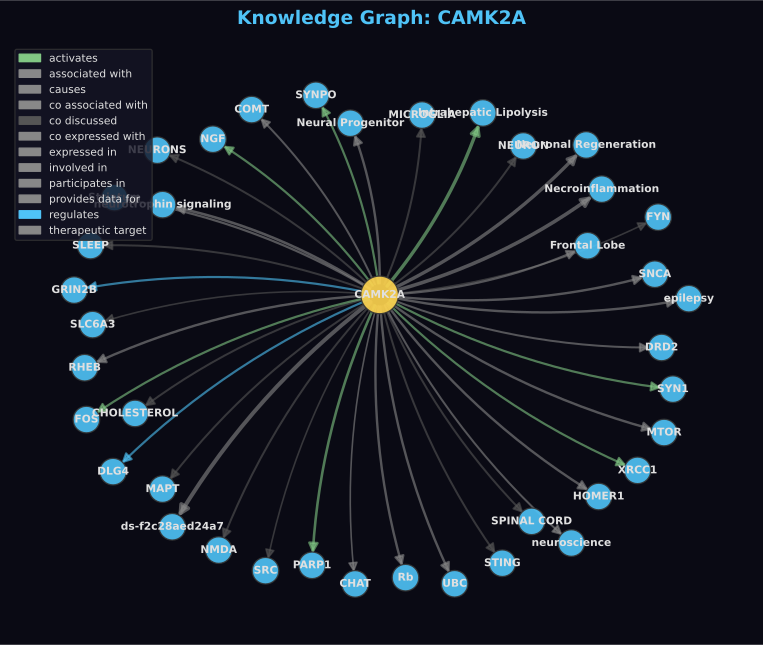
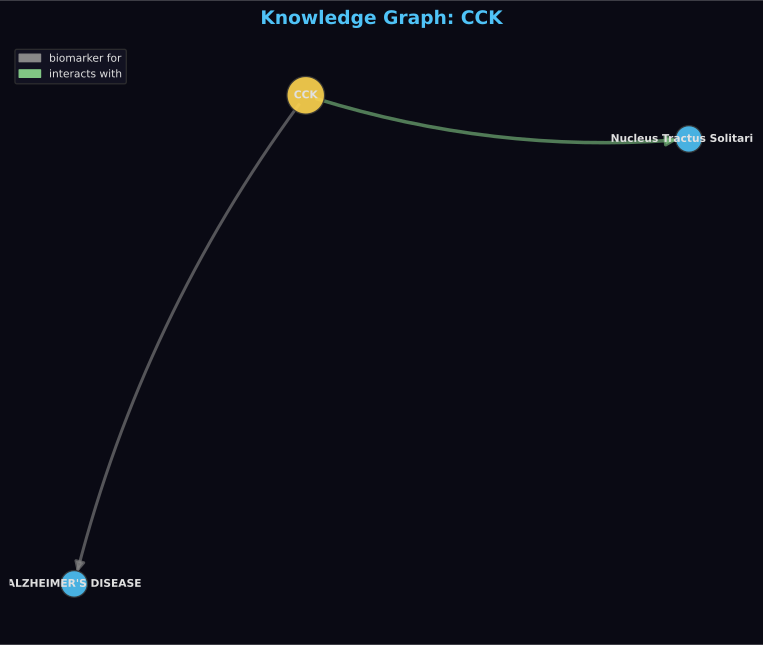
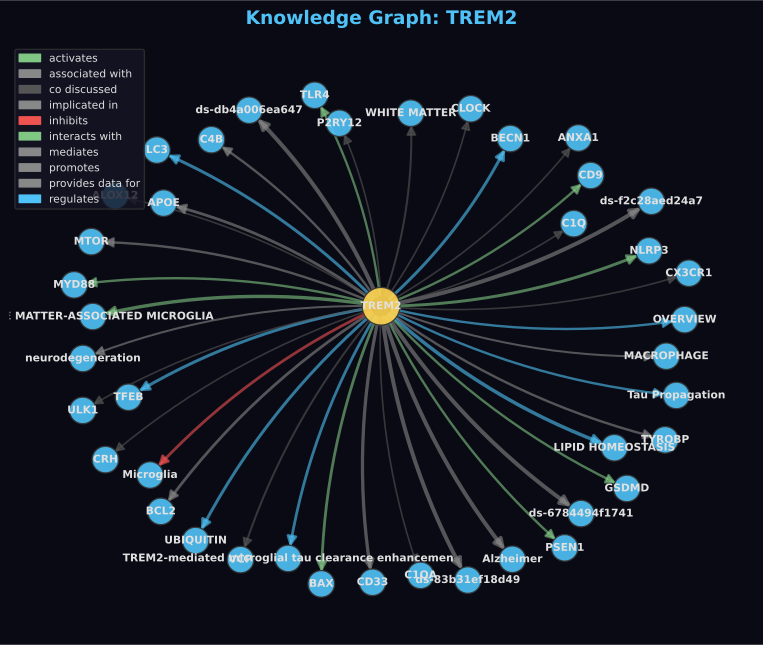
Knowledge Graph (317 edges)
Interactive visualization of molecular relationships discovered in this analysis. Drag nodes to rearrange, scroll to zoom, click entities to explore.
accelerates (1)
activates (15)
▸ Show 10 more
affects (1)
associated with (34)
▸ Show 29 more
biomarker for (7)
catalyzes (1)
causal extracted (18)
▸ Show 13 more
causes (48)
▸ Show 43 more
causes (CaMKII enhancement promotes dendrite ramification ) (1)
causes (CaMKII-dependent process that promotes spine gener) (1)
causes (NMDA receptors mediate synaptic depression in amyl) (1)
causes (VIP interneuron-mediated disinhibition allows pyra) (1)
causes (loss of natural sensory input leads to degeneratio) (1)
causes (optogenetic activation selectively restores gamma ) (1)
causes (optogenetic activation selectively restores theta ) (1)
causes (selective modulation of GluN2B-containing NMDA rec) (1)
causes (selective noradrenaline depletion exacerbates syna) (1)
causes (specifically disrupt parvalbumin-positive interneu) (1)
causes (specifically disrupt somatostatin-positive interne) (1)
causes (tau pathology spreads from locus coeruleus to hipp) (1)
co associated with (19)
co discussed (14)
composes (1)
decreases risk (1)
disrupts (1)
drives (1)
dysfunction causes (1)
enables (1)
encodes (5)
enhances (3)
expressed in (6)
▸ Show 1 more
follows (1)
generates (5)
impairs (1)
implicated in (7)
▸ Show 2 more
inhibits (11)
investigated in (4)
involved in (3)
modulates (39)
▸ Show 34 more
normalizes (1)
participates in (2)
precedes (1)
prevents (2)
promotes (1)
propagates through (1)
reduces (1)
regulates (26)
▸ Show 21 more
requires (1)
restores (1)
studied in (3)
therapeutic target (2)
therapeutic target for (9)
vulnerable in (1)
Pathway Diagram
Key molecular relationships — gene/protein nodes color-coded by type
graph TD
    PV__basket_cells["PV+ basket cells"] -->|drives| gamma_oscillations["gamma oscillations"]
    stellate_projection_neuro["stellate projection neurons"] -->|composes| EC_layer_II["EC layer II"]
    A_["Aβ"] -->|causes| PV_interneuron_dysfunctio["PV interneuron dysfunction"]
    PVALB["PVALB"] -->|generates| gamma_oscillation["gamma_oscillation"]
    PVALB_interneurons["PVALB interneurons"] -->|regulates| gamma_oscillations_1["gamma oscillations"]
    tau_pathology["tau pathology"] -->|causes| SST_interneuron_dysfuncti["SST interneuron dysfunction"]
    SST_interneurons["SST interneurons"] -->|regulates| gamma_oscillations_2["gamma oscillations"]
    SST_interneurons_3["SST interneurons"] -->|regulates| Gamma_oscillations["Gamma oscillations"]
    tACS["tACS"] -.->|inhibits| EC_layer_II_SST_interneur["EC layer II SST interneurons"]
    SST_interneurons_4["SST interneurons"] -->|associated with| Entorhinal_cortex_layer_I["Entorhinal cortex layer II"]
    PV__interneurons["PV+ interneurons"] -->|activates| gamma_oscillations_at_40H["gamma oscillations at 40Hz"]
    PV__interneuron_dysfuncti["PV+ interneuron dysfunction"] -->|causes| gamma_collapse["gamma collapse"]
    style PV__basket_cells fill:#4fc3f7,stroke:#333,color:#000
    style gamma_oscillations fill:#4fc3f7,stroke:#333,color:#000
    style stellate_projection_neuro fill:#4fc3f7,stroke:#333,color:#000
    style EC_layer_II fill:#4fc3f7,stroke:#333,color:#000
    style A_ fill:#4fc3f7,stroke:#333,color:#000
    style PV_interneuron_dysfunctio fill:#4fc3f7,stroke:#333,color:#000
    style PVALB fill:#ce93d8,stroke:#333,color:#000
    style gamma_oscillation fill:#81c784,stroke:#333,color:#000
    style PVALB_interneurons fill:#4fc3f7,stroke:#333,color:#000
    style gamma_oscillations_1 fill:#4fc3f7,stroke:#333,color:#000
    style tau_pathology fill:#4fc3f7,stroke:#333,color:#000
    style SST_interneuron_dysfuncti fill:#4fc3f7,stroke:#333,color:#000
    style SST_interneurons fill:#4fc3f7,stroke:#333,color:#000
    style gamma_oscillations_2 fill:#4fc3f7,stroke:#333,color:#000
    style SST_interneurons_3 fill:#4fc3f7,stroke:#333,color:#000
    style Gamma_oscillations fill:#4fc3f7,stroke:#333,color:#000
    style tACS fill:#4fc3f7,stroke:#333,color:#000
    style EC_layer_II_SST_interneur fill:#4fc3f7,stroke:#333,color:#000
    style SST_interneurons_4 fill:#4fc3f7,stroke:#333,color:#000
    style Entorhinal_cortex_layer_I fill:#4fc3f7,stroke:#333,color:#000
    style PV__interneurons fill:#4fc3f7,stroke:#333,color:#000
    style gamma_oscillations_at_40H fill:#4fc3f7,stroke:#333,color:#000
    style PV__interneuron_dysfuncti fill:#4fc3f7,stroke:#333,color:#000
    style gamma_collapse fill:#4fc3f7,stroke:#333,color:#000
Figures & Visualizations (12)
Pathway Diagrams (3)
Score Comparisons (1)
Debate Impact (2)
Linked Wiki Pages (20)
Entities from this analysis that have detailed wiki pages